Skyfall
June 19, 2013 2 Comments
 Title: Skyfall
Year: 2012, and in glorious 2D! The first of many brilliant steps EON took to assure Bond’s return from the brink of financial ruin would be a classic film firmly planted in tradition. Unlike the slice and dice action of 2008’s Quantum of Solace or the digital vomit of 2002’s Die Another Day EON ignored the current “hip” trends and celebrated 007’s Golden Anniversary on the silver screen with a gift to fans. Skyfall is nothing short of a celebration of everything we love about Commander James Bond. Watching it again six months removed from the release (Ed Note: This is the first Bond film I’ve seen in the theater since starting the project in April of 2010, hence …) it occurred to me that Skyfall is more of a reboot then Casino Royal (2006). The film is about stripping “James Bond” down to his core so he can then be built up again. And when I say “James Bond” I’m referring to not only to the 007 character but also his world. Bond has always been an idealized stand in for the UK but here Bond and England are truly one. When the crown falters, so does he. When the villain blows a hole in MI6, the absent Bond is wounded. He then must straighten himself out, return home, and save his country, even if she, in the form of penny pinching, pencil pushing bureaucrats, doesn’t realize she needs saving until it’s (almost) to late. In pulling himself back from the brink, Bond not only reinvents himself but his world. MI6 is physically moved to a new location and 007’s three pillars of support (two of which have been absent in the Craig era) M, Q, and Moneypenny are all reintroduced, reinvented and yes, rebooted. In breaking Bond down to build him up again the film is both rooted in the past while looking forward to the future. After Quantum and the MGM bankruptcy, it seemed our hero was finally done for, but as I’ve learned time and time again with this project, every time we count Bond out, he somehow comes back stronger. Skyfall is no exception.
Film Length: 2 hours 23 minutes
Bond Actor: Daniel Craig. Bingo. In his third film Craig not only pulls off the double backflip, he nails the landing. Whether he’s your favorite or you think him worse then Timothy, here Craig bleeds like Connery while adjusting his tie like Moore. He does both, by the by, right after ripping open a train car like Jaws tearing into a minivan. Hold on to your hats, James “not Jason Bourne” Bond is once again fun and Craig is having a blast. Not since Brosnan’s debut in Goldeneye (1995) have we seen an actor love being Bond like this. All I can think is the weight of the role must have finally lifted for Craig. His first go around he was too precise, what with all the world-wide-web denouncing him as the “worst Bond ever” before he was even issued his Welther PPK. “Don’t F it up” seemed to be the actor’s mantra and in avoiding mistakes he took no risks.

What? Keith worry?
The next film had no script, an incompetent director, and Craig was left dangling in the wind. Now, after four years of “will there or won’t there be another film,” Craig finally realizes what he’s got, the best damn job in the world. (OK, second best job after play first base for the 1986 Mets.) Additionally, Craig is given the tools to deliver the most well rounded Bond since Lazenby pointed out “this never happened to the other fellow.” We learn for the first time that Bond does sleep in spaces outside of hotel rooms. He has a flat in London! However, we never see it because when Bond was presumed dead, the place was sold off and all his belongings were put into storage. “Standard procedure” though this maybe, one can’t help but imagining the folks from “Storage Wars” coming across that bounty. “Holy shit, look at all this Dom Perignon! And I wonder what happens when I click this pen …” We also spend the entire third act at Bond’s family home in the moors of Scotland. (Where I come from, New Jersey, they call em swamps.) We learn James, an only child, was born to Andrew Bond and Monique Delacroix Bond (French!) and the two were burred in a shared grave. Kincade, the butler, even gives us insight into the boy Bond when he revels that after his parents died, little Jimmy hid in a secrete cave under his house for two days. “He went in a scared boy, when he came out he was a man.” I’ve often made the connection between one Mr. Bond and Mr. Wayne in the past, but after seeing Skyfall, the house, the deal is sealed. Both men have impossibly rich tastes and a weakness for the ladies. They both have secret identities and fight for what’s right against eccentric weirdoes. They both have signature cars and gadgets and lab men (Q, Mr. Fox) to keep everything in working order. But now it goes deeper. Both bachelors were orphaned and after a childhood trip below their ancestral homes (run by understanding older men, Kincade and Alfred) into caves of discovery, both emerge with greater purpose. Yah, Bond is in some ways England’s Batman, but with better suits and a license to kill. (Ed. Note: My new punk band, Worst Then Timothy, will premiere this Friday at Gussy’s in Astoria. $3 at the door)
 Director: Sam Mendes. Indeed, the first Oscar winning director in the franchises 50 year history is not the first guy who jumps to mind when thinking Bond. After years in theater Mendes made a huge splash with his feature debut American Beauty (1999). However, the years since have not been kind to Beauty and by the time Mendes turned the Titanic couple of the 90’s into bickering symbols of middle class American dysfunction in Revolutionary Road (2008) the Englishman’s criticism of American suburbia was no longer welcome on these shores. A shame, for Away We Go (2009) was a delight. But in Blog James Blog’s not so humble opinion, the most criminally overlooked film on Mendes’ IMDB page is the period gangster film Road to Perdition (2002). Not only a clinic in nailing set design and atmosphere, Perdition boasts an incredible cast of Tom Hanks in the bad guy role, Jude Law coiled like a spring, Paul Newman in his last on screen performance, and an up and coming English actor, Daniel Craig. Craig and Mendes became fast friends and the two would often give each other career advice. Craig in fact called Mendes when first asked to take the Bond role at which point Mendes told his pal to run the other way, fearing Craig would forever be branded as Bond. A justified concern as only Sir Sean has had an A-list post Bond career. Years later, Craig bumped into Mendes at a LA party and offered his old friend nothing short of the directing gig for the next 007, something the leading man, a few drinks into the evening, had no authority to do. The next day while nursing a slight headache Craig called his Bond bosses to admit he may have F’ed it up. Wilson and Broccoli forgave their 007 and welcomed Mendes with open arms. For his part, Mendes became interested in helming a Bond film after watching his buddy in Casino Royale. Mendes said it occurred to him that it “was still possible to make a big fantastic escapist movie and at the same time say something about the world we are living in.” For anyone unclear what the role the director, cinematographer, and editor play in making a film, you’re encouraged to watch Quantum and Skyfall back to back and you’ll get some idea. The metaphor Mendes and Co. play throughout the film (and none to subtly, this is Bond after all) is that M and Bond are old England, and they are dying; one will reinvent themselves to fit into modern times, the other will not. This message is expanding upon with set design and atmosphere but Mendes also uses dialog as a connective tissue to keep the theme in the fore. Two phrases in particular keep popping up like something of a manifesto.
A Bond for America?
The first is “Sometimes the old ways are best” as in Bond discussing his straight razor, Kincade talking about the virtues of a knife in a gun fight, and Bond once again when he plants said knife firmly in Silva’s back. The other is “Of course he/she/it is” as in “Bond, Silva is now in disguise as a policeman” “Of course he is” and “Bond, Q is afraid of flying.” “Of course he is” and Silva commenting on how both he and M have their final showdown in a dark gothic chapel “Of course. It had to be here.” I read this as Mendes talking directly to the audience, he feels the older Bonds, as well as the older ways of filmmaking, are the best. And it is with that mindset that Skyfall goes to all those Bond places and hits all the classic Bond themes because it is a Bond film, so of course it has to.
Reported Budget: $200,000,000 estimated.
Reported Box-office: $303,460,000 USA and $980,000,000 worldwide. Now that’s a figure to make Dr. Evil bite his pinky. The biggest hall for a Bond film ever and every penny was earned. To pick on Quantum again, after learning that film was $200 million I wanted a full audit. Surly, someone took off under the dark of night with bags of cash because that certainly did not look like a $200 million film. Here, it’s all, as they say, on screen and more importantly, it all works to serve the films ideas. There is a motorcycle chase over the rooftops of Istanbul’s Grand Bazaar (of course) that was shot for real (the old ways are best) that must of cost more then I’ll make in three lifetimes. A fight scene in a Shanghai skyscraper is not only unlike anything I’ve seen before, but the story is served as the glass towers and LED lights of this modern city strike a perfect  counterpoint to London’s old, grey, stone skyline. Even transition, like cutting from M in a small office talking about how the villain and Bond both operate in the shadows to the wide open gorgeous blue sky and water where Bond, standing on the deck of a sail boat, slowly and openly makes his way to the villains lair. The locations mean something here, as do the explosions and stunts and over the top sets. Mendes didn’t just use his budget as an excuse to go nuts; he went nuts with purpose.
Theme Song: “Skyfall” by Adele. I love Adele and simply assume everyone else does. Because how could you not. Add the fact that outside the late Amy Winehouse no other contemporary voice could bring us back to the classic Bond themes of yore and Adele, Brit to boot, is the obvious hire for the job. However, I must admit that I was not all that thrilled when I first heard the tune. It has since grown on me, like 90% of songs and albums I tend to love do, and I now think of it as a top shelf Bond theme. The build in the song sneaks up on the listener for a good three minutes until we hit the explosive final battle cry that carries us into the film, very Bond indeed. One more music note, the extras on the Blu-ray feature a quick piece about Derek Watkins. Watkins is a trumpet player who has played his horn for all 23 Bond films. He’s got to be the only person in the world who can say he’s worked on them all, no? Amazing. Further, while I was watching him play the score with 75 or so other musician it hit me once again how big and professional and organized and talented the cast and crew of these outlandishly huge films truly are. Anyway, live from the Kodak Theater in Hollywood California, ladies and gentlemen, Adele.
Opening Titles: As Bond sinks to “his death” we see his life flash before our eyes. That’s not just my interpretation; Daniel Kleinman created the opening title sequence to do exactly that. After Bond is shot and falls into the water the Adele theme kicks in and we enter a dream full of symbolism right out of Freud 101. Floating paper targets with Bonds face bleed out of the heart, the lava lamp blood then forms skulls and finally, Bond descends into his own grave. But Bond goes not gently into the light or this would be one short film indeed. So, along with the past we get glimpse of Bond future; Chinese New Year dragons, a quick shot of Silva looking on and finally Bond shooting mirror images of himself a la Man With the Golden Gun (1974) because you see, Silva is Bond gone bad. Further, the film looks forward and back and the credits do the same. I told you it was 101 but it’s all beautifully rendered and when coupled with Adele well … nobody does credits better.
 Opening Action Sequence: Yes, there has been quite a lot of “This is the best since that” already in this review but hot dog this movie has one doozy of an open. Perhaps the best since… dare I say The Spy Who Loved Me (1977)? Mendes said he wanted the open to be Russian nesting dolls with each twist revealing something new and unexpected. To quote my least favorite person this side of Tom Brady, mission accomplished. We first see Bond walking towards us, out of focus and distorted, looking like the alien emerging from the ship in Close Encounters of the Third Kind (1977). As the figure comes into focus we know who it is before we see his face thanks to the horn blast that push him onto screen. It is he, our hero, returned from Chapter 11 hell. Bond stumbles into a dark room containing a dead body and a badly wounded Agent Ronson. “LEAVE HIM!” M barks into Bond’s earpiece. Our hero hesitates, not wanting to abandon his fallen comrade, but he must chase the baddie lest many more agents will fall. You see, the baddie has a hard drive containing the true identity of every covert MI6 agent. Also presumed to be included are addresses, bank account info, and Linkedin profile passwords. Bond steals one more glance into the dying man’s eyes before he bolts after the McGuffin. This tight, short sequence is the entire film boiled down to its core; what are the consequences of MI6 and/or M sacrificing the one to save the many? One more note; the agent left behind is named Ronson which sounds a lot like Brosnan who was in fact left behind when EON went with Craig. Am I reading too much into this? You bet! Anywho, Bond jumps into a jeep driven by an agent named Eve and off they go after the baddie who’s on a motorcycle. What follows is an amazing chase involving smashed up jeeps, hand guns with insane ammo clips, a rooftop motorcycle chase, a backhoe ripping up a train car, a cascade of falling Volkswagen bugs, Bond getting shot in the shoulder, and a more then a few tossed fruit carts. It all ends with Bond and the baddie on top of a moving train, which is on a bridge and quickly approaching a tunnel. Long time James Blog fans need not be reminded of my head over heels love of trains on screen and this charging locomotive doesn’t disappoint. On a near by bluff Eve has her high powered scoop and rife aimed in the general direction of the two men but she is unable to get a clean shot on the baddie. M, who has been monitoring the entire thing from the safety and comfort of her London office, asks Eve if she has a clean shot. Negative, she may hit Bond. Take the shot M commands. As the train fast approaches the tunnel Eve tries to steady her nerve. She takes the shot, but when she does the camera is not on her but Bond, who goes flying off the train as if someone yanked a rope tied around his waist. It happens so quickly, so unexpectedly, it is totally shocking in a “holy shit! Did that just happen?’ kind of way that blockbuster films rarely are anymore. As Bond hits the water far below Eve reports “agent down.” We cut to M’s office, as the most powerful spy in England looks out her rain soaked window over the grey wet London skyline. In that split second M lost her best agent and the hard drive containing the closest kept secretes of her agency. What are the consequences of sacrificing the one when you’re still fail to save the many?
Bond’s Mission: We pick-up post credits three months after Bond’s disappearance over the waterfall. M is receiving a tongue lashing from the head Nazi from Schindler’s List (1993), AKA Ralph “call me Rafee” Fiennes. It appears NATO is none to happy with the list of agent names being out in the world and M is respectfully asked to retire “with dignity.” “To hell with dignity!” she snaps back reminding us once more why we love Dame Judi. Even this simple exchange is a reference/twist on the Bond mythology. How many times have we seen this tableau with M behind the desk dropping the hammer as Bond is forced to play the “you don’t understand what I need to do in the field” card? While M is in London fighting for her professional life half a world away Bond is fighting for his very soul. It only took 50 years but thank the movie gods EON finally got Bond going off the grid right. Rock stars often talk about the rush of performing on stage being unlike anything in the world. But when the lights are off and the crowds are gone living their lives many try to recreate the rush artificially. Drugs, booze and sex are more then often involved and so it is with the superspy in seclusion. We get an amazing window into Bonds world as we watch him stumble out of his bed at sunset and shamble down the beach from his shack to the local pub, an open air watering hole suitable for Colonel Kurtz and his men, where Bond calls upon his trademark bravery, moxie, and tolerance for alcohol to eek out a living. At sunrise, Bond is the sole occupant of the bar where he slouches, still pulling at the bottle. Craig’s face lets us know this has been the daily grind for some time and I’d imagine this is exactly how a sex addicted, alcoholic, adrenal junkie who has seen every corner of the world would end up dying. So cut off from his former life is Bond that he now gains intelligence from Wolf Blitzer, who informs CNN viewers MI6’s London headquarters has been attacked by terrorist. Bond returns home to find he no longer has home. MI6 is now underground, his flat has been rented and M, Mom in every sense of the word, doesn’t welcome her son back with open arms.

Bonds drinking partner
He must first prove himself to her in a sequence that is more crippling to Bond then the beachfront debauchery. In order to regain his double 0, Bond must endure the indignity of reapplying. His trademark tailored suit is replaced by a tracksuit. His verbal jousts with maniacal world threating villains is replaced by a word association game with a third rate shrink. Even his gun, Hollywood’s go to phallic symbol, is rendered impotent leaving Bond, much like Austin Powers, robbed of his mojo. For a man who is always three steps ahead, the fall from grace is staggering. What’s that you say? You think this sequence of events is Mendes commenting on the Bond franchise’s fall into bankruptcy? Hummm, I hadn’t thought of that…
Villain’s Name: Raoul Silva. For Bond villains, like most things in life, it’s all about the entrance. The room, large enough to stage the pivotal number in a Fred Astaire and Ginger Rogers picture, is full of wires. The camera looks down this hall of circuits like Luke Skywalker staring down the trench of the original Death Star. At the end of the hall a door opens and slowly, methodically, with a hint of swishiness, the villain walks toward the camera. Any Bond villain worth his salt gets a least one good speech and Silva’s is a doozy. We learn he’s ex-MI6, spending ‘86 to ‘97 at Station H Hong Kong, and he became lost after M left him to die in the field, not unlike the stunt she just pulled with Bond. The attack on MI6 is what brings these two men back into the fold; Silva is responsible for it, Bond responded to it. In his return from the wilderness Silva went postal, bombing his former work place because he was done with “the old lady giving him orders.” The old lady is, of course, both M and England. Bond on the other hand came back to protect the “old lady,” and that is the nut; Silva lets his hate for M swallow his sole while Bond’s love England saves his. What Mendes does is show us how thin the line between the two spies is and how if Bond were a lesser man, he would be riding shotgun with this techno terrorist.
 Villain Actor: Javier Bardem. The script, the director, and set pieces all but guarantee Silva will hold a special place in the Bond universe but it’s Javier who makes him truly a top shelf Bond villain. In his character’s introduction, occurring a good while into the second act, Bardem establishes his baddie as a cross of intellectual and sexual dominance in a scene that is off the charts sizzling with tension. I was shocked when some critics, like Joe Neumaier of the New York Daily News, saw Bardem’s slow burn menace and, yes, sexual overtness, as a weakness, comparing him to farm team baddies Mr. Went and Kidd. Because he may be gay he’s weak? This is 2012 for f**k sake. In Javier we get in fact the very opposite of weak. 95% of past Bond villains are “the smart guys” and “the strong guys” working in tandem; IE Goldfinger and Oddjob or Stromberg and Jaws. Silva is both and indeed has Bond outgunned in both departments. Why do we believe this to be so? Because Javier, to paraphrase Jean Luc Picard, makes it so. Look as his face as he rumbles thought London, singularly focused on reaching M. Become uneasy watching his caged tiger in the glass tube imploring M to “Think on her sins.” Smile at his complete satisfaction in tossing grenades into Bond’s childhood home. Bardem is Jimmy Conway in Goodfellas (1990) he actually enjoys being bad.
Villain’s Plot: Outside of the big theme, Silva and Bond are equally matched opposite sides of the same coin, the plot is boilerplate move from one local to the next. Bond learns the guy who shot him in the opening sequence is an assassin who’s next hit is in Shanghai. The once and future 007 catches the next flight to Asia and in short order Bond is walking into the trap, but what a glorious glass trap it be. Bond follows behind the assassin as he breaks into a sleek, ultra modern, lobby floor to 86th floor glass office building. Bond admires the assassin’s moves and sees his younger self in his target. (This is never said, Craig’s face does the talking.) In the next moment the English spy is wishing he was indeed his younger self as he struggles to hold onto the undercarriage of an elevator as it carries the assassin skyward to the top floor. The image of Bond hung under an ascending elevator quickly brings to mind the shot in Superman II (1981) where the son of Jor-El flies under the Eiffel Tower elevator, pushing it upward. Bond is often thought of as a superman and here using a classic Superman image we see that he is indeed very human. It’s the elevator pulling him up, not the other way around, and 007 is holding on for dear life…barely. Once safely on the top floor, Bond is still the passive voyeur, standing by while the assassin kills his target in an apartment across the way. The only other occupant of the apartment is a woman who is not the least bit surprised by the dead man on the floor and therefore must be in on the hit. Bond and the woman lock eyes and she becomes the next link in the chain eventually leading Bond to Silva. Does this whole thing require Silva seeing the board nine chess moves ahead? Yep. Does it matter like so many “smart” people on the internet think it does? Nope, not a lick. In part because …

Ed note: The Miami Marlins have attendance issues this year.
Villain’s Lair: An island! The Bond baddie lair is a freakin’ island! And a crazy impressive island at that. Bond has always been a travel log but here each location has it’s own distinct feel and atmosphere. For Silvia’s island we get an empty spookiness. If we are to believe our host, Japanese families once occupied the impressive concrete bunker like high-rises buildings that cover the small island. However, Silvia tricked them into believing the island had been contaminated in some way and overnight the island became Marlins stadium. What’s left are ghostly ruins and streets filled with abandon signs of humanity. Silva has the place wired with loud speaks which constantly play classical music, giving the whole place an out of time other worldly creepiness I can only compare to my first play though of Bioshock. Silva and music will come full circle in the third act when he once again sets out to destroy an isolate home, this time blasting the Johnny Lee Hooker perhaps too on the noise classic “Boom Boom.” (However, it’s not Johnny Lee in performing it in the film for some odd reason.) On top of all that, this island is much like the classic Ken Adam volcano lair of yore and unlike the publicly funded Tampa Bay Times Forum, home of the 2012 GOP convention, in that they built it. (“They” in this case being production set designers and craftsmen and women employed to work on Skyfall who are also no doubt dues paying union members. Anywho… A F**KING ISLAND!!!)
Villain’s Coolest Accessory/ Trait: Mr. Green, the villain from the last entry, looks like the kind of guy you would strike up a conversation with while waiting for a drink at a Manhattan rooftop bar. Silva, on the other hand, has a look that would make you get off your train five stops early if he sat next to you. Like all good Bond villains, he’s got physical problems to go along with his mental ones. Before we even learn about his prosthetic jaw (coming up, it’s worth the wait) we can see this is a man who is altering his look. His eyes look to be in the wrong head, most likely thanks to a bad eyelift. His hefty frame is slightly off balance on his skinny legs. His blonde die job screams “this man in not right.” And then there is the verbal tick, the masterstroke in Bardem’s baddie. As Silva is rattling off all the bad stuff he can do with the click of a mouse he lists “Manipulate the market? Bluup done.” The “Bluup” is delivered in a higher register then his normal speaking voice and sounds like a cross between a Nintendo Game System sound effect and dripping faucet. The first time I heard it, I thought it was a flubbed line that somehow made it into the final cut of the film but then it comes back. “Nothing superfluous in my life, if I don’t need it, Bluup” The bluup is how he sees the world. If Silva needs something to happen, he bluup, makes it happen. Now for that missing lower jaw… Back when he was with Station H (‘86 to ‘97 alert readers will recall) Silva was detained for five months. Though tortured terribly, he never spilled the beans on MI6 and when it became clear he would not be rescued, he bit down on the cyanided capsule in his molar. He did not die but everything inside burned. When he removes his false lower jaw his face drops, his eyes pop, and spittle sprays from his mouth. He is truly a monster, his insides burned out by M, and now he’s come home to get his revenge. Bluup
Badassness of Villain: Lets hold up the William Tell/ William Burroughs scene as exhibit A in the Silva is a monster argument. In a classic Bond Villain trope, Silvia plays host and escorts Bond around his lair for a grand tour ending in the abandon village square. Tied up in the middle of the square is the girl who led Bond to Silva’s island. She is also Silva’s lover because of course she is. With 1920’s big band music playing in the background Silvia and Bond drink from a bottle as Silva proposes a game. The first one to shoot a shot glass off the top of the girls head wins. Bond has the honor. With hands shaking, brow sweeting, Silvia cackling “The great James Bond can’t even shoot straight, what have they done to you?” Bond takes his shot and misses badly wide right (Sorry Buffalo), debris flecking off the girls face. “My turn” Silvia says as he raises his gun and shoots the girl in gut, causing her to bend over as the glass falls to the ground. “I win, what do you think?” “I think it’s a waste of perfectly good Scotch.” And that is just the tip of the Silva iceberg. So badass is he that he WANTS to be caught  by MI6 so he can get into Q’s computer, break out of his special Hulk S.H.I.E.L.D. cage, squash Bond under a downtown 6 train, and shot M while she is testifying before Parliament. The fact that only 25% of this works is well beside the point, it’s the shear act of attempting this bat shit crazy plan that make him badass. But the icing on the cake, Silva kills the longest standing symbol of Bond badassery, the original Goldfinger Aston Martin DB5. More on that to come …
Villain’s Asides/ Henchmen: Patrice, as played by Ola Rapace, follows in the proud tradition of the silent assassins as stared by Oddjob (Goldfinger) and carried on by Chang (Moonraker (1979)) and Necros (The Living Daylights (1987)). Patrice, a man with no country of origin on record, gets the ball rolling when he kills Ronson and makes off with agent list. At one point during the pursuit he shoots at Bond with a handgun that appearance to have two round ammo clips attached making it look like an Al Capone era Tommy Gun. I have no idea if these clips are real but if not I’m sure Wayne Lapierre has his top men working to get them to market as we speak. The final battle between Bond and Patrice is an absolutely thrilling throw down that ends with a multi-story plunge for the baddie. Silva also has a dozen or so guys that follow him around totting various mean looking guns. If this were a 70’s Bond film, they would be the blue jumpsuit cats. They are incredibly versatile and pop up wherever needed, at one point dressed like police to give Silva a ride through London.
 Bond Girl Actress: Berenice Marlohe. Born in Paris, the television actresses was little known outside her native France before being cast as the Bond girl, and to this I stand and applauded. It appears, so far at least, that the Craig era Bonds are returning to the tradition of hiring relatively unknown exotic women for the Bond girl unlike the jumping on the hot Hollywood actress of the moment calling card of the Brosnan era. Sadly, another old Bond tradition is brought back as well; that of the Bond girl existing only to look good, have sex with Bond, bring him to the baddie, and then get cast aside unceremoniously because we don’t want the little girl around gumming up the action now do we.
Bond Girl’s Name: Severine … kind of. The real Bond girl in this movie is M. As a result, Severine is kind of placeholder who even by the admittedly low bar of Bond girl treatment, gets truly abused. Her intro is promising enough. After the dude dies in her apartment Bond visits her at a casino where she appears to be the calm, cool, and in control manager. However, halfway though an intimate drink at the bar Bond sizes her up and sees she is simply a pretty face, a front controlled by bad men. 007 also ID’s a tattoo on her hand marking her as a sex slave. It all goes spiraling downward from there for poor Severine until she is curly tied to a poll for the amusement of two men and then shot in the belly to set up a joke. Between these two points, things get rapey.
Bond Girl Sluttiness: At the bar, Bond promises to save Severine from this life servitude. She is skeptical but willing to give this dashing Prince Charming a shot. Meet me on my boat at midnight she instructs and exits. A few scenes later we see her sitting alone in her cabin at a table set for two, her dreams once again crushed. The yacht leaves port and resigned to her fate, Severine takes a shower. That’s when out of the shadows steps a naked Bond, who embraces Severine from behind, and the music swells as the camera makes a discrete exit. I don’t know about you but when I’m along on a boat, I remain totally calm when a naked stranger I’ve meet once joins me in the shower. Its this kind of stuff that rightly infuriates our friends over at Church of Bond. (Ed Note: Church of Bond is a newish site that takes a much more focused looked at the Bond cannon and adds wonderful feminist insight to the macho boys and their toys world of 007. The reviews are fascinating and I highly recommend you visit regularly to not only keep up with The Church’s take on the films but also for the screening drink and food intake of the Church goers.) This scene was so out of left field, so ridiculously out of step with the rest of the film, that I found myself grasping for straws. So much of Skyfall is looking at Bond archetypes and spinning them and playing with them in a 2012 context I thought perhaps Mendes did this purposely bad, to poke fun of Bond’s cheesy and dodgy past, much like Qs comments on not really going in for he explosive pen bit an longer? But even this falls apart because Severine is a person and not a pen. Additionally, the only backstory we have on this paper thin character is she was a sex slave who to this day is still being held captive by men. So our hero does what to her? Sneaks up to her in a shower, has sex with her without speaking a word, then uses her to take him to the baddie who abruptly ties her up and shoots her so Bond can make a joke? Severine treatment at the hands of both Bond and the filmmaker (Silva gets a pass, he’s supposed to be evil) is a shamefully inexcusable misstep in an otherwise smart movie.
Bond Girls (Villain) Best Pick-up Line: Silva, suggestively caressing Bond, who is tied to a chair “There’s always a first time …”
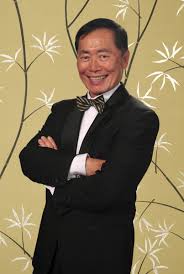
Bond may swing both ways? Double Oh my!
Bond’s Best Pick-up Line: “Who says it’s my first time.” One small step for James Bond, one giant leap for mankind. We are at a truly remarkable place in our culture. Bond, the symbol of all that is masculine and sexually desired by women is actually made cooler, smarter, more worldly, and indeed more powerful by admitting (all be it with a HUGE wink) to a homosexual encounter. Is he bluffing? Perhaps. Does it matter? I don’t think so. Bond was on the forefront of the sexual revolution in the 60’s and while he’s not exactly breaking ground here, it’s important to not overlook what has happened here. The ultimate ladies man, the guy who’s “had em all over the world,” may have had a funky night or two with some boys in Brighton. Bravo Bond, and hats off to yah.
Number of Woman 007 Beds: Three. While Bond is slumming it in his beachfront hut, we see he had some companionship. We also have the aforementioned shower assault with Severine. Nether of these are interesting or help us understand Bond in a film that strives to give us a look behind the double 0. And that is why the Eve encounter is fascinating. It’s at this point Blog James Blog will reveal Eve is Moneypenny. More on that below but what is important for this bit is how the encounter unfolds. A full 180 from the creepy, gross, disposable, bad porn film execution of the Severine encounter, this hook up has hooks. It’s shot beautiful and has beats to bring us in. The characters dance around each other, slowly coming to center, giving the encounter weight, beauty, and emotion. There is even an element of danger as the woman who previously shot bond is not holding a straight razor to his face. It’s all manages to be super sexy without showing us anything close to sex. In fact, the scene was handled with such delicacy that at first I wasn’t even sure our MI6 heroes did the deed. Perhaps they finished the bottle of wine and fell asleep on the couch snuggled in each other’s arms? This thought was immediately shatter when the next shot cuts to the night sky, full of exploding fireworks while Bond, standing erect on a long canoe shaped boat, is seen piercing through the mouth of a dragon. So much for subtle.
Number of People 007 Kills: 24ish. This is a violent Bond and the body count becomes murky from the get go. The open features those classic Hollywood “Get out of R rated violence” calling cards like dudes crawling out of overturned cars or getting up and shaking their heads after smashing a motorcycle into a wall. For all the shooting and crashing and fruit cart calamity I marking the open as a zero kill sequence. The first confirmed use of the double 0 would be Patrice and even this could be argued. Bond is holding onto Patrice preventing him from falling to the street way below. Bond, in fact, wants him to live so he will cough up his employer’s name. Alas, the grip holds not and humpty dumpty had a great fall. Not sure if this was by Patrice’s or Bond’s hand but lets put it in James’ ledger. The next scratch off marks the return of a wonderful Bond staple we haven’t seen in forever; death by exotic animal! I stand and applaud Mendes and crew for the dragon eating demise of the faceless baddie at the casino and Blog James Blog will officially go on record as saying “bring death by mauling back.” The climax to the second act features a shootout at M’s inquiry hearing but much like the open, bullets fly with no confirmed kills.  In fact it’s not till the final shoot out at Jimmy’s childhood home, Skyfall, that we can say with a certainty 21 goons meet their demise. How do we know? Well, twelve came a walking across the foggy front yard and another 10 (nine plus Silva) arrived via helicopter. Bond took out three with a shotgun, another to save Kincade and still another to save M. Two go down with the ‘sploded copper (At Blog James Blog downed choppers = two dead). And then the house blows up taking care of any stragglers save Silva and that dude on the ice. The underwater battle that follows with the dude on the ice is Bond 101 but the leg stranglehold adds a nice new wrinkle.
Most Outrageous Death/s: Severine’s senseless offing would be the obvious choice but since we’ve pretty much covered that at this point lets go with how un-outrageous Silva’s death is. This is a series that has offed lead baddies by dipping them in radiated water, fill them with compressed gas, shoving them out an airlock into space, and in the case of the longest running and most notorious Bond nemeses, getting dump from a helicopter skid while sitting in a wheelchair into an industrial smokestack. By that measure, a knife to the back is down right pedestrian. But it works in the context of the film. Stabbing is one of the more intimate ways to kill someone; you’ve got to be close and get dirty. This is why knifes work so well for horror films. And this is as intimate as a killing can get; Bond is the good son protecting mom from the evil son. A knife in the rats back seems 100% appropriate. Leaving Silva in the desert to drink motor oil wouldn’t have done at all.
Miss. Moneypenny: Loyal reads know that Blog James Blog has long held a torch for the lovely, long suffering Miss. Moneypenny. Her absents in the Craig era was an unwelcome side effect of the reboot and Skyfall more then corrects this oversight. Moneypenny gets more screen time in Bond 23 then she had in the previous 22 combine. The Bond/Moneypenny flirting always hinted at a unknown past history, especial when it was Connery placing his cap on the rack, but we never learned exactly what the story was … til now. Moneypenny shoots Bond and for all she and the rest of MI6 knows, kills him. Think about that for a moment. We are not talking about showing up at work the morning after some questionable office Christmas party behavior. We are talking about reporting to MI6 after having failed the mission of recovering the most import secrete England has only to have to write the report of how you killed the number one agent. Then, the guy you killed returns and you both get another shot to right the wrong of that mission leading to the canoe trip into the dragon’s mouth, a euphemism I pray never takes hold. And as if that wasn’t enough, Moneypenny is reimaged as Uma Thurman in Kill Bill mode crossed with Wonder Woman and a healthily dose of Sigourney Weaver’s Ripley.

Meet the new Moneypenny
She is every bit in brain, body, and brawn a perfect match for James, and as played by Naomie Harris she carries off the quip heavy flirting effortlessly. I can’t wait to see where Moneypenny, now perched at the desk next to the hat rack and across from the brown, padded door, and Bond go from here.
M: Skyfall is M’s movie and she wears it well. It’s bittersweet that we learn all about M only to say good-by but as a storytelling device it works wonderfully. By the third act we know how it’s going to end and when it finally does it’s still a gut punch. M is the Bond girl who requires saving from the baddie but as was the case with his last love Vesper, Bond fails. But first things first, this film gives us M and Bond in a more complex relationship then we ever could have imaged. After M gave the order that ends up with Bond dead she pens his obit, a piece James found “appalling” as she knew he would. When Bond finally comes in, he breaks into M’s flat and waits for her in a darken corner. You’ll recall she warned him never to do that again in Casino Royale lest he be shot. This time M asks 007 what took him so long. It’s these moments that raise the stakes in Bond and M’s relationship and by the time she fudges his test numbers to get him back on active duty, you know this is the deepest relationship Bond has had with anyone, his long buried natural mother included. Not for nothing do orphans make the best agents and when Bond says, “yes ma’am” it comes out sounding like “mum.” For her curtain call, M gets to do a bit of everything; quote Tennyson (lines learned from her late husband) and interrogate prisoners. She abuses her power and is humbled by her status. While Bond is drowning in a bottle of rum M is sipping bourbon fighting for her job, her department, and her country. When confronting the stuffed-shirt bureaucrats M is in fact arguing Bond films critics; Bond is still relevant, maybe now more then ever. And like every modern Bond girl, M gets her moment to kick ass and does so in an empowering and plausible way. When she finally leaves the stage she does so with class and dignity. RIP M, “The old order changeth, yielding place to new.” The new in this case is old again as Malory takes up residence behind the leather padded door at the dark mahogany desk where he passes off files marked “Top Secrete” to Bond. Yes, we were sad to see Dame Judy die, but the last scene, complete with Moneypenny and hat rack, made your faithful Blog James Blog, errr….. blogger, more excite about Jimmy B’s future then we’ve been in a long time.
Q: Q still has spots, James says so himself. This is to say he is young or not fully formed. He needs to cook a bit longer and mature. Unlike Moneypenny and M, and Bond for that matter, all of who are real characters in this film, Q comes across more as a billboard on which to advertise an idea. I can see this character, and Ben Whishaw, growing into something more but here he is half-baked. His opening scene is nice in that Bond instantly likes him and I enjoy the idea of some affection between Q and Bond. I also like Q as a young (Emo) tech guy because that’s what he would be in 2012. But when he spots off about not really going in for exploding pens any more, it feels like a blinking neon sign shouting “this aint your dad’s Bond.” Q isn’t a  character, he’s a plot device. His purpose is to anchor the second act and kick off the third. Bond returns to find MI6 has passed him by and Q is his guide (literally in the case of the tube station) through this unknown word. But the teck world is flawed as the baddie uses Q tech savvy to his advantage and Trojan horses his way in and out of MI6. Q let the baddie go, all be it unwittingly, so Bond must go off the grid, return to the past where there are no computers for Silva to take advantage of, so we can have a old fashioned Rio Bravo showdown that ends with the two adversaries face to face, the last rats on the island. Again, as mechanics to move the plot it all works quite well and if it was another character, one we don’t have a history with and is just here for the film, fine. However, Q is on Bond Mt. Rushmore with M, Moneypenny and Jimmy B himself. I want more from Q especially since everyone else was given a chance to shine in this film. Hopefully future installments will give the gadget guru more to do.
List of Gadgets: If I don’t particularly care for beloved characters being reduced to symbols and plot points, objects work as perfect metaphors and such. So, since we all have James Bond G4 teck in our pockets, the film was smart to present us with an elegantly simple box containing a Welther PPK S 9mm (all be it with finger print ID, something the NRA will not allow the average citizen to have because freedom) and a wee radio. And that’s all MI6 has to issue. And no, I didn’t forget about that old grey auto in storage in Brixton.
Gadgets/British Government Property Bond Destroys: About that old grey car … it gets blown up. Yep, the ’64 Goldfinger Aston Martin DB5 with the headlight guns, ejector passenger seat, and Homer Simpson cup holders gets sent off to the great junkyard in the sky. Bond is also present for the destruction and a tube stations and derailment of a speeding subway but I think we can bill Silva for that one. No, outside the car, Bond is responsible for very little government owned property destruction. Now, Moneypenny on the other hand? She busts up a company car (Ranger Rover?), shreds half the city of London (the reconstructions costs presumably coming out of English tax payer pockets), and shoots and nearly kills MI6’s most valuable human asset, 007, who then must be retrained at god knows what cost. No wonder this chick ended up behind a desk, she a menace!

Fruit destruction never gets old…
Other Property Destroyed: I’ve become obsessed with the upsetting of fruit carts in Bond films. I feel Sam Mendes maybe similarly fascinated by this phenomena. The open features all kinds of vegetable stand, nut barrel, and fruit cart mayhem and that’s before we drive two motorcycles down the main aisle of the grand bazar. What is it about smashing into fruits, vegetables, and dry goods that is so satisfying? Is it the variety of color, shapes and sizes? Is it the wet, juicy insides going splat? Is it a cheep prop that can be used by craft services after the stunt is complete? No idea, but much like fat guys riding motorcycles, the gag gets me every time. Less satisfying are the barrage of Beetles Bond knocks off the train as he opens a passenger car like a can of tuna. It was the only time in the film I felt I was getting hit over the head with product placement that had zero to do with anything outside of product placement. There are a few broken windows in Shanghai and we already discussed the London Underground (not his fault) but the destruction remains relatively light until the third act. Here, the Rio Bravo stand off explodes to Bondian heights with blowed up cars, helicopters, and finally Bond’s childhood home, “I always hated this place.” Mendes is in full on Filmmaker mode here using the setting and color pallet to expand the mood and tone. The stone house getting turned into Swiss chess by the helicopters happens as the sun sets on Scotland. The spotlight from the chopper creates shafts of light pouring thought the bullet holes in the home. The fire red explosions pop out from the dark blue backdrop of the swamp. It can’t be overstated how important and amazing it is to watch great directors take what could be a routine action sequence and make it more, using tools like symbolism and visual cues to tie the sequence to the greater whole.

… and neither does this
Bond’s parents are burred here and this is where he will loose his surrogate mother. The past can be both grounding and inhibiting and here, in one night, both the baggage and the roots that made Craig’s Bond end up a pile of rubble in the fog of a swamp. Where will the future lead? Also, I wonder if any bananas were destroyed in that old houses pantry?
Felix Leiter: We get a look at Bond’s future in a little prolog featuring the new M. Since we don’t have Felix in the film, the first Craig entry in which the CIA man is absent, I will focus on Gareth Mallory, the new M played by Raffe “Don’t call me Ralph” Fiennes. I must say I’m excited about the new M as he looks to be bringing something new to the table. He starts off as a “by the books” guy but quickly shows he has more sides to him. Mallory has spent time in the field and is not unsympathetic to cutting corners or even breaking a rule or two in order to get the job done. However, he is now behind the desk and has sat in the inquiries where his predecessor was raked over the hot coals, so it will be interesting to see how the new M squares these angles and how that in return will affect his working relationship with Bond. Also, what’s his drink?
Best One Liners/Quips: Bond on M “She never tired me to a chair.” Silva “Her loss.”
 Bond Cars: Bond drives more cars then he sleeps with women in this film. I’m sure there’s a joke there somewhere, I’m just unwilling to find it. The motorcycle at the top of the film is a Honda CRF250R. This could be the Cadillac of motorbikes or the Honda; I have no idea. I do think its odd to say Bond and Honda in the same sentence. In Shanghai Bond speeds around in a sexy little beast known to those who know cars as the Mercedes-Benz S-Class and to me as the one he drove that was not the Aston Martin. He also tools around in M’s Jag. That one I could pick off. The model you ask? Black, clearly. Oh OK Jaguar XJ. And then the classic Goldfinger Aston Martin DB5 shows up complete with the front shooters, the eject button, and original theme music.
Bond Timepiece: According to the Omega website Bond sports the Planet Ocean 600 M Omega Co-Axial 42 mm in Skyfall however I don’t recall seeing his watch in the film.
Other Notable Bond Accessories: The classic hits keep coming, the trusty Welther PPK S 9mm short is the sidearm of choice. And I must ask, did he not look like the most badass chauffeur in the history of hacks waiting for Patrice in Shanghai? Finally, I’ve said it before and I’ll say it again, no one, not even Clooney, can wear the shit out of a suit like Craig. As the late, great Warren Zevon once sang “Uhhh, I’d like to meet his tailor. Ahhhhhoooooooooooo”
Number of Drinks 007 Consumes: We have had rum soaked adventures in the past have we not Mr. Bond but this, old drinking buddy of mine, this takes the cake… and scars the liver. I can’t say definitively and at some point I will go back and count all the bottles of beer on the wall from each film but if I had to guess, this is the booziest of them all. And not just the drink this time as noted by the good doctor at MI6, “alcohol and substance addiction indicated.” Ohhh James. The first time we see Bond post “official” death he’s lying in a shack on the beach, one arm around a sleep brunette and the other clutching a half finished bottle of something. This being the beach, lets call it rum. I don’t know what he’s drinking at the bar but its clear and packs a punch. Not that it stops him from reach behind the bar for another when the sun comes up. Fear and Loathing in Las Bond continues at chez M where 007 confronts Dench with a bottle of the bosses Bourbon strengthening his resolve. He also looks like stir fried shit finally answering Ebert’s question; does James Bond ever get hangovers? Bond’s time with Severine is bookend by to belts of booze. When he first meets her at the casino bar it’s a shaken martini while right before her untimely demise on Silva’s island it’s a gulp of Scotch, a 50 year old McClain, a favorite of Bond’s or so Silva is told. The 1962 on the Scotch label stands out as a not so subtitle nod to the first time a Bond, a Scott named Sean, graced the big screen.  Finally, we don’t see it but do you think Bond was sitting in that cold dark house waiting to get shot at by Silva without a little liquid courage? For his sake I hope not.
Bond’s Gambling Winnings: Here is where I want more information. I love that Patrice was paid for the Shanghai job in a single chip and Bond’s the one who shows up to cash it. Talk about gambling! Then, he later encourages Moneypenny to put the full 4 million Euro all on red. Awesome. What I don’t know, and maybe someone can help me out, is what game is Bond playing when he gets up from the table at the casino?
 List of Locations: The end credits inform us that Skyfall was filmed at Pinewood and Longcross Studios London and on location in Turkey, China, Japan, Scotland and England. They save the best for last because if anyone, or anything, is the star of this film, it’s the UK. I’ve pretty much hammered this home at this point but Mendes had made a love letter to his home country, and in doing so makes Bond and England one, not unlike Richard Donner did with his first two Superman films, making the flying alien a surrogate of everything we want America to be. It was just four short months before this film that James Bond, not Daniel Craig, but Bond, had the honor of escorting The Queen to her Royal box for the ultimate show case of Great Britain, her people, and her culture, The London Olympic Games. So when Bond is bleeding, battered, and all together lost and purposeless, so is England. As a New Yorker, I spot bullshit in films that are “supposed” to be in NYC a mile away and as someone who’s never been to London, I know for a fact it’s a true London film. The double decker red busses maybe on tourist postcards, those who know London know the tube is the way to go, and so it is here. Not for nothing is the new MI6 in Churchill’s old bunker. And when we finally do leave the stony confines of the old city, we wind up a mountain road, not unlike the opening shots of the Shining (1980), in the most iconic Bond-mobile to ancient Scottish ground, where Bond will be reborn once again. The film ends not in the dark, fog covered church where M breaths her last breath but on a London rooftop, where Bond watches the sun rise of a new dawn for England, her people, and Bond himself.
Bonds Special Abilities Displayed: I love me trains. Spend a lot time on em and maybe as much time waiting for em. Most of time I read a book, or play games on my phone, or watch the rats scurry along the tracks avoiding the third rail. But sometime I just zone out and thinking about the trains. One of my long running fantasies that I return to often occurs when I find myself swiping my metro card and going through the turnstile as the doors close on my train and it begins to pull out of the station. I envision myself running beside the train, keeping pace at first but then it starts to accelerate and pull out of the station at a much quicker speed. I continue to run, inching my way closer to the yellow line on the platforms edge. As the final car pulls past me, I take a flying leap off the platform and grab the chains the run across the back door of the train and hold on for dear life as I pull myself up onto the little ledge, open the door, walk on the last car as even jaded New Yorkers look on slack-jawed, and I take my set as if nothing has happened. I can’t be the only rail commuter who’s had this thought, right? Well dear reader, no one less then James Bond himself had a similar idea and in this film he lived out my most extravagant subway fantasy. Got to love this guy.
Final Thoughts: Lets call it the three-year rule. When EON waits three or more years between Bond films … zang, lightning in a bottle. The Spy Who Loved Me (1977), GoldenEye (1995), Casino Royale (2006) and now Skyfall (2012) are the only four films with more then two years between them and their predecessor. Obviously these aren’t the only great Bond films but with the larger then two year lead-time EON is batting 4 for 4. I understand demands of the marketplace, keeping talent in house, etc. but there does seem to be diminishing returns the further EON goes on with the two every year count. I guess what I’m saying is, slow it down man, great things to those who wait. In Craig’s third film he pulls of the trick he failed in his first. The idea back then was to get back to basics with Bond, reinvent him as a person with a soul AKA a double 0 for aughts. Casino got three quarters of the way but ultimately failed on this score thanks to the weak love interest Vesper. The five-story building sinking with her into the canals of Venice helped no one. Yes, we have Bond running out of an exploding building that sinks into the swamp here, but that building means something and the love interest he fails to save here, M, packs a punch Vesper never could. So when Bond comes out the other side, reporting to a new M behind the old/new desk, he is truly a changed man.  Just as important, the Bond beats are back. Abandon in the interest of reinvention were many of the wonderful things that make Bond Bond and here they are reimagined, old new again, proving just how durable the backbone of this mythology is. A full 50 years and 23 films later the Bond formula can still be fresh and faithful at the same time. I missed the quipping, confident Bond and here he is. I had less fun with Moneypenny on hiatus and now that she’s back, along with Q, flawed as he maybe, something seams right. And then there is the stuff that goes beyond what we have done before. Skyfall explores Bond’s past in way we’ve never seen, 007 finally goes rouge in a way that works, he is given a lady to save who is worth saving, on and on and on. Mendes did all this and more, giving us a thinking, surreal, lovely film with a head and a heart. And yet, upon its release last November, all of this somehow seamed to be lost among a group of folks who fancy themselves fans but in fact are anything but. I’m of course referring to articles like this one and there are many more, meaner ones where that came from. The whole idea of film criticism as I understand it is to take a look at what works in a movie and what doesn’t, give it some context, and try to figure out why things turned out the way they did. The idea is to learn something. These people are not criticizing Skyfall, they are, as the Brits say, taking the piss. To quibble over things like how did Silvia know Bond would be in that train station at that time to blow the hole and have the 6:43 to Kings Cross come down on 007’s head is missing the forest for love of snark. Why does it matter? This is a Bond film, so of course it happened. And please don’t every forget, this film was dead in the water two years ago and what Mendes and crew deliver from the ashes is nothing short of a Bond film ranking in the top five of all time. Does it have problems? Some big ones in fact, but that’s Bond. Does the Fort Knox plot of Goldfinger hold up under any scrutiny? Hell and no but 48 years later is that what we remember? Hell and no. We talk about Jill Masterson’s death by gold paint and Oddjob’s hat and Goldfinger’s crotch laser and Pussy Galore’s flying circus and the Aston Martin and tuxedos under wetsuit and on and on and on. Even one of the greatest albums of all time, Dylan’s Blond on Blond, has problems. But do you let that ruin the entire record? Hell and no. Every fan of the bard knows exactly how handle “Rainy Day Women #12 & 35;” simply pretend it doesn’t exist and free yourself to fall in love with everything else.
Martini ratings:
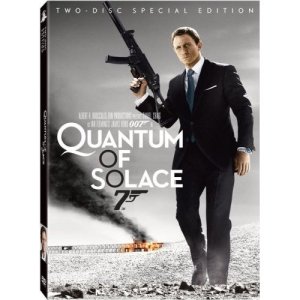 Title: Quantum of Solace
 Film Length: 1 hour 46 minutes. Casino Royale was the longest Bond film at 2 hours and 24 minutes. Indeed the last outing received some criticism for dragging so perhaps that explains the sub two hour run time. But as we discussed then it aint how long the flick is, it’s how long the flick feels. The Godfather (1972) clocks in at 2 hours and 55 minutes with not wasted moment nor a viewer complaint. The other side of that coin, Quantum maybe the shortest Bond film ever by a bunch but it feels like the longest by double.
 Reported Budget: $200,000,000 estimated. This maybe one of, if not the worst, directed Bond films but in all truthfulness, it is not the worst “looking” Bond film. That dubious honor would go to the Tamahori helmed CGI nightmare Die Another Day (2002). While this movie is not fun to watch it does have a sepia tone, saturated look that gives locations, like the Mars looking landscape swallowing the hotel in the finale, an otherworldly quality that attempts to add some mystery. If we were feeling generous, perhaps we could even go so far as to give Forest the benefit of the doubt and say he worked with what he had, what with the script being incomplete and all that. Perhaps he slashed and hacked his film to bits hoping the audience would be so distracted they wouldn’t notice the glaring lack of story. But just when I think about cutting the director some slack I come up with two hundred million reasons to say good riddance to all that. “Working with what you have” and “lack of” anything should never enter the conversion when discussing a $200 million dollar picture. Sorry folks, but that’s the way the game is played. If you’re Alex Rodriguez you can take Steinbrenner’s $275 million, but if your numbers drop below fantastic to magnificent, be prepared to hear the boo birds. Deliver the goods or clear out for the 50 or so other talented players, or in this case, directors in Hollywood who can. As A.O. Scott told David Carr recently “This is not a progressive kindergarten.” No points for effort and the like; with great money comes great expectations, that’s the way it works. And believe me they spent the big bucks on this picture. “More time on location then any previous Bond!” brags the press packet. Large segments of the outtakes are given over to pieces about the new cameras and mounts that were invented for the car and airplane chases in this film. The unedited footage shot by these expensive cameras is fantastic stuff but one assumes they didn’t spend all that money to make nice looking DVD extras. None of the potential that is seen in these shots makes onto the finished movie. The movie is such a unholy cacophony of unconnected images that perhaps .05 cents of every dollar makes it up on the screen in anyway we can see. This has nothing to do with a script and everything to do with the production team lead by the director. Around the time this film was released Quentin Tarantino offered (at least through the press, who knows if he seriously sat down with EON) to make a Bond film for $50M, feeling the big money was killing Bond films. We can debate all day about how you feel about Mr. Tarantino (Me? Love the guy) but what you can not deny is were he handed a Bond movie it would (A) not look like it was edited with a weed-whacker, (B) the script would be water tight and (C) all on a quarter of the money to boot. Not that money was any concern, I mean, it’s not like
 Jarring. The cut, cut, cut edits that take us from lakeside to desert to Inca ruins? Disorientating. The Jeeps flying off cliffs and guns blasting this way and that and all the GOD DAMN NOISE!!!! Beyond annoying. We end up watching Bond screech into a town (Siena Italy according to the flourish font on the screen) where he finally stops, opens his truck, and looks down at a man from a trademark Tarantino camera angle. “Its time to get out” Bond says to the man in the trunk who we recognize as Mr. White from the previous film. This is all meant to draw us in to Bond world. “It crazy and fast and anything can happen at anytime! This will surly make the audience
  When you just go to crazy town and throw everything on the screen with no context, nothing has impact because when anything can happen there are no consequences or stakes or, you know, reason to care. What you are left with is a geek show or an episode of the “Family Guy.” My note from 26:00 describes the film slowing down for lots of talk about nothing that makes sense. “What the f**k is going on?” I ask the wife who answers “F**ked if I know?” and so on and so on. Upon second viewing I picked up on quite a bit more….I think. Best I can tell Bond catches up with M’s former bodyguard Mitchell. Mitchell has some bills in his wallet that were traced to Le Chiffre. A Mr. Slate appears to be using some of the Le Chiffre money in Haiti so Bond is off to check this out. Now, if the Le Chiffre money was marked anyway, why do we need Michele to link us to Slate in Haiti? We don’t. It could have been “M, we are seeing some of the Le Chiffre money being spent in Haiti” and Bob’s your uncle. But that’s what this film does, take the simple and make it incomprehensible with hopes you will not notice that very little is going on. Somehow this all leads to Bond throwing his badge and gun on his pissed off Capitan’s before he goes out to right the worlds wrongs as a rouge cop. This brings us back to an overall issue with Bond films at large. EON can never get the “Bond is off on his own and this time it’s personal” theme right. It’s been attempted in various ways several different times during the near 50-year run of the franchise and it’s never quite executed properly. Why has this seemingly simple idea never worked? I think it has to do with the fact that Bond has no home, no family, and exists only for the job, that of serving England. In fact, the stuff he enjoys, the strong booze, the fast cars, the one night stands in the fancy hotels, and yes, the gun play with many, many baddies, are all fringe benefits of the job. Bond exists only to be 007, a spy in Her Majesty’s Secrete Service. Take that away and he’s a lost soul with no reason for being. Even this darker more complex Bond can’t escape that one simple fact; without the crown to serve and protect, James is nothing. Meet the new Bond, same as the old Bond.
 Villain’s Plot: Greene is high up on the food chain of an origination called Quantum, a loose network of terrorist, shady financers, and low level gun tooting ne’er-do-wells. Their latest endeavor sees Greene working to destabilize Haiti in order to get a new guy in power who will turn a blind eye to sweat shops or some such nonsense. Greene then moves onto cutting deals with the deposed dictator of Bolivia, General Medrano. Greene promises Medrano he will have his country back with in a week in exchange for a parcel of “worthless” (wink wink) desert land. Greene has also roped in the CIA who are helping him because they think they are going to get some oil out of the deal, even thought Medrano assures everyone there is no oil to be found. Or is it the diamond mine that also does not exist on this worthless land which piqued the CIA interest? And how exactly does the girl, who it is strongly implied was molested by the General, tie into all of this wheeling and dealing? I have not the foggiest. Turns out Greene and his goons are interested in the land so they can create a drought by hording water and selling it back to Medrano at a premium. Indeed, there are shades o Chinatown (1974) another film that is not easy to decode, but here is the thing; Chinatown is genius and Quantum is shit. I think the biggest reason Greene fails as a villain, and to a larger extent Quantum fails as a SPECTRE like outfit, is we are never convinced Greene and his gang can pull off any of this nation building because we never see any of it happening. It’s all meetings and talk but nothing in the world is every threatened. Yes, watching Blofeld lord over huge weapons of mass destruction from his grand hideaways is dated and cheesy to the modern eye, but you never doubted he was capable of doing what he said he would. “By God, that huge missile/laser/sun beam gun could crack to world in two! Bond better stop the feline stroking madman or else…” Here, we get one shot of a cave full of water and one shot of three natives around a dry spigot and that’s it. This does not serve to give us dire stakes. I appreciate Quantum conquering worlds with a suitcase full of money and well-drafted documents but even that is kept foggy. We never really see or understand what Quantum does, how they do it, or frankly, why they must be stopped.
 cover as they plot to blow up the London 2012 Olympics, having been invited to choreograph a huge opening ceremony dance party sponsored by their club. See what I’m doing here? Giving writers ideas for ANYTHING better then the deadbeat baddies we get in this film. And I’m just spit balling here fellas, this took me all of five seconds, surly you can bang your heads together and come up with something…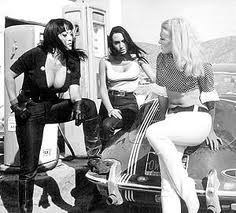
 dude to get his goodie-bag and then shoots two or three others while escaping. Hans the bodyguard is tossed off a roof and when a plane hits a mountain. (Another rather common obit line for thugs in Bonds world.) I count that as two dead. Bond makes like Ice-T and becomes a cop killer twice but to be fair they were corrupt, killed Mathis, and vote republican so no ones going to miss them. Bond kills two in a Jeep when storming the hotel. He shoots two more (at least) and kills one more confirmed when he blows up the hotel but I’m sure there were more burning baddies that we simply didn’t see.
 “Well, then the right people kept their jobs.” Remember the whole revenge for Vesper thing that’s been going on for two freaking films at this point? Bond “Congratulations, you were right?” M “About what?” Bond “About Vesper.” See, everything taken care of, and roll cred… What? Oh you want some Greene closure too? OK. M “They found Greene dead in the middle of the Bolivian desert of all places. Two bullets in the back of his skull. They found motor oil in his stomach.” Now what in holy f**k does that mean? I get the whole giving him the motor oil as an old “I know you covered my lady in oil ha ha anit life a gas” gag, but wouldn’t Greene drop the oil can, like immediately, and begin walking? He sure as shit didn’t drink it himself? Nor would he be able to put two bullets in the back of his own head so, who killed him? Quantum? Why? If it’s because he screwed up then why make such a spectacle of the thing with the oil and what have you? Doesn’t Quantum want to not draw attention to them selves and let that trial just go cold with Greene? And again, if I may, oil has NOTHING TO SO WITH THE STORY! Jesus, here goes that unraveling sweater again…my head hurts, I’m going to get some more of that Kettle One.
 This was M at his most human. In this film, Dench bounces wildly between all three modes, sometime in the very same scene, making her a plot device and nothing close to a character. All of this while at the same time being stupid enough to be duped by her body guard of 5 years and still having no idea how Vesper fits into the equation until that final button scene where all is explained including the secret to time travel (something about 1.21 gigawatts.) Like almost every actor who singed on for this movie, Dench deserves better. That said M’s executive bathroom is a marvel in production design.
 Gadgets/British Government Property Bond Destroys: At the very top Bond’s Aston Martin get shot up real good. Perhaps this pissed the bean counters in the Ministry of Taxation off as 007 is sans car after the opening credits roll.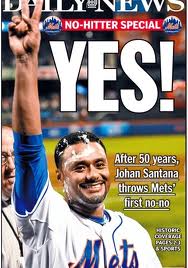
 Best One Liners/Quips: When Bond shows up at Mathis’s house, the host offers “I have pills for everything.”
 Bond’s Gambling Winnings: As if this film didn’t have 99 problems to begin with Bond never gets to lay a bet.
 On one level because I didn’t know what as going on but on a deeper level because I felt I’d been duped, like a rube who fell for the carnival barkers boasts. The name James Bond got me into the tent but once I paid for entry I was presented with nothing but smoke and mirrors. I recall there being some bad press at the time, not the lest of which was Daniel Craig was injured at least three times during the making of this movie included an injury to his face, which required four stitches, another to his shoulder, which required 6 surgical screws to be inserted in an operation and his arm in a sling and then his hand was injured when one of his finger tips was sliced off. In this day and age of internet reports from the set such bad mojo can taint the reviews of a film. However, in this case, the 58 Metacritic score seems high. In the 1960’s, Bond invented the modern day hero; smart, sexy, fun and funny. He’s had his ups and down since then, sometimes leading and sometime following cinematic trends and fashions but 007 has always maintained a sense of style. The films were always, in one way or another, effectively Bond. This is first film that is simply a poorly executed action movie with no Bond elements to hold on to. Quantum of Solace is a bad generic thriller coasting on franchise momentum and I think that’s the worst thing I have said about any Bond film in all of my writing. This is Superman 4 (1987), Alien 4 (1997), Indy 4 (2008); films with too much money, too many cooks, too many ways to loose the heart and soul of why the film is being made in the first place. The Daily Mail never reviewed James Bond novels because Ian Fleming had an affair with the wife of the owner, the second Viscount Rothermere. I wish I could take a page out of the Mail and try to pretend this film never existed by erasing it from the record.
 Title: Casino Royale
 Things were so bad Brosnan felt the need to make a statement on the actors behalf. Sir Sean chimed in saying “Craig’s a great choice, really interesting – different. He’s a good actor,” but none of it helped. By the summer of 2006, just months before the film’s release, the story shifted gears and became about the blowback. On July 31, 2006 the WENN website reported that “New James Bond star Daniel Craig has been stunned by the bitter backlash he has received since replacing Piece Brosnan as the secret agent last year. Craig …was disheartened when thousands of fans called on film-makers EON to ditch him and bring back Brosnan – claiming the Munich star was “too ugly” for the role. The 38-year-old star says, ‘I didn’t expect this backlash. You take it in, you can’t help it. I’ve been trying to give 110 per cent since the beginning but after all the fuss, maybe I started giving 115 per cent.’” Good on Craig for taking the right attitude and good on EON for not folding in the face a torch bearing mob, it couldn’t have been easy. Then, in November of 2006, something funny happened on the way to a theater near you. Mainly, people actually saw the film and Craig went from zero to hero quicker then the public changed their mind on Mel Gibson in the summer of 2010. Overnight he became the best Bond yet, better then Connery! Casino Royale was the best Bond picture ever! Q and Moneypenny and Moore and Brosnan were suddenly relics from a forgotten time. This is all fun to look at in retrospect but we have seen it again and again and again on the internet. The truth is, the public was 100% wrong when attacking an actor before seeing his performance and they were equally wrong to dismiss everything that came before him after enjoying his movie. A moment to editorialize, it’s very much this “with us or against” (thanks a lot W) mentality that has come to dominate discourse in the first decade of the 21st century from politics to pop culture. Adding to the ugliness is the speed at which this all happens. We as a public now feel the need to own a thing, chew it up and spit it out, and then once we’re done with it, it’s on to the next hot thing people want to take ownership of. Whatever happened to reflecting on a thing, seeing in the context of history and as a larger piece of work? The sad truth is the public as a whole
  has become utterly stupid and completely entitled at the same time, a deadly combination that makes consumers of pop-culture reactionary buffoons with no rudder to stay on course. This puts the creators of pop-culture products in a position where they simply can not gage the quality of their work based on public reaction or box office numbers and the work suffers. The only thing a creative person can do is give everything to their performance or screenplay or whatever job they may have on a project and once it’s out there, 100% forget about it. Sadly, fewer and fewer people take this attitude and that is why we get nothing but “sure things” like action sequels, remakes, and yes, reboots. This is the state of Hollywood people complain about while shelling out money for the next Transformers film.
 Reported Budget: $150 million estimated, a nice round number and a mere $8 million more then the most expensive previous film four years previous. Bond films have always featured prominent product placement but since the three film deal with BMW for the first Brosnan pictures the corporate financing deals have become s favorite target for critics. In his film The Greatest Movie Ever Sold (2011), provocateur Morgan Spulock focuses in on close-up shots of Ericsson phones in both of Craig’s outings and holds a “special place in hell” for an exchange between 007 and the Bond girl where she asks about his watch. “Rolex?” “Omega” Bond replies. “The fact you are having a conversation about a watch is ridiculous,” hissed Spurlock. If products are arbitrarily thrown into a film or if a plot point is inserted simply to include a product and not as part of the story then yes, call everyone involved out. However, I think Spurlock has his panties in a bunch over a whole lot of nothing in this case. The cell phone is an integral part of the plot in this film and never once did I notice the name on the receiver, big HD flat screen and all. As for the Omega conversation, it’s organic and goes by without creating a bump. There are much worse offenders, like the Q Dollar Car Rental guy selling the BMW in Tomorrow Never Dies (1997). Spurlock needs to relax and go have another Big Mac.
 Opening Action Sequence: We open not with the familiar UA logo and gun barrel but a black and white MGM into Columbia logo. The B&W stock carries over into the film giving it an immediate back to basics, classical feel. The title card tells us we are in Prague, Czech Republic while the glass elevator and modern architecture of the building tell us we are in the present, despite the black and white. A man enters his office to be greeted by another sitting in the dark. “M really doesn’t mind you earning a little money on the side, Dryden. She’d just prefer it if it wasn’t selling secrets.” Dryden sits down, gets his gun ready, and explains the new world of Bond to us in a few short sentences. “Spare me the dramatics Bond. If M was so sure I was bent, she would have sent a double O. Your file shows no kills, it takes two.” Cut to a bathroom, a more saturated black and white, as we witness Bond drowning a man in a sink. This is a violent, hand to hand, close-up death. The look on Bonds face lets us know the kill means something. He is also a quick study. When Dryden pulls his piece and fires on Bond, the gun makes an anticlimactic click. Seeing in Bond’s eye that the first kill has been made, Dryden tries to impart some wisdom “Don’t worry, the second is…” bang! “Yes, considerably” the newly baptized 00 responds, establishing himself as the cold blooded bastard he will need to be. As the camera gives us our first good look at the new Bond, Craig’s face is closer to Connery’s then any other Bond. Pierce was pretty, Moore was stylishly handsome, Lazenby had a models face, and Dalton was a stuffed suit but Craig looks like a soccer hooligan, all be it a very good looking hooligan. He has the creases and rough and tumble face of a man whose been out in the world and raised a bit of hell. His fixed eyes tell you he’s not to be crossed. For his conformation, Bond turns to the camera and shoots down the black and white gun barrel as red blood drips down to fill the frame. Welcome aboard 007.
 looses one hundred and one million, two hundred and six thousand dollars of terrorist money; news the villain greats with a pull off his inhaler. Since these are not the kind of guys who take IOUs, Le Chiffre does what rich guys do when the screw the pooch, quickly try to leverage another bet using highly moneyed connections. How else could he so quickly arrange a high-stakes poker game at the Casino Royale with 10 players, $10 million buy-in, $5 million re-buys, and winner take all for a possible $150 million? Needless to say, Le Chiffre doesn’t plan on loosing. Meanwhile, turns out Bond is the best card player at MI6 and gets the gig. His mission; take the table. For those who don’t play poker and are used to world melting lasers the steaks may seem quite low. On the contrary, this is a chance to de-finance God only knows how many terror attacks and if Le Chiffre doesn’t win, who knows what baddies will crawl out of the wood work to collect. I also can’t stress how well structured and paced the build up is to the big game is. There are zero leaps in logic and Bond learns what’s happening as we do. Leading up to the main event the film is constructed as tightly and precisely as an Omega wrist-watch.
 Villain’s Lair: There are all kinds of poker players and when you sit down at a public table you never know what kind is sitting across from you. The first time we get a feel for what kind of a player Le Chiffre is he’s hosting two others on board his yacht. While another player is deciding how to bet, Le Chiffre does one of the more obnoxious things you can do at a table, tell the other guy what he’s looking at. “I have two pair and you have a 17.4% chance of making the straight.” This is the height of arrogance and while it may serve to put an inexperienced or hotheaded opponent on tilt, it is also a poor strategy against more experienced players who will see thought the trick and pick-up tells while doing so. It worked here however as Le Chiffre’s opponent folds. Le Chiffre also has access to an old smelting mill right out of the Saw franchise where he engages in some homoerotic torture. Not that there is anything wrong with that. The homoerotic part that is … no torture is wrong under any circumstance. To clarify, homoerotic fine, torture not, despite what the Republican Party has to say on both subjects. Right, so Le Chiffre cuts a hole out of the bottom of a chair, strips Bond naked, and tries him to said chair. The room is a rusty, filthy dungeon and both men are so sweaty you can smell their body odor through the screen. One of the many genius things Quentin Tarantino does as a writer is have characters explain the horrific things they are doing or going to do. So, when we see it happen, we know exactly what kind of pain/agony the character is going through. Daryl Hannah reading the effects of Black Mamba poison to Michael Madsen as he is experiencing it in Kill Bill Vol. 2 (2004) or Eric Stoltz describing how the needle needs to be rammed through the breast bone in Pulp Fiction (1994) would be two easy examples. Here, Le Chiffre walks around swinging the rope and then gives a light tap to Bond’s under carriage. He screams and we all know what’s coming next and when it does, we feel it with Bond. This is the exact opposite of the North Korean torture scene from the last film. This is real. This is gross. This hurts. But boy oh boy dose Bond put up a heroic front. “I’ve got an itch, down there, do you mind?” Whack! “Ohhhhhhh, no no no, to the right, to the right!” Talk about quips! Eat your heart out Roger Moore.
 Villain’s Coolest Accessory/ Trait: The man cries blood. It’s a wonderful touch. Watching Le Chiffre calmly blot his eye as others look on in horror is simply fantastic. Don’t think so? Picture sitting next to this guy on the subway. He also has a platinum plated asthma inhaler which serves to emphasize this is not a physical guy. He is an intellectual villain in the proud tradition of Bond baddies but unlike others of his stripe, he has no muscle, no Jaws or Oddjob, to step up when the going gets tough. This is an oversight he will regret.
 Bond Girl Actress: Eva Green. A show biz kid born in Paris, Green acted in several films before she became more involved in various other artistic pursuits. That’s all I got and for that reason alone I applaud EON for looking past southern California when it came to casting the Bond girl.
 Maybe if we met this boyfriend at some point and he was just as fantastic as Bond but somehow I don’t think he is. This is a relationship where Vesper is willing to betray her county and Bond, the coolest guy in any room David Bowie is not, for some guy? And the true sticking point here is Bond. This is James Bond who despite all his boozing and skit chasing keeps the mission and his country as priory one. He blew up an embassy for Christ. Now, he is in love and willing to give up everything for a woman who hung him out to dry on his mission way before she stole the money? Back at the game, Bond busted out and lost his first $10 million thanks to a betrayal. He goes out onto a terrace to regroup and get his head together before going back in with his $5 million re-buy. Enter Vesper. Now ladies, the last thing you ought to do is lecture a man who just botched the biggest mission of his career when his full house got crushed by four Jacks. That goes double if you happen to be a co-worker who holds the purse strings for the re-buy. Shut up, give him the money, and let him save the world. But no, Vesper not only refuses to give him the cash, she patronizing to boot. Bond, correctly, snaps calling her a “bloody idiot.” And she is exactly that. She is willing to blow the whole thing and this is BEFORE the boyfriend is kidnapped! She shows no trust in Bond or the mission as laid out by her boss, M, before, during, and after the boyfriend kidnapping incident. Why on God’s green earth would Bond want to spend the rest of his unemployed life with this woman?
 Number of Woman 007 Beds: Two. Origin stories for characters, especially ones we already know, can be quite enjoyable. It’s a blast watching Tobey Maguire soar over the city streets learning the full extent of what is means to be Spider-Man. This is why the first Matrix (1999) succeeded and the next two failed. It’s a lot more fun and interesting to watch Keanu Reeves learn he is Jesus (whaaaooooh) then to watch him be Jesus (ooooooh). After winning Dimitrio’s Aston Martin, Bond pulls the car around to find Solange, Dimitrios wife, surprised but not shocked to find someone other then her husband behind the wheel. “That’s why he was in such a bad mood.” Bond invites her to his place for a drink. “It’s not far.” She hops in, they spin around the parking lot, and end up back at the valet for the Ocean Club. This whole thing is simply delightful, Bond learning on the spot how to take full advantage of his new 00 while developing what would become his modus operandi. This is his first baddy’s lady conquest and he opened the door with superior play at the poker table and an Aston Martin. This is the birth of Bond and Craig plays it, correctly, like he’s a kid in a candy store. Later, while rolling around on the floor of Dimitrios house with his wife Bond actually chuckles to himself. It’s as if he saying “this is my job!” He also pulls what would become a classic out of the Bond playbook. While engaging in liaisons with the lady he casually brings up the hubby, so where is Dimitrios now do you think? Solange, to her credit, knows Bond is using her to get to her husband but she is simply having to much fun to care and plays along. Learning Dimitrios is on the next flight to Miami, Bond hops up, tells the lady he is getting drinks, and out the door he goes, bound for Miami and one step closer to finding the mysterious money man. However, shit, as the kids say, gets real quick when your operating in the world of high intrigue. After thwarting the Miami bombing Bond returns to the Bahamas to find Solange has been killed; no doubt retribution for her betrayal. Bond takes the news that he’s become a black widow in stride and assures M the deceased knew nothing that could compromise his mission. When the next woman he beds, Vesper, also
  ends up dead he finds it not so easy to dismiss. In keeping up with the new improved modernized Bond, the ladies had much to cheer about in this movie as well. It was refreshing to see Bond, not the girl, have the emerging from the sea Ursula Andress moment. While the same reference severed to objectify Halle Berry in the last film, here it somehow has the opposite effects and humanizes Bond. It also made the wife quite happy as she sighed to herself and thanked the gods of cinema it was Craig, and not Moore, in the little baby blue briefs.
 Most Outrageous Death/s: The sinking building, in truth, does feel like another movie. It’s dramatic for sure and it’s not to say this film didn’t have outrageous stunts, but they were more nuts and bolts, the sinking house feels quite CGI and frankly, a little contrived. This all brings us to Vesper caught in the elevator. You know those ads for $19.95 gadgets you can by on TV that are products to solve a problem that doesn’t exist? “Don’t you just hate cutting vegetables” the VO asks as you see an actress handle a knife like she has five thumbs while struggling to slice carrots and you’re sitting there thinking “Just cut the carrots lady.” That’s how I felt watch Vesper in the elevator. She becomes a damsel in distress, someone who needs rescuing when all she needs to do is simply open the door. We know this because after the elevator cage plunges underwater, we see her lock the door and take the key so Bond can’t save her. I know this is meant to be a Jesus giving up her life for her sins moment and I know she saved Bond with the defibrillator and he giving her CPR, unable to save her, is meant to be a full circle moment but in a film that goes out of it’s way to make us feel every punch and make these people real why in hell come up with something so contrived. Again, I can’t stress this enough, all she had to do was open the damn door of the elevator! She proves to be, as Bond so accurately observed, a blood idiot. Anyway she drowns and Mr. White runs away with the money.
 on screen and I defy anyone, no matter how many times they’ve seen the film, to not give a winching “ohhhh” as the car cartwheels to a stop. This is just halftime of a brutal evening that has seen/will see Bond be poisoned, die, brought back to life, betrayed by Mathis, lose his girl, crash his car and end up naked and tied to chair getting his balls beat. But hey, at least he won the $150 million, hey? This is all a very long way of saying the car, he destroys the car. He also goes through a lovely tuxedo while playing the big game; ruined by machete and shower. The shower scene, happening shortly after his battle with machete, shows Bond holding Vesper with hands that have scratched up knuckles from the recent fight. Details, they make all the difference.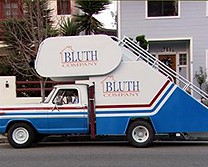
 Best One Liners/Quips: Now the whole world’s going to know that you died scratching my balls!
 In other words, the guy with the Yankees cap is Jeter, a tight player is The Rock, and so on; I imagine everyone does something similar when they play. With this in mind, the last hand of the Le Chiffre invitational is down to four players; proceeding from the dealer we have Ponytail, a grey hair gent with a silver ponytail going down his back, Big Luv, a rotund man in a loud purple suit, Le Chiffre and then Bond. The blinds, I.E. the forced bet or the anti, are at ½ a million and a million. We as an audience join the action already in progress, $24 million in the pot and 8,6,4 all spades along with the ace of hearts are already dealt out on the table. Le Chiffre, first to act, checks as all other players follow suit. Cagey play and so far so good. On the river Lemmy’s favorite card falls, the Ace of Spade. Once again Le Chiffre and Bond check into Ponytail who goes all in for $6 million. Big Luv nearly jumps out of his seat to get his all in, $5 million, pushed forward into the pot. Now Le Chiffre, who Hollywood’s a bit, which is to say he pretends he’s thinking about it, playing with his cards and chips, before doubling the bet to $12 million. Now it’s Bond’s turn to act some and after staring Le Chiffre down a bit he pushes in all his chips, $14.5 million, forward. Le Chiffre looks like Sylvester the moment after he’s swallowed Tweety as he looks down at his house, Aces full of sixes. Le Chiffre lets go of a gasp of a laugh knowing he is about to bust the entire table in one hand, “Well I think I will call you on that one” he says while pushing in all his chips. $150 million in the pot Mathis points out. Showdown. Ponytail is quite pleased with his A high flush to the Q, a monster hand that would win most days in Vegas. However, he couldn’t have been pleased that his last spade came an Ace and indeed here comes Big Luv with a boat, eights full of aces. Le Chiffre, as we saw, has the bigger boat, aces full of six which of course he slow roles as is his custom. So, Ponytail had only four hands that could beat him, Big Luv only two and Le Chiffre is next to the nuts. $1 dollar American to anyone who can predict what Jimmy B is holding. Much has been made of Bond hitting the straight flush (5,7 of Spades) in this situation, rightfully so, and we will get to that, but many things need to be unpacked here.
  Firstly, we learned there was $24M in the pot on forth street which was checked around. Then on the final round of betting everyone is all in with $6M, $5M, $14.5M and $14.5 respectively. If my calculations are correct, and I’m certain they are, that would be $64 million in the middle. I don’t know what kind of operation they are running at the Casino Royale but most of the places I play, if $86 million walked away from the table, someone would notice. But that’s not even the strangest thing. Fifth street is Ponytail all in for $6, Big Luv all in for $5, and then Le Chiffres raises to $12. Why in heavens name would he do that here? It leaves him with only $2.50. Looking across at Bond, he had to see that Bond had $14.50. Why not put him all in here? Or, just call the $6. You would never, ever in this situation leave yourself with only $2.50. It’s like emptying your gun except for one bullet and then saying, OK you shoot all of your bullets at me. If you think you have the best hand, and Le Chiffre dose, pull the trigger or slow play but don’t do a half measure, especially when you see that you and your opponent are evenly stacked. Which brings us to another huge point, are you telling me, after that much time, money, and play in this tournament that Bond and Le Chiffre, the two big stacks at the table, have the exact same amount in chips? The chances of this happening are about the same as getting hit by lightning while driving a motorcycle on the frozen Hudson River. Bond then beating two house and a flush with a straight flush is about the same chance of getting hit by lightning while driving a motorcycle across the frozen Hudson River with Diana Rigg on the back and Bill Clinton in the sidecar while all three of you are harmonizing on the second verse of “Up on Cripple Creek.” No matter how fun it sounds, it will never, ever happen.
 List of Locations: Much of the movie was shot in the Prague, the beautiful old world capital of the Czech Republic. The Madagascar slums and construction site chase scene were filmed is the Bahamas as was the Ocean Club and beach scene. Montenegro, the location of the Casino Royale, looks like a story book fantasy and is a place I would live the rest of my life if I had the means. The Bodies exhibit exteriors were Miami and the airport chase was also Miami as well as three other airports. Pinewood did some set work and the finale was shot in Venice. The coda where Bond confronts Mr. White was shot in George Clooney’s beloved Lake Como. I remember exactly noting from Quantum of Solis (2008), a bad sign right off the bat, but I hope to continue where we left off. Lake Como is simply breathtaking and I want to know who/ what Mr. White is up to. Maybe he works for Blofeld and SPECTURE? Maybe Bond’s quest for vengeance will once again pull him away from MI6? Maybe I’m wishing in vein because while I don’t remember the movie, I remember many did not enjoy it. Oh well, we will cross that bridge when we get to it.
 Final Thoughts: The blurb on the back of my copy of Casino Royale comes from Josh Rothkopf of Time Out New York. “Daniel Craig is the best Bond in the franchise’s history.” I disagree but the line is also understandable. I find Rothkopf to be a very thoughtful critic who truly understand film history and I do not take his comment to be a tossed off platitude. I’m sure he meant it at the time. My question is, if I bumped in Rothkopf at Kettle of Fish tonight, would he still feel that way? I doubt it. Hailed as the future of Bond at the time, today Casino Royale fits quite nicely into the Bond cannon. Indeed, it is a step forward but no more so then other great Bond films of the past. Further, things like Parkour, the Bodies exhibit, the bombing of an airport, the shorting of stocks, the blink and you miss it Richard Branson cameo and even the central poker game are not necessarily dated but they do place this film in a time and place, just like every other Bond. And that’s as it should be. But I think at the time of the film release there was an over enthusiasm for everything about this movie, particularly the praise of Craig. I’m sure this was due in no small part to the pre-release backlash against the actor. Add the fact that it followed Die Another Day (2002), a bad movie that has aged worse then any Bond film not called Moonraker (1979), and I think people went a little nuts for Royale. All this is not to say it’s not a great film, the opposite in fact. 45-years-old when the film came out, the Bond movies didn’t get where they are without adapting and changing, sometimes going the right direction and other times not. This movie takes a leap into positive territory and ends up being one of the stronger entries. The number one reason for this, more important then Craig, is director Martin Campbell who with his two films has proven to be the best Bond director since Terence Young. Guided by his steady hand the film “gets real” and deconstructs one of film’s great heroes. Instead of going big and outrageous, things were boiled down and became a hyper realized reality. The story is a fantastic piece of writing that shows us new angles while reveling where some of James favorite moves come from. It’s back to basics for most of the stunts which are once again exciting and a blast to watch. The baddie is also brought back to earth but still a villain we love to hate as demonstrated in the torture scene. And Craig’s Bond is wonderful; he’s fun, smart, physical and handsome. Both he and Campbell give the character an arc going from wet behind the ears to arrogant and cocky to humbled and hardened. Yes, the poker is ridiculous but it’s also fun to watch. And isn’t that point? I’d bet my entire stack that 90% of the audience for this film wouldn’t know if a straight is better then two pair and that is fine. It really doesn’t matter. The game tonally fits in with the rest of the film in that its beautifully shot, it has significant tension, provides a tight storyline, and is above all fun and exciting. And that’s what it should do.
 Title: Die Another Day
 TV was showing nothing but up to the second news reports, that was if you could still get TV. I had rabbit ears on a small Sony at the time and since broadcasts in the city all came from the top of One World Trade, all I had was fuzz. This meant many trips to local bar to absorb the news while numb myself to it. With all conventional programing preempted, it fell to print, in the form of The Onion, to make one of the first jokes, and not a moment to soon. That now famous front page made it just that much easier for those of us who worked in tall Manhattan office buildings to step onto the elevator. On TV, the holder of the second highest elected office in America, New York Mayor Giuliani, famously appeared on SNL and gave people permission to laugh again, but he was in fact a little late to the party. New York’s twin towers of late night comedy, Letterman and Stewart, had already returned to the air and nakedly, awkwardly and beautifully fumbled with what was funny and appropriate after America’s greatest city, to paraphrase John Updike, got both its front teeth punched out. While New York was carrying on in the proud tradition of Broadway and declaring the show must go on, Jay Leno was still hiding in his bunker of a garage in Burbank, along with the rest of La-La Land. Another irony, the town that makes billions off distorting buildings and mindless killing thousands in action packed fantasies had no idea how to react to the real thing that so many described as “looking just like a movie.” Producers of Zoolander (2001), a comedy about New York’s fashion industry that was released on September 28th, rushed to digitally erase the twin towers from shots of the skyline, an act of vandalism Paramount still needs to square. A trailer featuring a baddies helicopter caught in Spiderman’s web strung between the towers was yanked from TV and theaters. Most hysterically, there was a loud cry urging Peter Jackson and Co. to rename his second Lord of the Rings film, even thought the book on which it was based, “The Two Towers,” was published in 1954. While New Yorkers ran toward the burning buildings to do what we could, Hollywood ran away as fast as they could. It took a New York filmmaker who was never warmly embraced by Hollywood to make the first, and to date best, film dealing directly with September 11th. Spike Lee’s near masterpiece The 25th Hour (2002) is the one of the only non-documentary movies to sift though the aftermath of that day with emotional honesty and in doing so becomes the exception proving the rule; big budget Hollywood style films almost always fail when attempting to tackle large scale horror head on. While Hollywood’s initial response of whitewashing the towers out of existence is inexcusable, that fact that the entertainment industry had the wisdom to tread lightly when taking on such large and at the same time nuanced subject was wise if not commendable. The truth is, most films shouldn’t even try, lest we have another Pearl Harbor (2001) on our hands. For projects like Remember Me (2010) or the Oscar bait Extremely Tasteless and Incredibly Exploitative (2011) it will always be “too soon.” (Ed Note: Full disclosure, I never saw Remember Me or Extremely Tasteless and Incredibly Exploitative and I never will.) Think about how many truly great films deal directly with the holocaust or Hiroshima. For every Schindler’s List (1993) there are 100 cynical train wrecks. You know someday some black hearted executive will release a tear jerker centered around the Japanese tsunami of 3/11/11, no doubt staring Ryan Gosling and Reese Witherspoon, but we can all rest assured it will be a bigger bust at the box-office then John Carter (2012). Indeed films work better in dealing with the incomprehensible through the prism of metaphor, parable, satire or allegory. Think about the Japanese film industry responding to the nuclear bomb attacks on their nation with Godzilla (1954) or Hollywood responding to the AIDS crises with Fatal Attraction (1987). A few years after the fact, with the benefit of perspective, Hollywood did in fact make powerful “post 9/11 films.” Movies like The Departed (2006), Pan’s Labyrinth (2006), There Will Be Blood (2007) and No Country for Old Men (2007), not to mention the countless post-apostolic moves that have come out in the past few years, are movies filled with dread. They all convey a feeling that something evil is out there, it’s coming to get us, and we don’t know who/what it is or when it will strike. In these movies the good guys are compromised, violence can breakout at anytime, and in some cases (No Country, There Will Be Blood) the baddies gets away. Kind of sounds like the 21st Bond film that came out in 2006, don’t yah think? (By the by, with all these 2006/07 releases it would appear five years was the prescribed time to properly digest 9/11.) But for now, we are dealing with Bond 20, released 14 months after the attacks, thirteen months after a “coalition of the willing” hit the ground in Afghanistan and four months before Tony Blair would sully his legacy by jumping in bed with George Bush’s war on Iraq. In the three years James Bond was away, the world did indeed change, but not for Bond. Current events were going way to fast for 007 to catch up, so producers ignored the present and used this, the 40th anniversary and 20th film of the James Bond franchise, to celebrate 007’s rich past.
 Film Length: 2 hours 7 minutes
 As a result, the Tamahori films that I have seen feel like a bunch of different “ad moments” added together. You get slammed into a set piece quickly, and while this works as a “hook” for ads it means sacrificing set-up in a film. Then it’s all wiz-bang with no context until we hit a big climatic finish, but we still have more then 9/10th of the film to go. Strangely, Broccoli and Wilson found this quality in Tamahori to be an asset. For the 40th Anniversary the keepers of the Bond flame felt the need to, as the DVD literature puts it, “Pull out all the stops.” The DVD extras have interviews where the two producers speak proudly about how any given action set piece in this movie would “be the center piece to any other film and we’ve got five.” This bigger is better thinking lead to some of Bond’s biggest disasters and this production has a Moonraker era “Look what we can do!” feel written all over it. It’s the worst impulses of the franchise and yet EON continues to fall into the trap. If you need further evidence that this film was a bloated boondoggle look no further then the “stripped down reboot” follow up Casino Royale (2006). Things are not helped by Wilson and Broccoli’s decision to embraces the worst film making trends of the day, mainly the frantic hack and slash editing style as seen in so many open big/gone next week action films of the time. Christian Wagner, the man who cut Bad Boys (1995) for Michael Bay, one of the worst offenders of the chop it to shit style, was brought on as the editor. Add Wagner’s pacing, or more appropriately lack thereof, to Tamahori’s “Cram it into 30 seconds” storytelling and shooting style and what you have is a big, loud, ugly film with three acts that exist nearly independent of each other. The icing on the cake is Tamahori’s fetishism for Matrix (1999) style camera moves and film speed manipulation. We gets shots of one of the baddies, wearing a wind blown trench coat natch, whirling around with guns blazing in a low angle slow mo that then speed-ramps into double time as the soundtrack assaults the viewer with Whoooossshhh and zipppppsss and lands with a clang! Add the Fast and the Furious (2001) neon car chase, the Richard Branson modeled villain and a Madonna cameo and the film feels more dated then any of the Moore of Connery movies. Die Another Day is just like 95% of action films we see today, the two-minute trailer plays as a better movie then the feature.
 Reported Budget: $142,000,000 estimated.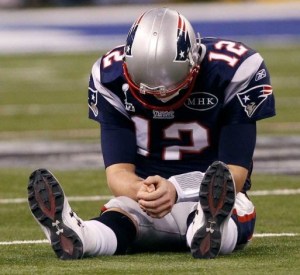
 The only place where Joey Ramone would ever cross paths with Woody Allen would be at a kosher deli. The point is, I love The Clash and London Calling is on my top 25 records of all time list, but so is Blonde on Blonde and “Visions of Johanna” has no place in Bond film. A song should at the very least do no harm, but “London Calling” punches a hole in the Bond universe and leaves a vacuum much in the same way Gidea Park’s “California Girls” did in A View To A Kill (1985). I guess we should at least thank the gods we got the genuine article and not
 Bond’s Mission: So it turns out Bond was tortured for a little longer then the opening credits, more like 14 months if we are to believe the on screen text and length of Bond’s unkempt facial hair. Indeed seeing the always dapper gentleman spy looking like Robinson Crusoe (a role Brosnan played in a 1997 movie) should be more shocking then it is, but credit to Brosnan for trying to pull as much gravity from the situation as he can. When Bond is yanked from his cell and stands before a firing squad, Brosnan plays the scene with a perfect mix of defiance and fear in facing his death. However, the firing squad retreats at the last second and a disembodied voice tells 007 to cross a bridge that extends into a foggy void. Turns out, Bond is being exchanged for another prisoner named Zao who also happens to be the cat who opened the diamond briefcase with the explosives in it. As a result, Zao’s face is now bedazzled with a dozen or so diamonds. Why he didn’t adopt Diamond Head, no one’s favorite 80’s metal band, for his moniker is a mystery. Bond is being exchanged, against his wishes, because the United States had one of their deep cover men in Korea exposed, and they think Bond spilled the beans. The U.S. is willing to give up Zao, who killed four Chinese agents, to get Bond out so he will stop talking. We all know Bond would never talk and so should M but she has her doubts. Bond has his 00 revoked and although it’s never stated, I assume he was going to be handed over to the U.S. This is all very dense on exposition yet thinner then the 2012 NY Mets line up. Forget that Bond’s stunt in the DMZ would have caused a war, forget that the prison exchange makes zero sense and forget that Bond escapes the cell M is holding him in by stopping his heart. What, I didn’t mention that last past? Whelp, yah, that’s what he does. What makes this whole Bond being tortured for 14 months and disavowed by MI6 thing so silly is it has absolutely no lasting repercussions. Bond suffers no metal scars from his ordeal. Besides the stopping his heart trick, he learns nothing from his 14 months of hell and loss of the only livelihood he has ever known. Look I get that this is Bond, but after all he’s been through can he really so cavalierly go back to one-liners and banging babes? The answer according to Die Another Day is hell and yes. It is only through the flimsiest of plot devices that the first 20 minutes of the film have any bearing on the rest. So Bond escapes and goes rogue, hoping to learn who set him up to look like an informant. Bond going rouge seems like a no brainer but just like in Licence To Kill (1987) the great premise is fumbled, bungled and all together botched. The plot quickly becomes a quagmire that bends over backwards in attempts to string together a tale of revenge and betrayal, themes that are never able to cut through story points involving diamond smuggling, space weapons, billionaire playboys and plastic surgery. If a cynical person were to take a step back from the film, they may conclude this movie has no ideas of it’s own but functions as a highlight reel referencing memorable moments from previous films via inside jokes. Take the part where Bond is in his Cuban contacts office and he picks up a bird watching book. Savvy fans know Ian Fleming enjoyed bird watching from his Jamaican estate and he nicked the name James Bond from an author of an ornithology book. The joke is continued further when on the beach, Bond, James Bond introduce himself to the Bond girl as an English man on holiday, in town to observe the birds. See, bird is a British term for woman and Bond is poising as an ornithologist so this is funny. The Bond girl, by the by, emerges from the sea in a bikini with a white knife belt on her hips a la Ursula Andress in Dr. No. Another character makes his entrance into the film skydiving over Buckingham Palace with a Union Jack parachute recalling not only The Spy Who Loves Me (1977) open but also the jet pack fly-over of the villa in Thunderball (1965). Gone is the BMW replace by an Aston Martin and Q’s work shop it littered with everything from the fore mention jet pack to the knife shoe and briefcase seen in From Russia With Love (1963) to the hang-glider from Moonraker (1979) to the mini-jet from Octopussy (1983) and many, many more. In case we missed all of that, when Q gives Bond his watch he comments, “It’s your 20th I believe.” Perhaps with his lack of establishing shots and slash and burning cutting Tamahori was fondly recalling Spootswood’s Tomorrow Never Dies (1997) in which case good on yah … I guess.
 Villain’s Name: Col. Moon or Gustav Graves. Yes, the British playboy diamond miner and the dead guy in the cliff diving hovercraft crash are one in the same. Turns out that after the fall the younger Moon not only lived to, shall we say die another day, but went on to live the most incredible 14 months in human history. I say that with full knowledge of Bob Dylan’s 1965-1966, a period of time during which The Bard wrote, recorded, and released three masterpieces (Bringing It All Back Home, Highway 61 Revisited, and Blonde on Blonde), plugged in and got booed at the Newport Folk Festival, toured Europe twice, was accused of being Judas and changed the face of rock & roll. While Bond was cooling his heels in a Korean prison Col. Moon (deep breath) faked his death, escaped the DMZ, made his way to Cuba, got a DNA transplant that turned the 5’ 9” Korean into a 5’ 11” member of the Shakespearian Acting Company, opened a fake diamond mine in Iceland, convinced his entire diamond smuggling ring to now go thought Iceland, joined the Blades fencing club, corrupted an MI6 agent, fixed the Sydney Olympics, built a greenhouse on a frozen lake, built a diamond infused sun reflector, launched said sun reflector into space and got it working perfectly, and gained the trust of the crown to the point where when we meet Gustav Graves he parachuting into Buckingham Palace to be knighted by The Queen. Ummm, hummm. What you got to say now Zimmerman? Moon’s 14 months “after” his death makes your ‘65-‘66 look like Axle Roses’ 1993 – 2008. Zao, he of the diamond face who was the prisoner exchanged for Bond, also goes AWOL from the Korean army and joins his now Anglo pal Moon in his bid to melt the world, not to stop the world and melt with you. Don’t confuse the two.
 Villain Actor: Toby Stephens. This English actor would be right at home in “Downton Abby.” A capital “
 Was his plan to sell it to the North Korean government? Possible, but then as Graves he kills his father, shooting the general in the head while we watch in slow mo. Was he planning on going rogue with the space weapon all along? Then why be so public about its launch, something he never could have done as Moon? This whole thing doesn’t pass the smell test. There is just no way both these men are the same person with the same goals unless, maybe Moon was going to become Graves the entire time and Bond just gave him a good way to disappear. But even that doesn’t work because Graves tells Bond he modeled this playboy character after the British spy, who he never meet till the day he was chased of the waterfall. Indeed, Die Another Day references nearly every past Bonds film in one way or another but Diamonds Are Forever (1971) casts the largest shadow. In fact, a solid argument could be made that Bond 20 is a remake of Sir Sean’s swan song. In the 1971 film Blofeld makes several clones of himself that result in false deaths and mistaken identities. Blofeld also kills off his former self to take on the identity of a seemingly legit businessman, casino mogul Willard Whyte. The legit business in turn is a front to smuggle diamonds which Blofeld uses to build a star wars death ray. In fact, all that’s missing from Die Another Day is a pair of deadly gymnasts (Bambi and Thumper) and a pair of homosexual hit men (Mr. Kidd and Mr. Wint) and the two movies are nearly identical in terms of not only story but also, sadly, quality.
 Villain’s Coolest Accessory/ Trait: Zao’s diamond face is rather creepy and is actually quite a good idea. The issue is the Zao character is little more then an earned boy for Graves. Zao is a hell of driver but mostly he just kind of walks around shouting orders as his face sparkles under the klieg lights. Besides being an Asian man trapped in a British body, Graves also never sleeps. Somewhat counter intuitively this leads to him having boundless energy. It’s later implied that his gene therapy robs him of sleep but this is never adequately explained.
 Bond Girl Actress: Halle Berry. For the second film in a row the Bond girl is a Hollywood star (Dennis Richards in The World Is Not Enough) and once again it doesn’t work. First off, I know many people absolutely love Mrs. Berry but I must confess I am not among them. I have not seen Monster’s Ball (2001), the film which won Berry the actress Oscar, an award she left the Iceland set of Bond to collect, but I’ve seen her in many other movies and I find her to be rather dull. The first time I remember taking notice of her was as Vivian in Spike Lee’s Jungle Fever (1991). She was good as Gator’s crack-head partner but Samuel Jackson was transcendent, so much so that Cannes invented an award for his performance. Other then that nothing really jumps out. Her Storm in X-Men gets buried by the other team members which is nuts. During the period I read the X-men, mid to late 80’s, Storm was robbed of her powers and continued to lead the X-men while sporting a kick ass Mohawk to boot. Berry clearly needs a new agent after staring in bomb (Swordfish (2001)) after bomb (Gothika (2003)) after bomb (Catwoman (2004)). What has always been great about the Bond babes is their exotic, unknown qualities and nothing is exotic about A-listers who have every bit of their person life out in the open, especially if they gossip page favorites like Halle Berry or Dennis Richards. All that said, I think even Berry’s biggest fans would have to admit she not good in this movie. Her line reading is flat and lifeless one second, too flirty and over the top the next. But to be fair, Berry also had to deal with scenes like the one where she’s tied to a table, which is attached to a robot arm that goes berserk and is waving her around while several out of control lasers cut back and forth barley avoiding her. “Hurry up James or I’m going to be half the woman I used to be.” Not even Meryl Streep could make that work.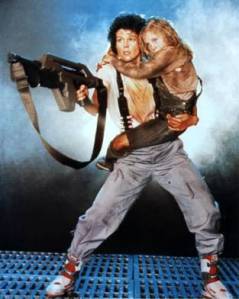
 Bond Girl Sluttiness: Sex has always been strangely chased and rarely exotic in Bond films but here it’s outright bizarre. Tamahori has shown that little things like establishing shots and character development don’t interest him and nowhere is that more on display then the sex scenes. One of the jokes of the Bond films is how quickly women jump into bed with him and I fully support this, but to get to the punch line there must be a joke. The doctor said “Then don’t do that” is not funny unless you know the guy first said “Hey doc, it hurts when I lift my arm like this.” After telling Bond she is a Jinx “Born on Friday the 13th” Bond spends 45 second making bad bird puns and the two are in bed. It’s worth noting the strange jump cuts and the odd fadeout on the wine glasses. The barley sexual encounter looks like a second rate outtake from the Top Gun (1986) sex scene and is as exciting as sitting in traffic at the Lincoln Tunnel. It all feels as if Tamahori has no interest in this mushy stuff and is simply putting it in the film because he’s expect to. He’d rather get it over with as quickly as possible so he can get back to playing with the fast cars and big exploitations. For instance, when Bond is invited to Iceland by Graves, he turns to Mrs. Frost and asks…
 Miss. Moneypenny: GAAHHHHKKK!!!! What the hell is it with these later Bond’s and Moneypenny? She has not had a decent thing to do since the late 1970’s. This is a strong, intriguing character that can give you a ton of storytelling points and in the past few films she’s been reduced to a bad punch line. That said, she has never had to suffer the indignities Tamahori puts dear Miss. Moneypenny though in this film. This is a new low. At one point Bond is sitting at his desk at MI6 (He has a desk? He has an office? This has never come up before…) when he hears a noise. He runs into the hall, draws his PPK, and starts taking out intruders dressed like cat burglars right out of the Batman TV series. As he moves from room to room we get a quick pan of Moneypenny, slouched in her chair at her desk, bleeding from the face, dead. Moneypenny is dead?!?!?! But no no no dear viewer, EON has tricked you. See, Q has a new virtual reality toy and Bond, sporting Men In Black style sunglasses, is simply going through a training exercise. This is a cheat, and a cheep one, but it’s also a set up. After the mission has ended and Bond has saved the world, he is presumed killed in a fiery plane crash. Moneypenny, writing 007’s obit, looks up to see him standing in her office doorway. She gets up, walks over to him, and the two embrace, kissing passionately. Bond then pushing everything on Moneypenny’s desk to the floor and the two start going at it in her office. They are then interrupted by Q’s voice and cut to Moneypenny with the virtual reality glasses on, laying on her back and rolling around while wearing a skirt in the middle of Q’s lab, moaning “OH James.” First off, this is 100% inconsistent with the Moneypenny character in both her feelings for James and her workplace conduct. It’s played as a joke but what is the joke? That Moneypenny was caught masturbating by a co-worker? Could this be any tackier? Why yes it could, we cut to a cabin exterior where we hear Jinx asking James to “Just keep it in a little bit longer.” “Well it has to come out sometime…” Yes, they are in bed but the conversation is about a diamond resting in Jinx’s navel. If this film has shown us anything, it’s that Tamahori has stranger ideas about human sexuality then Rick Santorum. As for Moneypenny I wish she’d been shot, she would have never suffered through this cheap, undignified, and totally unnecessary shaming.
 Q: John Cleese, no longer R, is now Q. Continuity between films, always a dice and fluid thing in the Bond universe, is quite odd here. Cleese’s character was introduced by his predecessor in the previous movie, so we know he is not Major Boothroyd. However, it is 100% understandable that he would become Q, the position at MI6, much like Dench became M even though she is not Sir Miles Messervy. All that said, Cleese is not the bumbling absent-minded professor of the last film but a sharped tongued Bond agitator in the exact same vain as Llewelyn’s Q. He has not the history with Bond nor the seniority to get away with such behavior but there you have it. And now that all said, Cleese can’t help but be funny. As an exasperated man trapped in a lab while Bond has all the fun with his inventions, the Monty Python vet is pitch perfect. Weather he’s calling Bond “double o zero” or telling Bond “I wish I could make you vanish” Cleese’s timing is perfect and he is a pure delight.
 everything that is wrong with Hollywood movies. And here it is, 11 years later. The writers should be ashamed. Anyhow, try to keep up because here we go. We cut from hot springs of Iceland to a base in South Korea where Bond’s boss M tells Bond he needs to stop the “Icarus,” currently raining fire on the DMZ. It’s being controlled by Graves who is at a base in the north. Jinx’s boss Damian Falco tells her to tag along. Cut to the cargo bay of a plane where Bond and Jinx get on one-man glider things called switchblades and jump out of the plane. Cut to a shot of them flying. Cut to a shot of them looking through a chain link fence that would be better suited for a tennis court then protecting a military instillation. In .03 seconds they pick out Graves and see him boarding a plane. “We’ve got to get on that plane.” They start to cut the fence. Cut to them running down the runway of a North Korean airbase, catching up to the taxiing plane, and jumping in the wheel well. Cut to them in the cockpit about to take out the pilot. This all takes up about a minute of real estate. Why bother? It’s so clear the story matters not a hoot, it just about slamming us into the next action set piece. I can see the production meetings now. “Too much talking in this part, we might loose the audience. Cut it down to half a page.” Hitchcock once famously broke it down like this; four guys are sitting at a table playing cards. If the bomb under the table goes off, that’s action. But if the card players don’t know about the bomb under the table and the audience does, that’s suspense. Die Another Day takes the four guys and the table, throws the whole lot out of a 60 story building, and while the guys are falling they get attacked by rabid hawks with laser eyes. It’s not action, its not suspense, it’s a Red Bull induced fever dream determined to keep you so off balance you won’t realize nothing makes sense. So much of this movie plays like a hacks shortcut to film making, and it just plain stinks.
 here. He blows several holes in the walls of the Cuban DNA hospital and in the side of a plane. However, it’s Jinx who sends the aircraft into the sunbeam from hell. This leave the fencing club which, as a dreadlocked attendant pointed out, “needed some redecoration anyway.”
 The film takes an outrageous moment and makes it plausible because it’s done with everyone involved knowing it’s meant to be a lark. Moments later, 007 breaks the mirror in his room to reveal Mr. Chang and three other men spying on him. “You didn’t think I knew you were Chinese secrete service all along Chang.” To which Bond ads “Put your hands down.” Again, in this moment, everything is in the Bond universe we have come to know and love; Bond turning the tables, defusing the situation, and moments later is getting the info he needs, that Zao is in Cuba. It’s all handled with wit and charm, two elements that are rare in the film and completely absent by the time we arrive in Iceland. Bond’s man in Havana is Raoul, a Cuban out of central casting. We meet him drinking coffee and smoke a cigar while working in his open air roof top office that sits above a sweat shop. Then he speaks. Raoul deliciously rolls the cigar smoke around his cheeks as he purrs every line in a low, seductive, monotone. He sums-up his feelings about his communist county by observing “our heath system is second to none.” I wanted to spend the rest of the film with Raoul, watching as he and Bond jumped into a 1957 Chevy and went on a rum soaked adventure across the island. Someone at EON should get on that, along with the evil Q thing.
 “Liver not to good. It’s defiantly him.” While cleaning up at the Hong Kong Yacht Club, Bond enjoys his first post prison drink, a bottle of ’61 Bollinger. At a beach side bar in Cuba Bond has a Mojito. In the next scene while rolling around in bed with Jinx we see two champagne glasses on the dresser. 007 also has two martinis, both with a bad joke chaser. The first is served to him on a turbulent flight, bound for London if memory serves; making Jimmy B glad he ordered his drink shaken. The second Vesper Bond orders at a bar in the hotel made of frozen H2O. “Martini, plenty of ice if you can spare it.” We also see him with a drink in hand, some kind of whiskey I would wager, while sitting at his desk but since this turned out to be a “holodeck episode,” I don’t think it was real.

 Title: The World Is Not Enough

 From skiing away form flying snowmobiles (known as Para Hawks) to diving between docks that are being destroyed whirling blades to literally flying though the air while being chased by a fireball, this film ups the ante on stunts and action in a series that has made its name on both. Locations, another Bond staple, manage to be both magically exotic and lived in at the same time. With simple singular moments, like the masterful establishing shots of the Caspian Sea at dusk featuring industrial stacks climbing out of the water and belching smoke, Apted puts Spottiswoode’s Bond picture to shame. The image of the sleek, speedy, BMW knifing its way thought the baron, dead oil fields of Azerbaijan is an image I’ll never forget. Ditto a man in a white suit drowning in a tub of caviar. And was that Kuntz’s “Puppy” in the background? Indeed it was. And the open…. Oh the open. The entire film is directed with such confidence that only in the final battle did I loose my perspective, and then I would bet it was done on purpose for effect. Apted hits all the classic Bond notes and tastefully adds a few of his own. He even manages to take the stale tried cliché of a sinking sub and spin it, by putting the boat on a 90 angle to the ocean floor, and get true suspense, by having Bond swim outside the craft to reach another section. The sterile removal we felt from the last film vanishes and we are planted back in the exciting and exotic world Bond inhabits. And did I mention the open? Ohhh dear gods of cinema the open…
 Bond rushes back to Q’s lab, jumps into the jet boat and like Batman flying out of the Batcave, Bond blasts out of the side of the building, on to the water, and off down the river after the female assassin he goes. A reminder, this is just the open and already we’ve done more then some films get done by the close of the third act. That said, the brisk pacing is deftly handled and while the film is moving incredibly fast, it never seems rushed. Speaking of fast, Q’s little Bat-boat, despite his claims of it not being ready, moves down the river at a rather good clip. Much of the DVD extras are given over to the boat chase on the Thames and great detail is presented on how much work the seven week shoot required. It was all 110% worth it. Seeing famous landmarks fly past as the boats chase each other is a thrill. The scope of the chase is staggering as the two play cat and mouse by ducking into coves, zooming under the London Bridge, knocking over docks, and even getting mileage out of the tried drawbridge impeding a chase gag; since we are on the water, it’s a drawbridge being lowered that causes the obstacle. Bond’s jet boat has an assortment of gadgets, which are used to great effect (but miss the target) and Bond even gets to flip the watercraft in a 360 barrel roll before he looses the assassin behind an impenetrable wall of fire. A quick look on MapQuest shows Bond a shortcut he can take to cut off the baddie further up river. The only problem is this shortcut would require Bond’s Bat-boat to climb up locks in a cannel and travel over land for a good six blocks. And this is where the Sideshow Bob rake theory comes into play. Bond soaks some ticket writing cops and smashes through a kayak rental shops to bring his boat up onto the cobble stone streets of London Town. At this point I was thinking OK, we saw boats slide over land in Live and Let Die (1973) and that worked for me. But then Bond goes down an ally, turns up a block to avoid cops, and then outruns them down another ally. Jesus that’s a bit much I thought, I mean all they had to do is add one shot where Bond hits a switch and wheels pop out of the hull and Bob’s your uncle. Then he blasts through a fish shop and I’m calling bullshit. But, by the time he crashes through a restaurant, upends several tables, and breaks out of the back window to land back on the river in front of the lady assassin, well it was just so over the top surrounded by other outrageous moments that I was back on board. It’s James Bond for Christ sake; of course he can do that! Go James! Now facing his target, Bond launches two torpedoes chasing the assassin out of her boat, up onto a dock and into the basket of a hot air balloon. Bond jumps his boat up out of the water (a four second clip that took 6 days to film, explaining at least a part of the huge budget) and he grabs one of the lines on the balloon basket as he floats up over the Millennium Dome. I can not express how exciting it is to see Bond, for the first time, doing his business in his home town of London. It’s astounding it took this long but well worth the wait. By the time the balloon explodes thanks to a suicide bid by the assassin (she would rather die then disclose the name of her employer) and Bond goes tumbling down the side of the Millennium Dome we have hit the 14 minute 20 second mark and
  I was on the edge of my seat for almost all of it. And somehow, some way, for all its action and Rising Arizona (1987) pre credit length, I didn’t remember a beat of this open. And once I realized that, my heart soared because it occurred to me, outside of Denise Richards trying to act, I didn’t recall any of this film at all. And wow we are off to a smashing start.
 Villain’s Plot: The plot of The World Is Not Enough is the most convoluted yet and that is saying a lot when considering the Bond series is legendary for thick and hard to follow stories. The nut of the thing boils down to control of the worlds oil supply. We learn that most of the oil exported from Russia, Iran, Azebaijan, Turkey, and Kazakhstan is sent to the Caspian Sea via three pipelines to the north. King is in the middle of building a pipeline in the south, threatening the monopoly of the other three. It’s unclear which of the interests Renard is working for at first but once his full plan comes into view, it’s a shocker. And like every Bond villain plot worth its salt, the plan involves a nuclear bomb and 8 million innocents as collateral damage.
 Villain’s Asides/ Henchmen: Loyal readers know that we here at Blog James Blog enjoy watching Bond participate in Alpine sports and throwing chips around a card table above all else. (Drinking coming in at a not too distant third.) Well, the skiing sequence in The World Is Not Enough is a doozy. Yes, Bond’s skills on the sticks are impressive as ever (he even pulls a twisty backscratcher) but what makes the sequence stand out is the four biddies who give chase. As Bond and Elektra, still thought to be on the same side at this point, inspect a section of the pipeline reachable only on skis, four black “Para Hawks” appear on the horizon. Picture a snowmobile with a fan-boat back and a para-glider/ultra light parachute wing on top and you get the idea. These things are badass and their pilots even more so. Dressed in all black and wearing black helmets with black goggles they look like alien bugs piloting strange flying snowmobiles. Elektra’s personal bodyguard Gabor, played by American Gladiator John Seru, reminded me of Lobot, Lando Calrissian’s aside in The Empire Strikes Back (1981). Not so much in appearance, Lobot was a bald white man and Gabor is a dreadlocked black man, but in personality. Lobot never speaks a word but communicates with Lando through shared looks only the two of them understand. Ditto Elektra and Gabor who other then one spoken line (I’m assuming to justify Seru’s SAG card) just kind of hovers in the background until needed.
 a dying florescent bulb, blinking and buzzing while casting a harsh, shrill light. Let’s start out as nicely as we can. I truly enjoyed the former Mrs. Tiger Blood Sheen in Starship Troopers (1997). While I’m not sure she’s in on what makes the film absolutely genius, her flat, vacant line reading is in perfect line tonally with the rest of the cast and fits the style of the film perfectly. I think she is in on the joke for Drop Dead Gorgeous (1999), an unsung comedy gem with a very strong cast. She plays the over confident beauty queen who can say nothing that is not incredibly offensive and shallow but since she is so pretty no one ever calls her out. You could say typecasting and I will not argue but she hits the comic notes and makes the most of the role. That’s all I got. To put this as charitably as I possible can, Mrs. Richards is wildly miscast as nuclear physicist. Being in the same film as Marceau just makes this fact all more glaring. Next to her sexy and sophisticated cast mate, Richards looks like a child playing dress-up. In press conference on the DVD extra Pierce proves how much of a gentleman he truly is when he sticks up for his leading lady saying “those who don’t get her performance are missing the mark.” I truly appreciate what Brosnan is doing here but the truth is, it’s Richards who is so far off target that her presence in the film, mercifully not coming until the second half, single handedly holds this movie back from being one of the all time Bond greats and knocks a full martini glass off the final rating.
 Listening to Richard read lines is like hearing a second grader read the Gettysburg Address out loud in front of the class. She can’t even pull off the lowest form of humor, the pun, without coming across as clueless and crass. I literally groaned out loud at “I have to get that plutonium back or someone is going to have my ass.” Even Brosnan looks like he has no idea how to field that one. And man she looks just scared shitless up there on the big screen. Her eyes are always wide and blank, as if it’s taking all of her energy to concentrate on hitting her next mark. I don’t think I can overemphasize how out of place this character is in this film. Picture Rachel Maddow running for Vice President on the “Santorum 2012” ticket and your not even in the ballpark. It’s just beyond all reason that this woman would be cast in this role. All that said, the thing that Jones and Bond ride thought the pipeline on is cool. See, I said something else nice about her.
 At one point she straddles Bond while he’s on the chair and while it never said, it’s clear she now is using his body, thanks to erotic asphyxiation or hypoxyphilia. Sexualized torture in a Bond film? Indeed, and it’s shocking as shit.
 Number of Woman 007 Beds: 3, all of which have been covered in one way or another by now so we will keep it brief. The MI6 doctor, who not only gives 007 a clean bill of health but notes his stamina, wink wink. (I also greatly appreciated the cutaway to a man playing bagpipes.) Elektra King in a between the sheets encounter that, at the time, seems out of place following a comment about how Bond couldn’t afford to play her high stake reindeer games. However, in retrospect I think this horizontal mambo was yet another calculated move on Elektra’s part. She saw her fish slipping way, so she set the hook and reeled him in. And finally Dr. Christmas and while the two participants display no dignity in the act, John Cleese, of all people, does when he pulls the plug on MI6’s infrared spy cam.
 There is a submarine battle for the climax in which Bond kills two guys and uses one as a human shield.
 M: Judy Dench on the other hand gets the most involved and satisfying M plot yet in any Bond film. After nearly getting killed in the MI6 bombing, she reviles to 007 that “against all instincts as a mother” she recommend against paying off Renard for Elektra’s safe return. This is fascinating not only because it sets up a neat little morality play for M but it reveals she indeed has a life and family outside of MI6. That said, I do think the idea that Elektra went bad because M didn’t rescue her is a bit over played. “You made her this way,” Renard tells M at one point but I don’t buy it; M made her a man hating killer of her own father who is hell bent on controlling the world’s oil supply? That’s just a bridge to far. None the less, it is great to see M question herself and MI6’s policies. I’m also not so sure M would jump on a plane and walk right into what is so obviously a trap but perhaps she was feeling guilt when it came to the whole “let Elektra rot in a cell” thing. (Yes, she did send 009 to rescue her and all that but let’s stay in the moment shall we.) M is warned by Bond that Elektra is up to no good but by the time she herself sees the plot it’s too late. M is indeed imprisoned by Elektra in what is supposed to be a shoe on the other foot moment but M is way to smart for that. She immediately goes about plotting her escape, using her brains in contrast to Elektra using her body. It was very enjoyable to watch these two smart women matching wits and there is even a moment where M admits Bond is her best agent, although she would never tell him that. All of this enriches the M character and goes miles to explain the close yet distant relationship between she and Bond.
 Gadgets/British Government Property Bond Destroys: Pretty much all of the above, the jacket, the glasses, the boat, and the car which is sliced in half prompting Bond to lament “Q’s not going to like this.”
 Bond Cars: BMW Z8. The sporty convertible looks great, especially slicing though the oil fields of Azerbaijan. While poking around the internets I learned that Brosnan, in addition to whatever seven digit salary he was receiving for the films, got to take home the featured BMW for the last three Bond outings. So, in his garage he’s got the BMW Z3 from GoldenEye (1995), an 8-series BMW (instead of the 750iL) from Tomorrow Never Dies (1997), and the Z8 from The World Is Not Enough. This is a super smart call on both EON and BMW’s part. After all, Brosnan is Bond and it simply would not due to have him tooling around London in a Fiat. This way, he gets a great car and every time he leaves the driveway he’s promoting his films as well. The jet boat featured in the open has a V8, which is insane; the tiny boat is not much larger then a V8. This sucker can reach up to 80MPH, go as shallow as 4 inches of water, and turn on a dime. If I were Brosnan I’d insist on hooking a trailer to the Z8 with this little baby on board.
 At Valentin’s casino Bond orders a martini, shaken not stirred, to steady his nerves after nailing a baddie to the bar with a knife staked into his tie. Bond then pays for the drink with the baddies gun. While lounging in bed with Elektra the two share some Bollinger.
 List of Locations: EON return to Pinewood for the first time since 1987’s The Living Daylights which explains why MI6’s home base of London is featured more spectacularly then ever before. The return to home base may also explain why this is one of the better looking Bond in terms of sets we’ve had in quite some time. All the locations are presented in a way that makes them both exotic and real, not an easy balance. As mention previously, MI6’s Scotland headquarters is in a castle and while I’m sure the interiors were soundstages the look quite castley. We also already pointed out the fantastic use of Bilbao, additional Spanish locations of Bardenas Reales and Las Majadas served as stand-ins for Kazakhastan and Azerbaijan but the striking oil field location actually was Azerbaijan. The fields were owned by the state in 1847 when a tobacco man drilled a well and this sight became the first ever oil filed. As seen in this film the landscape looks absolutely alien and demonstrates how our quest for oil has been raping the land for the first. The Istanbul Caspian Sea locations are real places and the skiing bits were shot in the French Alps in the same valley that hosted the First Winter Olympics in 1924 and is said to be where “Mountaineer” sports were born.
 In order for Elektra’s grand scheme to work she not only needs to be seeing 20 moves ahead on the chess board, but everyone one of those moves must go her way or the entire plan collapse around her. And you know what, I was fine with this because it was so smartly executed and it stuck to its own logic. Each event played on what happens before and after making a logical, tight and wildly entertaining story. Bonus points for giving us incredible insight into M and Bond’s relationship, the most complex Bond girl and baddie rolled into one character, and twisty-turny misdirection throughout. On top of that, it tackles heavy themes like terrorism, torture, and petroleum politics in the Trojan horse of an expertly executed Bond film. All super smart indeed. I think much of the credit needs to go to Apted who brings both a grace and a light touch that allows these characters to breath where we want them to but then when called for, he tightens the screws and bring the action-oriented “wow!” I love seeing Bond get hurt, I love seeing Bond navigate the shady underground, and I love seeing Bond match wits with intelligent women who are his equal, and we get it all here. This movie plays like a character driven spy thriller and rewards the viewer at nearly every turn. The elephant in the room is of course Denise Richards. At one point she and Bond are racing through the pipeline on a speeding platform they want to slow down. But they can’t because as Richards tells us “the controls are jammed.” Have you even been unable to stop anything from moving because the controls were jammed? Ever? What the hell does the controls are jammed even mean? While this film does so much so well every single time the Richards character, named Dr. Christmas Jones in case you forget, is on screen she acts as an anchor pulling the film into tried cliché. The worst part, her character is 100% superfluous. We could have gotten all the same info/hit all the same story points without suffering through “could you translate that for those of us that don’t speak spy?” She is this film’s Kryptonite. Back to Brosnan’s previous outing, I liked Tomorrow Never Dies a whole lot less than I thought I would. The other side of that coin; I liked The World Is Not Enough a whole lot more then I anticipated. The 19th Bond was a surprise in the best way possible and when placed in the Bond canon I think it fits squarely in the bottom of the upper halves middle.
 Blog, James Blog