Moonraker
April 10, 2011 6 Comments
 Title: Moonraker
Year: 1979. In the first year of the Pac Man/Reagan decade (that would be 1981) the Rolling Stones released the cheekily titled album “Sucking in the ‘70’s.” At first glance the title could be seen as an ironic wink to fans; perhaps the lads were hinting in their second decade, the Stones were not as good as they were in their first. Considering the self proclaimed Worlds Greatest Rock and Roll band kicked off the 1970’s with Get Yer Ya-Ya’s Out and closed with Some Girls it seems clear Mic, Keef and crew were having a piss. But when you further considerer how the band absorbed reggae, country, punk, gospel, soul, new wave and disco in many of their best 70’s tunes, you can’t help but wonder if perhaps the title refers to the band “sucking in” all the contemporary/hip genre influences of the day and giving them a Stonesy spin. By the time Moonraker landed on the screen, Bond films too had established they can take a genre of the day; be it Kung-Fu or gritty urban crime, and to varying degrees of success, Bondize them. In 1977 when Star Wars (1977) and Close Encounters of the Third Kind (1977) made more money than the GNP of most European countries, Hollywood reexamined the previously sub B-movie genre of Sci-Fi and space became the name of the game. By 1979 movie houses were screening more space flicks than you could shake a Lightsaber at; the still terrifying “Jaws in space” thriller Alien (1979), the clues Disney band-wagoner The Black Hole (1979) and the extremely successful cure for insomnia Star Trek: The Motion Picture (1979) to name a few. Cubby Broccoli saw gold in them thar stars and chose to sidestep For Your Eyes Only in favor of Flemings 3rd Bond Book Moonraker. Too bad Broccoli’s attempt to suck in the ‘70’s Sci-Fi craze ended up just plain sucking.
Film Length: 2 hours and 1 minute. For the movie widely known as “the one where Bond goes to space” it’s interesting to note that the film doesn’t blast-off for the stars until it’s clicked past the hour and a half mark.
Bond Actor: Roger Moore. From the get go Moore wisely knew he could never be Sean Connery and decided to put a comic spin on 007. His reasoning was that Bond is silly on its face. Here is a “secret agent” who is known by name to every bar tender, black jack dealer, doorman, valet, matradee and concierge from here to East Jabib. He’s more like the Most Interesting Man in the World from the Dos Equis ads than a covert member of MI6.

Stay thirsty my friends
When Scaramanga meets him for the first time in The Man with the Golden Gun (1974) the villain speaks of his admiration for the “famous assassin, 007 with his license to kill.” In Moonraker, Bond pays a visit to the man who built the spacecraft, Hugo Drax, who greets the “secret agent” by saying “Mr. Bond, your reputation precedes you.” He then attempts to kill Jimmy-B not 5 minutes later. Some undercover op. When you think about it that way, you can’t help but play Bond as ridiculous, he IS ridiculous. Whatever your opinion of Moore as Bond, you can’t say he was boring or not fun to watch; in his first three films that is. The 4th Time Around, we are left asking, as did Dylan, “What else you got left?” Jesus the man sleepwalks through this film. He delivers lines that could be classic Moore; (after a nasty fall “James, did you break anything?” “Only my tailor’s heart,”) like Al Gore on Quaaludes. At one point he gets to sport a dirty poncho and hat that makes him look like the Outlaw Josey Wales and he can barley bring himself to stand up straight. According to my research, Moore worked tirelessly behind the scenes giving 388 media interviews to promote the obscenely expensive film. He was also in great pain suffering from kidney stones at the time. Perhaps he wasn’t feeling 100% but that’s why it’s called acting old boy. You get paid the homerun money to bring your A-game. Moonraker is simply not a fun movie (but it has fun moments) and I think a big part of the problem is Moore clearly isn’t having no fun, my baby, no fun. Bond should be rakish, not raked over.
Director: Lewis Gilbert. It’s a shame Moore was not up to the task because Gilbert and his production team have made a beautiful film with at least three classic Bond action sequences One of those takes place on the roof of a gondola. (Gondola as in the big cable car boxes you ride to the top of hill when skiing, not the boats in Venice.) Two cable cars are stopped next to each other a gazillion feet in the air as Bond and Jaws jump between the two while slugging it out. Clearly stuntmen are used but there are no cheats in the scene; they are on location, way up in the air. We always know exactly what is happen and where it’s happening and therefore when Bond ends up dangling over the side, we feel it. Likewise, when James slides down the cable as the gondola bears down behind him we are truly in the moment. When not expertly taking advantage of locations, Gilbert makes the Ken Adams designed sets the star of the show. In watching the DVD extras I was struck by how much pride all these guys took in doing everything for real and not just “fixing it in post” with CGI. One of the many examples, the film calls for six “Moonraker” space shuttles to be launched at once. The real space shuttle didn’t launch until 1981 so no one knew what a shuttle launch would looked like.  However, rockets had been launched and we all know a bunch of fire and smoke comes out as they go up. Models were built and phosphorescence combustibles were lit to simulate the fire shooting out of the rocket boosters. However, the smoke vapor trail was absent. Special effects artist did a bunch of experiments and in the end decided to fill the model rockets with table salt and punch several small holes in the bottom. Then they lit the mini models and pulled them upward on strings, the salt falling out the bottom looking just like smoke. I love that kind of shit, and clearly so do the film makers. During the DVD extras, set designer Ken Adams who was responsible for most of the great Bond set going back to the circular room in Dr. No (1962) said Moonraker was very special for him because it was not only his last Bond but “after that one, all the old guys were gone.” As much as Moore taking over as Bond signaled the end of one era for the franchise, I suspect that with a lot of the original behind the scenes creative folks leaving, this film is the end of another chapter. And if memory serves, Bond, like many a 1960’s icon, entered the wilderness in the 80’s. I’m sure that Ken Adams and crew hanging up their spurs had a lot to do that.
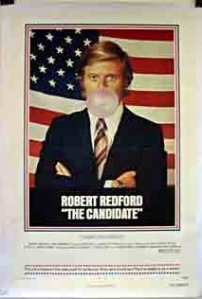 Reported Budget: $34,000,000 estimated, a budget that we could say is, ahem, out of this world?!?! Get it? With the space theme and the rockets and the ….. right. For those keeping score, that would be more than the first six Bond films combine. Two years previous the standard in outer space special effects were established by Star Wars with a $13,000,000 price tag and Close Encounters… at $19,500,000. The most expensive film of the era Superman (1978), a movie that was met with widespread protest by members of the Tea Party due to its positive portal of an illegal alien posing as an all American kid, cost a whopping $55,000,000. Moonraker, none-the-less, was a big ticket item, a fact that everyone involved in the film took delight in pointing out whenever possible. Anytime producers, actors, directors, etc. are jazzed to talk about how much money was spent on a film as part of the movies promotion blitz the buyer should beware. Bragging about budget typically means filmmakers made the age old mistake of thinking if a film cost a lot then little things like acting and story aren’t important. In watching the promo material on the DVD extras it’s crystal clear that everyone was hell bent on making the biggest Bond yet. Since 007 had already conquered the mountains, the desert and the sea floor, space truly was the final frontier. I’m reminded of Robert Redford in The Candidate (1972). Redford plays Bill McKay, a lawyer who runs for a California seat in the U.S. senate. The film explores all the ins and outs of campaigning for national office, a process that is a 24 hour a day all consuming job for McKay and his staff. After a tense election night the results come down and McKay has indeed won. As a jubilant celebration erupts around him McKay turns to an aside and asks “What do we do now?” After all the time and money and effort put forward to launch Bond into space, no one knew what to do when he got there.
 Reported Box-office: $70,308,099 (USA) $210,308,099 (Worldwide). And with that, skimping on things like plot and performances is justified. The worldwide take was greater than any previous Bond and in fact would not be equaled until GoldenEye (1995) sixteen years later. I must admit, this number shocked me. I kind of always thought of Moonraker as a millstone around Bond’s neck and in rewatching it I realizes it’s not nearly as bad a I remembered, until halfway through the second act that is, when the thing go bounding off the rails. But it also must be said that stuff that most likely worked at the time suffer greatly when viewed with modern eyes. The laser space battle jumps to mind.
  Why, oh why, did they need to be lasers? Even EON admits without admitting it that the laser gun battle at the climax of the film has aged terribly. There is virtually no talk of the space scenes in all the making of extras and the DVD cover features Bond in his space suit while holding his trusty Walther PPK, not a ray gun. All that said, at the time, Moonraker was a rousing box-office and critical (Ebert gave it three out of four stars) success and proved that Bond could keep up with all the Wookiees, Vulcans and acid bleeding xenomorphs that Hollywood could throw at him.
Theme Song: “Moonraker” performed by Shirley Bassey. Johnny Mathis, Frank Sinatra, and most interestingly Kate Bush were all considered but in the end Shirley Bassey got her third call back for Bond theme duty. Just weeks before the films release Bassey recorded two versions; the slow, flat, mellow rendition heard over the opening credits and the peppier, disco heavy version heard at the close of the film. For my money, they should have just taken GooooldFINGER!, changed it to MooooooooooonRAKER!, and called it a day. Give the people what they want. Below is the disco version and speaking of giving the people what they want, whoever put this video together deserves the YouTube equivalent of an Emmy.
Opening Titles: Kind of flat. The mellow tune doesn’t help. We get the weightless theme illustrated by naked chicks on trampolines and falling bicycles. The biggest standout is the inexplicable and inexcusably terrible edit that gets us out the credits and into M’s office to start the film. It’s so jarring and abrupt it has to be a mistake, yet there it is in a $34 million dollar picture. Perhaps the credit sequence had to be crammed quickly to include the last second addition of the Bassey theme but still, it’s astounding this cut was aloud to stay in the film.
 Opening Action Sequence: Prior to the NASA shuttle program all spacecraft were one-and-done deals which would land in the ocean and never fly again. With the state of the art shuttle fleet the U.S. had developed the first “reusable” spaceship. The first shuttle into space was Columbia. Following its April 12, 1981 inaugural flight Columbia would complete 27 missions before disincarnating above Edwards Air Force Base upon reentry on February 1, 2003, an incident that ultimately lead to the demise of the shuttle program. While making non-outer space trips the shuttle was transported from point A to B by “piggybacking” on the back of 747’s. So, the opening shot of Moonraker makes absolutely no scenes what-so-ever; not because it shows a shuttle on top of a Boeing aircraft, but because the aircraft is owned by the British who haven’t launched a weather balloon, much less anything resembling a space shuttle, into space. Also, why are the dudes who steal the space shuttle dressed like Marlon Brando from The Wild One? Turns out, the shuttle was on loan to the Brits for….some reason… and they lost it. Now, Bond needs to find it. We reconnect with our hero on “his last leg” of a mission while he’s trying to get into “mile-high club.” Things turn quickly when the lady pulls a gun and the pilot of the Lear (who’s dressed like the Red Baron) jumps out of the plane. Bond is leaning out the door to watch them fall when Jaws (Where the hell did he come from?) push 007 out. 12 years before Johnny “I am an F…..B…..I AGENT” Utah would jump out of a plane sans parachute to catch up with Bodhi, Bond and Red Baron engage in an unbelievable freefall fight that ends with Bond grabbing the chute and Red Baron (presumably) going splat. But before Bond can catch his breath, Jaws is on him like stink on unbrushed metal teeth. After some more freefall shenanigans, Jaws ends up busting his ripcord, flapping his arms like a bird, and breaking his fall with a circus tent. The big guy emerges from the big top unscratched, upping the ante in the running “indestructible Jaws” joke that was established in the previous film. To add an entry into my continuing “God bless the pre-computer graphics days” campaign I need to point out that John Glenn, the second unit

On an all time high
director put in charge of the pre-credit sequence, story boarded each and every move in the mid-air fights. He then went out to shot one or two shoots/moves per jump with specially designed helmet cams. Stunt and camera men made a total of 88 jumps to put together a sequence that lasts less than one minute on screen. The results are not quite as striking as the ski jump from Spy Who Loved Me (1977) but it’s a fantastic bit of filmmaking that puts us right into Bond world.
Bond’s Mission: Bond is called into M’s office and told of the missing shuttle. 007 decides to start off the investigation by talking to the head of Drax industries, the Los Angeles based company that built the shuttle. And that’s it. Seriously, Bond figures out who the bad guy is in the first scene. He doesn’t know he figures it out until a non-Oddjob Asian manservant/assassin tries to kill him in a G simulator, but yah. From the get go Bond pretty much knows who the bad guy is and where to find him at all times. Bond’s mission then becomes moving from one set piece to the next until he is launched into space.
 Villain’s Name: Sir Hugo Drax. “What he doesn’t own he doesn’t want.” This guy is Mike Bloomberg rich. So rich is Mr. Drax that he even purchased the Eiffel Tower but the French government refused to let him take it out of the country. I believe it was something about needed a permit to remove national treasure. Or maybe it’s because he’s a Nazi, a party affiliation the French tend to be touchy about. Besides being a genocidal maniac, the man is rather refined. He plays piano, hunts pheasant on his extensive property, and is always in the company of two countesses or heiresses or princesses. Despite his ridiculously opulent lifestyle Drax seems to enjoy not a cent of his vast fortune. He has all the charm of a bad hair piece. He speaks in the same droll weather discussing world donation or a cucumber sandwich. He stands stick straight with his hands claps behind his back and when he does move, he walks as if a Pringle chip is lodged between his ass cheeks and he’s trying not the break it. And he’s a Nazi.
Villain Actor: Michael Lonsdale. Born in Paris France the bilingual actor appeared in over 100 films, his most recent notable role was in the under appreciated Munich (2005), a film about spies who have license to kill which stared some dude named Daniel Craig. Lonsdale is a distinguished looking older gent with quite a range who had the unfortunate  luck of drawing the short straw when it comes to Bond villains. One of the many flaws in Moonraker is Drax is given nothing to do and Lonsdale is left drifting through the film with no anchor. For a series that prides itself on creating interesting baddies, Drax is the weakest Bond villain to date.
Villain’s Plot: So back to that Nazi business. Drax, like Stromberg before him, is interested in creating a new human society. However, given Mr. Stromberg’s family name, I think it’s clear he would take umbrage with Drax’s politics. Where Stromberg was a misguided environmentalist who choice to hunker down on the ocean floor during his genocide, Drax plans on launching a poisonous gas into Earths atmosphere from space. Even thought Drax is a card carrying Nazi and Sarah “Blood Libel” Palin booster, he, like Stomberg, has a soft spot for the furry and feathered creatures of earth. Not pheasants mind you, those are to be shot for sport like grizzles in Alaska, but lab rats, yah, they can live. So the game plan is (deep breath) fill six Drax manufactured space shuttles with the beautiful people of earth, launch “Moonraker” 1 thru 6 simultaneously, fly them to a secret space station, launch 50 globes filled with a poisonous gas extracted from Amazonian orchards that will kill the people while sparing the animals, encircle Earth with these 50 globes creating a “necklace of death,” release said gas into the atmosphere and then hang out till the smoke clears. Once that’s all done Drax will finally return to repopulate the planet with the best and brightest. While Drax is aboard his space station making speeches about this plan Bond and his CIA counterpart crash the party disguised as two of the beautiful people. Bond, who at this point is way to old and whose hair is way to sculpted to be considered even close to qualifying as part of the super race, walks among the youthful beautiful undetected and proceeds to foil the super race plot. From what I understand, the book had Drax pointing a nuke at London but Bond films have gotten to the point where all of mankind must be threatened or the gig is below 007’s pay grade and the job is kicked down to 008. (009 handles U.K. tariff law and parking violations.)
Villain’s Lair: As mentioned above, the sets are the star of show. Over fifty were built for the film taking 220,000 man hours to complete. While the space station is clearly the biggie, the earth bound ones leave a more lasting impression. Drax has several bases of operation, each more impressive than that previous. When Bond first gets to LAX he is picked up by a cleavage baring Drax assistant Corinne Dufour who serves as Bond tour guide while piloting him via helicopter to the “Drax Estates.” Like George Lucas, Drax has obtained a good chunk of California real estate on which to build various spacecraft. Hidden behind the warehouses, labs and runways is Drax’s home, a castle that was brought over from France brick by brick and surrounded by a moat, natch. The grounds are littered with topiary, reflecting pools, and cadets training to become astronauts. Inside are impossibly long hallways that end in impossibly large rooms decorated like museums. The mission-control/ lab facilities look exactly as my 11 year-old self would want a space-aged NASA complex to look like. Drax also owns a glass blowing plant/shop/museum in the heart of Venice.  This space is notable for its ability to be multifunctional. One day, a lab straight out of the Bond tradition lies behind a door and the next, an elegant drawing room appears when opening the very same door. I have no idea how Drax did this but I would guess all those beautiful folks he plans to re-people the world with are also talented brick layers and carpenters. Drax also owns some ancient Mayan pyramids but like the Effie tower, he was unable to move them. However, he was able to skirt the local historical preservation society and turn the wonders of the ancient world into a full on mission control complex complete with six launch pads. The entrance to the place is a stone and waterfall fantasy room that looks like the lobby of a Vegas hotel. It’s populated by purple orchids, a python and enough diverse looking ladies to satisfy the role call at the top of Paul’s Boutique. It’s always interesting to see how Bond sets are able to juxtapose the old style with the new. In the Mayan pyramid, a stone wall slides to revile a control room full with so many different shaped and colored television monitors it looks like a huge Mondrian painting. Speaking of multifunctional spaces, at one point Drax places Bond in what at first looks like a boardroom thanks to the round table and several chairs around it. But when the table is sucked into the ground and the ceiling opens up it becomes clear our hero is in fact directly under a rocket; a rocket that is moments from launching and making Bond all kinds of Christy McAuliffe. (What?!?!? Too soon?) Finally, there is the space station itself. The first time we see the floating city it’s slowly reviled by the light of the sun as it rises over the earth in what is by far the best shot of the film. As space stations go it’s pretty awesome although not as fully realized as the floating city in 2001 (1969) or the Death Star. However, when it’s finally destroyed, the twisting and knotting of metal makes for a much more visceral experience than simply blowing the thing up.
 Villain’s Coolest Accessory/ Trait: Drax’s overall refinement and taste for the good life is what I think drives the man. He wants the entire world to be just like his hermetically sealed estate. The dumb, poor and ugly are simply in the way. He is an unapologetic elitist who literally wants to kill all those he sees a beneath him. But before he gets around to that he plays his piano, trains his dogs to passively sit in front of raw meat, hunts pheasant and rolls around in his Rolls. My favorite detail; he plays bridge with the British Prime Minister. Which raise the question, who else would play with a billionaire Nazi and the PM of England? Frank Sinatra? Steve Wynn? Yasser Arafat? The Dalai Lama? Charlie Sheen? It would be one hell of a game. But all of this can’t make up for the simple fact that Drax is dumber than a bag of hammers, and like every Nazi, deserves what’s coming to him. Indulge me for a moment. Drax builds the Moonraker space shuttles and has sold one the United States. He has six others back at Lucas Ranch but “something,” we never learn what, goes wrong with one of them. So he steals his spaceship back from the US while it’s on loan to the Brits. He couldn’t build another one? He couldn’t tell NASA his engineers have discovered a flaw in the framis that hooks up to the doohickey and recall the ship? Nope, he steals the bird back pissing-off not only the US but his bridge partner as well. Mistake #2, when Bond shows up at the LA complex, it’s simply a courtesy call to find out more about the shuttle. Drax, perhaps offended because Bond declined his cucumber sandwich, decides to have 007 killed. Obviously, after the attempt on his life, Bond becomes curious and starts to snoop around. If Drax had just let Bond waltz in and out, no one would have been the wiser. (Yes, there was a CIA plant working in his research facility but what good did she do to prevent the hijacking?) Finally, Drax made the mistake of sending an attractive, young, female pilot to pick Bond up at the airport. After the attempt on his life, Bond visits Mrs. Dufour’s boudoir, puts the MHT (See The Spy Who Loved Me) into play and the next thing you know Jimmy B is photographing secrete documents. How did someone so carless get so much money? I bet he sucks at cards too.

Got Milk?
Badassness of Villain: Nazis are by definition badass but again, Drax takes no joy in his cleansing of the human race. He just kind of does it, and we never really see any motivation. Take Col. Hans Landa in Inglourious Basterds (2009), no he didn’t have the money to pull off killing everyone on the planet but man did he enjoy his work. He took immense satisfaction in picking off enemies of the Reich, one farm house at a time. Anyone can go up to space and push a button to make the world end, it takes a special someone to get in up close and get his hand dirty. Hats off to yah Col. Hans Landa, you would have made a fantastic Bond villain and you’re a credit to Nazi’s everywhere. On the other hand, in the closing credits of Moonraker six actresses are simply credited as “Drax Girl” 1 thru 6. So that’s kind of badass.
Villain’s Asides/ Henchmen: Drax’s has a butler, Cavendish, who escorts Bond to the grand room to meet the master of the house but the tea and cucumber sandwiches are served by Chang. Toshirô Suga who was Roger Moore’s personal martial arts trainer played the Asian manservant who like Oddjob before him is a kick ass kung fu dude who grunts, groans, and yells without one word of dialog. His final showdown with Bond happens in a glass factory which is perhaps the most inspired location for a hand to hand battle ever. Glass is shattered as bodies go flying left, right and center until Bond finally sends Chang crashing though a huge Hudsucker Proxy clock and landing in, not on, a grand piano. “Play it again Sam.” With Chang out of the picture Drax’s calls 1-800-Henchman-for-Hire and is happy to hear one Zbigniew Krycsiwiki AKA Jaws is available. “Oh well, if you can get him of course.” So who was Jaws working for in the opening sequence? Anyway, Jaws is in all but one of the best scenes in the film including a truly creepy appearance where he’s dressed as a 9 foot deranged clown at Rio’s famed Carnival celebration. The way he lumbers down the ally, his painted on paper–mâché black clown eyes fixed on his target, is strangely unsettling. As he gets closer, ally cats and drunken revelers appear in the shadows as multi-colored party lights flash on the brick ally walls creating a surreal scene that boards on art. Then, the punch line; Jaws is literally conga lined away by a bunch of dancing drunks before he can finish Bond off. This simple scene is one of the better crafted moments in the Bond canon. The film also brings the “Jaws is indestructible” joke to its absurd conclusion; he crashes through a brick wall while riding full speed in a gondola, (gondola as in the big cable car boxes you ride to the top of hill when skiing, not the boats in Venice,) he drives a boat over the worlds second largest waterfall, he gets a knee to the nuts (an action that is met with an audible metallic clang) and he survives a 100 mile plunge to earth by riding in a section of a destroyed space station. After The Spy Who Loved Me Bond producers received thousands of fan letters all wanting Jaws to return. Many of the letters were from children who really liked Jaws but asked why he had to be bad? So, like the T-1000 converting from a killer to protector between the first two Terminator films, Jaws too switches sides when he figures perhaps a 7’2” metal mouthed maniac wouldn’t quite fit into a Drax’s pure blood utopia. Jaws, getting more depth and emotion that any previous henchman and Drax himself, is even given a love interest. Indeed, the two share the most intimate moment of the film. Jaws and his lady friend find themselves the only two souls left alive on a space station that is about to crash to earth. They share a glance and a smile that shows both are resigned to meet there fate, and are happy they will do so together. Two glasses of champagne are poured to toast the couples last living moments and Jaws speaks for the first and only time. “Well, here’s to us.” Call me a softy if you must but I found it rather touching.
 Bond Girl Actress: Lois Chiles. The Houston Texas native was a top model before acting in such A-list films as Coma (1978), Broadcast News (1987), and Say Anything… (1989). She may have been a star if not for a self-imposed three year break to care for an ill family member. While watching Moonraker, she reminded me a lot of Kathleen Turner in both look and voice. (Dose anyone in the history of cinema have a better voice than Kathleen Turner?) Chiles, however, does have her flaws. She is, like everyone in the film save Kiel’s Jaws, rather flat and boring. She also dated Don Henley for a period which clearly illustrates not only poor taste but deep, dark character flaws.
Bond Girl’s Name: Dr. Holly Goodhead. OK, it’s no Pussy Galore but it’s a rather good handle and Lois Chiles herself admitted she digs the fact that she has one of the more obscene Bond girl names. When Bond first meets Goodhead he feels the need to point out she is, in fact, a woman. Perhaps he did this so he could be justified in interrupting her every time she starts a sentence. That is, until near the end of the film when the two find themselves in the cockpit of Moonraker 6 and the NASA trained doctor is the one who knows how to pilot a spaceship. Then Bond shuts up right quick and sits on his hands like a punished child. That’s right you rude ass, let the lady drive. In addition to being a pilot Goodhead is a CIA operative, a fact Bond learns in a fun sequence where every item in her purse from a pen to her lipstick doubles as an implement of destruction. “Standard CIA equipment” Bond tells her which made me giggle thinking about Felix carting around flame thrower perfume in his two-way radio handbag. Goodhead not only gets to avoid putting on a bathing suit but she also gets to wear a dress that just blew the wife away. It’s a conservatively cut number made out of some material that is sheer yet not transparent, shiny yet not reflective and monochrome but several colors at once. I have no idea how it works but watch her walk around Venice and there you have it. On the other hand, the less said about the yellow space outfits she and Bond are forced into while flying the shuttle the better.
Bond Girl Sluttiness: There is very little sensuality and even less fire in this Bond girl which is consistent with the rest of the stuffed suits in this film. When she sleeps with Bond the first time it’s not for pleasure but business; she needs to throw her MI6 counter-part off her scent. Ahhh, but there’s an inner freak in Dr. Goodhead just waiting for the right time to come out. For the climax of the film, Bond and Goodhead pull off a maneuver that neither you, nor I, nor anyone, even those who have covered the Kama Sutra from Adhimani to Yoni has pulled off; the act of weightless whoopee. And with that, Bond and Goodhead become the charter members of the 600 mile high club.
Bond Girls Best Pick-up Line: Corinne Dufour, the babe-o-licious helicopter pilot, informs Bond her “mother gave her a list of things not to do on a first date.” While she reclines back onto her bed she adds “I never learned how to read.”
 Bond’s Best Pick-up Line: “How do you kill 5 hours in Rio if you don’t samba?”
Number of Woman 007 Beds: Three. Sex is odd in this one, outside the final zero G romp, it’s kind of dull and bloodless. It’s treated very much as an obligation. I must pin this back on Moore’s lazy performance. “Well, I’m Bond so I guess I have to bonk yah?” Hey Jimmy, this is not your wife of 10 years, put some pep in your step. Anyway, he nails the illiterate Corinne Dufore after he disarms her “That’s not what I came for” with the MHT. His partner in Rio, Manuela? She bangs, she booms like she’s Ricky Martin Livin La Vita Loca. And then there is Goodhead who lives up to her name on Earth and in space, the latter historic joining recorded for posterity when a live video feed of the shuttle is pumped to White House and Buckingham Palace. This raises the question, who would be more uncomfortable viewing the sexual encounter, Queen Elizabeth II or Jimmy “lust in my heart” Carter?
Number of People 007 Kills: 17 confirmed. After Bond steals the parachute from the free falling Red Baron in the opening sequence there is a long drought in the killing department. Sometime later Bond finds himself pheasant hunting with Mr. Drax. Bond shoots at a bird which flies off on it’s marry way. “You missed Mr. Bond.” “Did I?” asks Bond while handing Drax gun. Meanwhile, an assassin falls out of a distant tree. Bond’s next victim pops out of a coffin floating on a gondola/ hearse hybrid. (Gondola as in the boats in Venice, not the big cable car boxes you ride to the top of hill when skiing.) Bond throws a knife at the dude before he can Bond, and back into the casket he falls. In a nod to the Live and Let Die (1973) double-decker bus decapitation, the coffin is knocked of the top of the boat by a low lying bridge. The next two casualties are thanks to Bond complete carelessness. When exploring Drax’s Venetian glass factory, Bond finds a secrete lab containing lab rats and glass vials fill of …what exactly? Bond finds out while hidden in a side room avoiding two lab coat sporting dudes. In his haste to hide, 007 carelessly left one of the glass vial on a table ledge. The two lab coat dudes die in a matter of seconds after they accidently knock the vial to the floor. The rats are just fine (I know your were concerned.) The next killing is quite intentional, Bond knowing full well that when you toss someone out of a glass face clock 4 stories above the ground that they will die, whether they land in a piano or not. In what at this point is become as predictable as Bonds drink order, we have yet another boat chase with more gun tooting sailors getting blasted into the water. Q outfits Bond with the aquatic equivalent of the Goldfinger Aston Martin which allows 007 to dispose of pursuing boats by releasing mines (three mariners dead) and heat seeking torpedoes (three more). A third boat is sent over the falls killing three more dudes but not Jaws, who walks away with his tie slightly askew. In a much more inventive and humorous homicide Bond sends a baddie who is bound to a stretcher out of the back of an ambulance. This poor guy has to suffer rolling down hill on a cobblestone street before he ends up face first in a British Airways billboard. (By the by, while the ambulance was making it’s way up a beautiful Rio mountain road it past statically place billboards for 7Up, Marlboro, and Seiko….all in English.) Then there is the space battle. Much like the climatic battle in The Spy Who Loved Me this fight features a ton of faceless U.S. solders squaring off with a ton a faceless baddies. Only this time, it’s the Space Marines and the battle happens in weightlessness with ray guns. These elements can work wonderfully in film, Starship Troopers (1997) comes immediately to mind, but they do not work in a Bond film… at all. The idea of a space ray gun battle is so far removed from the Bond universe that the sequence feels like it invaded from a different film, much in the same way the cowboys continue a huge bar room brawl on the set of a musical in Blazing Saddles (1974). Worse, while this battle progress, laser shots flying to and fro, Bond and Goodhead run around doing this and doing that, hardly noticing the battle. Bond doesn’t even take out a single baddie. By Bond not participating in the goings on, it further removes the battle from the over all plot of the film. The last half hour just fails on every level and drags the entire film down like a Challenger landing. (Oh Come on?!?! You giggled a little…) Anyway, Bond finally takes out Drax the same way every boss bad guys is taken out in a Sci-Fi film; by blasting them out the air lock into the far reaches of space. Bond also always needs to kill at least one animal and in this film that would be a venomous snake taken down with a venomous shot.
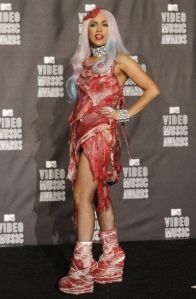
Release the hounds
Most Outrageous Death/s: After Drax finds out that Corinne Dufore not only slept with Bond but lead the spy to the safe containing the secrete plans for the Death Star or something he is none to pleased. He summons her to a dramatic face to face in a huge field on the estate. She shows up via golf cart wearing a white flowing dress. Drax fires her immediately and tells her to hit the road. Head hung low, Dufore turns her back to her former boss and starts to slowly walk back toward the golf cart. But you can tell by the look on her face she knows this walk will end badly. She slowly looks over her shoulder to have her fears confirmed by the sight of Chang making like C. Montgomery Burns and releasing the hounds. Deciding that the golf cart is likely to slow, Dufore elects to flee on foot and into the woods she goes. What follows is a scene out of a werewolf film if it were produced by Merchant Ivory. The woman in white runs though a dreamy forest with sun beams of light raining down on upon her and the pursuing dogs. I swear the film goes into soft focus as the music swells and the cuts between her face, her running, and the frothing dogs become quicker. As she falls, in slow motion, the dogs pounce on her like her dress was made of prime rib, while the camera swoops skyward to the sound of distant church bells. I’m 100% sure the folks at EON did not intend to have audiences doubled over in laughter at this point in the film but that is exactly how the wife and I reacted to the sad lonesome death of Corinne Dufore.
 Miss. Moneypenny: As she somehow always manages to do, Moneypenny is once again a bright spot in an otherwise dreary affair. Bond and Moneypenny have a nice little running joke where when 007 enters the office he tells her exactly what he’s been doing. “Why are you late?” “I fell out of airplane.” Later, when he shows up in the Eastwood poncho get up Moneypenny exclaims “James you look like you’ve just fallen off a mountain.” “Funny you should say that. I was on a cable car … never mind.” Good stuff.
M: Bernard Lee has appeared as Admiral Myles Messervy in all eleven bond films; he and Lois Maxwell as Moneypenny the only two to do so. Moonraker would be his swan song as Lee died on January 16, 1981. It’s also the film that gives him perhaps the most screen time. His entrance is a classic “good God!” into a phone after learning about the Moonraker hijacking. He then calls Bond and Q to his office to brief them on the situation while a blinking “Most Secrete” sign serves as a helpful visual aid. Later, M makes the trip to Italy with the Prime Minister and Bond to visit Drax’s chemical production lab. Wearing ties and gas masks the three men enter the room to find not a lab but an ornate drawing room. “I’m afraid not being English I don’t always get your sense of humor.” Having been embarrassed in front of his bridge partner the PM apologizes to Drax on the behalf of all of England and orders Bond off the case, effective immediately. M then does exactly what he should; gives Bond two weeks leave and tells him to take a vacation. “I always wanted to go to Rio, Sir.” “I recall you mentioning it 007.” After everything Bond has done for M, he owes him this chance and M knows Bond will not let him down. It’s a touching, trusting moment between these two men who have a two decade history together and it’s a fitting send-off for Lee.
 Q: “Balls Q?” “Bolas 007.” Make that exploding bolas being tested in the Q lab along with a mannequin that splits open to reveal a firing machine gun and laser guns that melt the targets dummies head. Again with the lasers. First, by introducing it here it still doesn’t make the ray guns fit in the film later. In fact, in makes everything all more messy as the lasers in Q’s lab melt the targets yet no one in the later battle is melted. Anyway, Q had gone to the cinema on his day off and caught Scorsese’s Taxi Driver (1976). He really dug the sleeve sliding gun tracks De Niro constructed and made a similar contraption with dart guns now “issued as standard equipment.” He gives this gizmo to Bond at the initial intelligence briefing in M’s office, a section of the building Q rarely gets to visit. It’s a shame as he always has something to add, perhaps the new M will work to get him into the mix.
List of Gadgets: The dart gun comes with 10 darts; 5 exploding (blue tipped) and 5 doused in a lethal poison which causes death in 30 seconds (red tipped.) Besides the ability to hide the dart gun in ones shirt sleeves the other nifty bit is the trigger. In order to shot the darts, the user just has to think about it and the variations in his pulse sets the gun off. With all apologizes to Jack Black, “Mind Bullets!” This is handy indeed for when Bond is strapped into a G-simulator that goes to 11. I remember seeing this film as a kid and being completely freaked by the sight of Bonds face looking like Frank Black in the “Alec Eiffel” video.
As the red line readout gets longer, the thing gets faster, and Bond gets stretchier. Lucky for Jimmy B the mere thought (and flash frame) of a dart in horses ass … well not a real horses ass, but a painting of a horse, complete with ass, in M’s office, enables Bond to stop the mechanism by breaking it’s speed odometer. When Bond struggles to get his feet after getting out of the contraption the good Doctor Goodhead wrings her hands “I have no idea what went wrong?” I was reminded of the death by spa equipment scene in Thunderball (1965) where essential the same thing happens. Bond should know by now, when a lady asks him to try out X piece of equipment, he should politely decline. The wrist rocket dart dispenser doodad also works in hitting Drax, sending him backwards and out into the vacuum of space. Bond also has a nifty safe cracker that looks like a cigarette case and a spy camera, the lens of which sits in the first “0” of the 007 written across the front. His watch, a Sisko digital job, comes equipped with some kind of explosive fishing line. Sadly, Moonraker also takes part in the increasing annoying tradition of make Bond have at lease one sequence in an absurd mode of transportation. At one point, Bond is relaxing in a gondola (gondola as in the boats in Venice, not the big cable car boxes you ride to the top of hill when skiing) when his gondolier is made to be dead. Bond quickly hops into the drivers set and pushes a button. The slow moving sallow hulled scull instantly becomes a Miami Vice Cigarette boat and Bond is throwing up wakes while the “innocent-bystander-boat-gets-sliced-in-two” gag that was oh so tired when they did in The Man with the Golden Gun is giving an encore. But wait, there’s more. By pushing another button, Bond’s gondola (gondola as in the boats in Venice, not the big cable car boxes you ride to the top of hill when skiing) becomes a hovercraft which climbs steps out of the canal and takes off across the piazza. The silly Italian music kicks in while pigeons and dogs do double-takes and hold the phone? It’s the dude from the beach in The Spy Who Loved Me! And he again does his look at the bottle gag! Why that’s down right fantastic. The scene is still silly and unnecessary but that was nice touch.
 Bond Cars: Somewhere on page 17 of Moore’s 007 contract, right next to the paragraph that guarantees he will always be supplied with quality cigars on set, there must be a clause that states Moore will spend at least 10% of his time on camera driving a boat. Form the swamps of the American south to the canals of the Orient to the depths of the ocean and now, the streets of Venice and the falls of Brazil, this dude is always in some kind of water craft. As we mentioned above, the Brazil boat can drop mines, shoot torpedoes and when going over a water fall, can become a hang glider. And why the hell not? Get this man back into a spiffy car already. In the meantime, I’m looking forward to the paddleboat chase at the climax of the next movie.
Gadgets/British Government Property Bond Destroys: The other problem with these too tricked out water craft is that I assume they are a one and done deal. I can’t imagine packing the hang glider back into the hull of a boat that just went over a waterfall and I don’t think the gondola (gondola as in the boats in Venice, not the big cable car boxes you ride to the top of hill when skiing) is going to recover from be broken to bits by the inflatable hovercraft bottom.
Other Property Destroyed: Darx’s multimillion dollar G simulator is destroyed by cracking the dashboard, priceless works of art are smashed in the glass factory fracas, the gondola (gondola as in the big cable car boxes you ride to the top of hill when skiing, not the boats in Venice) station is smashed, a billboard is impaled by a downhill speeding gurney and a space station, with 6 space craft docked to it, become the most expensive thing 007 has ever relegated to the trash heap by a magnitude of 10. Finally, in what ranks as one of the more ridiculous moments in a Bond film, Bond and Goodhead destroy three globes containing the poison gas before they are able to enter the earth’s atmosphere. It’s one of those scenes where two actors are sitting in a cockpit, staring at a screen, and can move nothing more than their hands and their mouth. Yet the scene demands that the actors must make the audience feel a building tension and urgency. So the hands move joysticks and push buttons while the mouth is forced to deliver such lines as “I have the three globes on the screen,” “were skipping on the earth atmosphere,” “Its getting hot,” “I can’t hold this course much longer,” “we will break up,” “A few seconds more,” “switching to manual,” “the controls aren’t responding,” “wings are starting to glow,” “hold steady, steady,” and “its entering the earths atmosphere, James this is our last chance.” If the above reads flat, Moore and Chiles manage to make it even more boring if that’s at all possible.

Stay on Target
Then, for the icing on the cake, after the third globe is destroyed, it’s off to the back for some zero G gyrations. How did they pull the shuttle up so it didn’t break-up? For all we know, the two could have been burned up while we were watching the closing credits. (What, you want some kind of shuttle Columbia joke? You’re sick!)
Felix Leiter: No Felix since the beautiful and capable Goodhead is on the case. But we do get a quick shot of General Gogal, the head of the KGB. We learn in this brief appearance that the Russian is living a much richer and fuller life than M. As far as I can tell, M is always at work and never had one inkling of a sexual desire. However, when Gogal answers the 3AM phone call and is informed of the pending destruction of the planet, he seems mildly interested. “Keep me informed.” When asked why he is still up at the late hour, the bathrobe clad sexagenarian responds “How can I sleep, nothing but problems, problems.” He then hangs up the phone and rolls over to continue making out with a woman half his age. Man, were we on the wrong side of the cold war or what? Those Ruskies know how to live.

Bonds Watch Case
Best One Liners/Quips: When Bond is getting into the G simulator, Goodhead tells him not to worry, “A 70 year old could hand three G’s” In pitch perfect Moore fashion, Bond responds “well the trouble is there’s never a 70 year old around when you need one.” Not only is it funny but its Oh so true; why I must have that thought like, three times a day.
Bond Timepiece: Sisko digital deal. When do we return to the classic time pieces? I hope soon, these pieces of junk are starting to get depressing.
Other Notable Bond Accessories: The master of disguise, for some reason somehow, ends up looking like the Outlaw Josey Wales in one scene. Not much else to report.
Number of Drinks 007 Consumes: 1. This may explain why Moore is so surly, he comes close a few time but only once gets to wrap his lips around a drink. In the open, a bottle of champagne rests untouched in an ice bucket. Later when Bond enters Goodheads hotel room he announces “Bollinger. If its ‘69 you were expect me” but once again never gets to consume. Finally, Bond gets to imbibe in the libations upon arrival at the presidential suite in Rio where he is served and drinks a vodka martini, shaken not stirred, by the mysterious woman who followed him from the airport.
Bond’s Gambling Winnings: Only one drink and no gambling, no wonder this film is a disappointment.
List of Locations: The closing credits proudly announce that Moonraker was shot on location in Italy, Brazil, Guatemala, U.S.A. and OUTER SPACE! I hate to call Mr. Broccoli’s word in question but something seems a little fishy about at least one of those…. Back in the U.S. Bond arrives at LAX, boards a helicopter, and three minutes later arrives at Vaux-le-Vicomte, the 17th century chateau located in the green hills of France. The Venice locations look just like you would want Venice locations to look including San Nicolo Benedictine monastery. I really don’t like to look forward in the Bond timeline but when I saw Moore crossing the courtyard here I instantly thought of the Venice scenes in Casino Royal (2006). I’ll have to keep an eye out for that when I get there and see if they are in fact the same thing. The seaside street in Rio makes for an amazing shot and the Sugarloaf gondola (gondola as in the big cable car boxes you ride to the top of hill when skiing, not the boats in Venice) scenes are breathtaking. The Carnival scenes are interesting in that they work as part of the story and not just a colorful backdrop. The Mayan Ruins are impressive but the Iguazu Falls are far more so. The climatic scenes were shot somewhere between here and Mars.

Shoot the Moon
Bonds Special Abilities Displayed: In this film we get a new skill seemingly every scene. Right off the bat Bond knows Drax built the shuttle and can rundown all his vital stats off the top O his head (not to mention cracking the case before he even started.) Bond has a superhuman scene of smell which comes in handy when he sniffs out an assassin hidden in a tree. After seeing a walkie-talkie purse and a hypodermic pen Bond I.D.’s Goodhead as an agent. He also impresses the good doctor with his knowledge of 14th century architecture. He expertly wields a glass sword while battling like a bull in a China shop, and then proves he can climb a rope, an activity that I recall as not being all the easy from 7th grade gym class. Bond can ride a horse like John Wayne and ID orchids like a tenured FTD salesman. Goodhead does most of the piloting of the Moonraker 6 but Bond proves he would be a hell of a Missile Command player by joy-sticking and lasering down the deadly gas globes.
Thoughts on Film: Roger Ebert has always said “it’s not what a film is about, it’s how it’s about it.” Indeed, truer words could not have been spoken about Bond. 007 films, at the nut, are the same story every time. The fun lies in seeing how that same story is told, how the rules are bent but not broken, and how our expectations can be manipulated by the occasional curveball or changeup. For the 11th film, Cubby Broccoli decided to shot the moon. Shooting the moon, as anyone who has ever played hearts knows, is never easy. 90% of the time you’re going to lose. Even if you’re holding the right cards everything needs to go exactly right and one misstep derails it all. But man, when it works, there is nothing better and you win the whole enchilada in stylish fashion. Neil Diamond’s 1972 live album Hot August Nights maybe pop-cultures ultimate “shoot the moon” victory. Exhibit A, the album cover. I mean holy Jesus in heaven, are you kidding me? And you know what, it’s awesome! Because he owns it. This is not ironic, this is what Neil thinks is the coolest thing in the world and because he believes it so much, it becomes the coolest thing in the world. But can the music deliver on the album covers promise? When you consider this double live record kicks off with a full orchestra playing a “prolog” you would be forgiven for rolling your eye and wondering if perhaps Neil bit off more than he could chew. I mean, this is a Spinal Tap joke and is there a bigger punch-line in Rock and Roll than the recent Hall of Fame, Brooklyn born, Brill building trained singer/song writer? Make fun of him all you want. Got it out of your system? Now, give me 7 and ½ minutes of your time and crank this clip to 11. (Ignore the bad psychedelic visuals, just keep reading)
Yah, that freaking rocks, and so does the rest of the record. What should be preposterous; a double live record, blue sequence jump suit, a string section, Neil Freaking Diamond, works. That is shooting the moon. In The Man with the Golden Gun, when Bond and Pepper pull a full 360 while jumping the river (not the shark) it was eye rolling and bent our good will, but did not break it. In the Spy Who Loved Me, when Bond skied off a cliff, it was fantastic and energy pumping. When the Union Jack sprang out of his pack and the Bond theme kicks in, the moon was shot. Those two over the top moments worked because everything was in place to set them up and because all involved believed in what they were doing. In other words, it’s all about context and commitment. A stronger film may have been able to support Jaws biting through a gondola cable (gondola as in the big cable car boxes you ride to the top of hill when skiing, not the boats in Venice.) However, when you couple that moment with a hover craft gondola (gondola as in the boats in Venice, not the big cable car boxes you ride to the top of hill when skiing.), six space shuttle launching simultaneously (undetected?), a hang glider popping out of a boat and a freaking laser battle in space that has aged worse that three week old boxed wine, it’s a big old swing and a miss ….. by a mile. The screenplay also seems reluctant to commit to the cause. Back to the gondola (that one, not the other one) in Venice. The boat is never set-up to be a British piece of equipment with a MI6 guard/ escort as Bond gondolier. So when the chap is shot and Bond pushes a button to turn the craft into a motorboat, it makes no sense at all. This could have been fixed with one or two little lines. When James got on the boat he could have nodded his head and gave a little line like “Agent Smith.” The gondolier then could responded “good to see you 007, enjoying Venice?” and Bobs your uncle. One sentence on the other hand doesn’t solve the problem of why the hell did Drax thief a ship he could have just as easily have built. Add the further burden Bond films carry when it comes to context. At this point we have 10 previous movies going back to 1962 not to mention the books and the countless Bond imitators. That a lot of history. By this point we as an audience know Bond,  so you can’t just stick a ray gun in his hand and expect us buy it. Everyone in the audience didn’t see From Russia With Love but everyone sitting in the theater sure as shit knows Bond isn’t Capitan Kirk. As I said, curveballs and change up are good, but when you pitch a football from the mound, don’t expect the fans to cheer. Perhaps the biggest reason the film can’t support its overblown ideas is Moore doesn’t sell them. Maybe he doesn’t believe in the product but without his trust, the entire thing falls apart around him. While the film has a few inspired old school Bond moments it never comes close to working as a coherent movie and Moonraker ends up being not only one of the lesser Bond entries but the worst Moore film yet. Coming off the wonderful Spy Who Loved Me, the failure is all the more glaring. Moonraker’s biggest sin is for everything that’s going on and all the money spent, its just boring; a word that should never be in the same sentence as James Bond. At the time of its release, Cubby Broccoli boldly announced that Moonraker was “Not science fiction, but science fact.” No, not even remotely close. However, if the goal was simply to make money, than shooting the moon succeeded beyond even Broccoli’s wildest expectations.
Martini ratings:

 Title: The Spy Who Loved Me
 Labor Day, Universal’s big fish tale grossed $129,549,000 (in 1975 dollars) more than doubling the $60 million take of the years number two film, One Flew Over the Cuckoo’s Nest (1975). Jaws was bigger than a movie, it was a game changer that gave birth to the blockbuster, the summer movie season, and the event picture. For better or for worse (I’m looking at you Mr. Will “July 4th” Smith,) movies would never be the same again. Both audiences and Hollywood’s expectations of what a big movie was changed dramatically and Bond was force to adapt. In the mid-60’s, 007 was the only game in town. Now, genres that were traditionally B-pictures like monster films and science fiction were big budget Hollywood events that made the last three or so Bond films look quaint in comparison. Truth be told, Bond had been slumping and lazily resting on its reputation for some time. It needed a kick in the ass to force the franchise out of complacently. Two summers after Jaws changed everything, The Spy Who Loved Me met all these challenges head-on and roared into theaters on 7/7/77, natch. Watching it today, The Spy Who Loved Me is a leap forward for Bond and popcorn films in general. Where as the last few 007 pictures felt stuck in the 60’s, this film feels ahead of it’s time. It’s not hard at all to draw a straight line from this 1977 picture to 1980’s action films, the Indian Jones movies in particular. It’s a clockwork, bang-bang, high soaring, romance thriller/ action adventure that screams loud and clear that in this, his 10th big screen adventure, Bond has grown up.
 Director: Lewis Gilbert. As enjoyable as the first two Moore films were, they always felt like the training wheels were on. They were uneven, clumsy and had a stuttery start/stop quality that held the whole thing back. Even the big set pieces had a “Hey, look at this stunt” kind of strung together quality with no real gel outside of Moore’s charm to connect them to the rest of the goings on. Both films, when you boil it down, lacked heart. Like a poorly done horror movie, they were fun to watch, but nothing stuck around to keep you up that night. All of these things; script, pacing, feel, etc., get hung on the trailer door of the director. Guy Hamilton’s Bond movies were the very definition nuts and bolts; shot it, cut it, print it, on to the next shot. I have no idea if that’s how he worked but outside Goldfinger (1964), his films for the most part feel sterile. (As opposed to Terrence Young’s well crafted lived-in classics.) Hamilton was on board to direct The Spy Who Loved Me and had even started preproduction when EON was slapped with a plagiarism suit forcing the courts to put a work stop order on the movie. Everything shut down for months and once the matter was cleared up, Hamilton had moved on. Broccoli wasn’t going to wait around any longer and gave You Only Live Twice (1967) director Lewis Gilbert a call. Considering the mangled mess that film was, my expectations were far from great for this, his second Bond picture. Turns out a lot can change in 10 years and in this case, all of it for the better. In The Man with the Golden Gun, there was an attempt to strip Bond down to his basics which worked well at first but filmmakers lost their nerve in the end and the movie became bloated and convoluted. For 007 10, in some kind of reverse voodoo/addition by subtraction Gilbert pulls of the physics defying feat of making this Bond tighter and more streamlined by blowing it up and making the biggest, slickest, and most ambitious film yet. It all stars with the script which is logical, straight forward, and an absolute hoot. Gilbert goes onto deftly balance the humor and action and choreograph show stopping set pieces. The film is also beautiful to look at. Every woman is drop dead gorgeous and every location is exotically captured. Bottom line, Gilbert infuses this movie with purpose and gives Bond back his soul, something that’s been missing since George Lazenby sported a kilt and took on Telly Savalas. Welcome back 007.
 incomprehensible that the official scoreboard had only a single digit in front of the decimal so her score was displayed as a “1.00”. Comaneci not only became the most famous athlete in the world save Muhammad Ali but the 7 stone 14-year-old struck a might blow to the American psyche. At the time of better dead than red, any victory by the Soviets took on a wider meaning not remotely comprehensible in today’s political climate. So, in addition to goose stepping naked chicks sporting Ushanka military lids the opening credits of The Spy Who Loved Me features woman performing gymnastics on gun barrels that double as a balance beams and uneven bars. The entire thing ends with the music hitting an ear piercing metallic sting that launches us deep into the halls of the Kremlin. Man, I miss the cold war! One more thing Reagan ruined.
 Bond’s Mission: So, if those dirty, naked, goose stepping, fuzzy hat wearing, perfect split and tumble performing commies didn’t hijack the British boat then who did? And oh, by the by, did we mention the British sub has sixteen missiles and nuclear warheads aboard? But you knew that thanks to article three of “Submarine Movie Law.” MI6 obtains intel indicating someone has discovered a way to track subs even when they are submerged. Perhaps that’s a good place to start. Lucky for the freedom loving Brits, a man in Cairo is willing to sell information about this technology and who has it to the highest bidder. The freedom hating Russians get the same tip and both Bond and Triple X are dispatched to Egypt to track this man down and make hivm taaalk.


 Bond Girls Best Pick-up Line: “This is what we do in Siberia, but not how we do it.” I have no clue what that even means but it sound dirty.
 Number of People 007 Kills: 19 confirmed kills plus a whole bunch. Americans, for whatever reason, often think of sex and violence in film (and other arts) as somehow making that film “more adult” or “mature.” Well, based on that idea, Bond grew up big time in the 10th movie by stacking up the largest body count to this point. We kick things off with the ski pole shooting of Triple X’s squeeze, complete with the mysterious fire igniting in his jacket at the point he was shot. The second Bond kill inspired me to come up with the “magic hickey theory” or MHT. Bond enters Fekkesh’s office looking for Fekkesh (I will never tire of typing that name) and comes across Fekkesh’s secretary. “He is not in right now Mr. Bond. Can I get you anything while you wait, and I do mean, anything…” Jimmy B leans in and starts to kiss the lady on the neck when she suddenly panics and warns Bond he is about to be shot. Bond repays the ladies generosity by spinning her body so she takes the three bullets intended for him. This struck me as all sorts of wrong. Didn’t she know it was a set up to shot Bond? Isn’t that why she offered herself to him in the first place, to otherwise occupy his attention so he could be taken out? So why did she warn him? The only possible reason is love. Thanks to that kiss 007 landed on her neck she instantly feel under his spell. Hence the MHT, no woman can resist Bond once pecked on the neck. The theory is once again proven when Bond turns Triple X. After the mission ends the Russian makes good on her threat to avenge her boyfriends death. She pulls a gun and Bond moves in for the clavicle kiss. Once smooched, she quickly forgets the whole shooting things and moves right into the whole smushing thing. The MHT strikes again. Back to killing, the dude who shot at Bond when he used the lady as a human shield was the not-Jaws-Stromberg-flunky Sandor. The baddie and Bond engage in some rooftop fist-a-cuffs that ends with Sandor dangling off the edge of the building, only Bond’s grip on his tie keeping him from falling. Bond lets his grip slip once he learns the location of Fekkesh and Sandor is no more. Number 4 is a chicken feather coated motorcyclist who Bond run off the road and over a cliff, “All those feathers and he still can’t fly.” Numbers 5,6,7 are passengers in a car that goes over the same cliff and through the roof of a home. Jaws, the fourth passenger of the car, walks away with his tie slightly askew.
  A lovely helicopter pilot who works for Stromberg is blown up courtesy of Bond’s sea to air missile launched from his submarine car. The sub-car also torpedoes a Thunderball dude and kills another SCUBA diver in the first ever underwater hit and run. During the climatic battle Bond takes out two of Stromberg’s red shirts with one harpoon, two more a done in by Bonds machine gun fire and a grenade takes out a jeep containing three dudes. One other dude is somehow set on fire. Meanwhile, Bond navigates the chaotic machine gun fire without a fear, thanks to a technique that was expertly demonstrated in the fantastic film OSS 177 – Lost in Rio (2009). Hubert Bonisseur de La Bath or OSS 177, the French 007, perfected this technique which requires the agent to raise his hand slight above his head, as if shielding his eyes from the sun. The agent then runs while slightly hunched over with his head slightly cocked to the side while wearing a concerned, but not panicked, expression. Try it the next time a bunch of dudes are shooting at you and if the cinema is to be believed, you will not get shot. Kill number 19 is Stromberg himself. Near the films climax, Carl hosts a grand dinner for Bond following the time honored tradition of Bond baddies. Stromberg is seated at one end of the very, very, very long table and Bond at the other. After some back and forth Stromberg has had enough of 007 and reached for his concealed gun. The gun hangs under the table, just above Stromberg’s lap. It’s barrel is pointing into a very, very, very long tub which extends under the entire length of the very, very, very long table and ends at Bonds lap. Stromberg pulls the trigger and Bond bails out of the way a split second before his crotch is turned to mush. Bond then takes his gun, places the barrel in the tube, and squeezes off his own round which strikes the less nibble Stromberg seated at the other end of the very, very, very long tube. Bond puts two more bullets in the felled bad guy just to make sure Stromberg knows 007 is very, very, very unhappy. This is the best lead villain death in some time and I found it rather satisfying. In addition to the above, Bond also took out an untold number of other bad guys. He blows up the taker which still had a bunch of dudes on it and he retargets the nukes headed for New York and Moscow to take out two subs. These are nukes so there is no doubt that’s two boat loads of people are dead. But I also wonder what other ships were nearby and therefore vaporized? Oh well, lets not dwell on it to long, Bond certainty didn’t.
 Q: The gadget guru has a massive presents in The Spy Who Loved Me to which I say, right on! We first see him in analyst mode where he deduces how the subs are being tracked in a matter of seconds. “Heat signature, they can follow her wake.” We next meet him in the pyramid where he has constructed his entire lab. Witnessing Q testing stuff is one of the treats of Bond films and here we see a tea tray capable of decapitation, a hookah that can put a bullet in your brain and an ottoman which will turn your twig and berries into bangers and mash. So, with all this super secret testing going on, how in the hell is the #1 Russian spy and the head of the KGB allowed to waltz though without a care in the world? It’s inconceivable I tells yah! Q also sends Bond a Jet Ski hydrofoil which, like the Little Nellie package from You Only Live Twice, serves the sole purpose of getting Bond on a ridiculous looking and wholly impractical form of motorized transport.

 Thoughts on Film: Despite all the obstacles that stood in the way of The Spy Who Loved Me’s success, the film is a triumphant return to form that very well may have saved the franchise. It was a do or die moment and not since 007’s mid-60’s heyday has a Bond picture delivered on it promise. Gone are the shaggy edges and blotted excess and what is left is a big, polished, slick, glossy blockbuster. In my book, polished and glossy are typically bad terms when it comes to describing movies because they represent the opposite of the 1970’s style grit I love. (Think 1970’s Scorsese, Ford Coppola, Lumet, Carpenter, De Palma, Ashby, etc.) However, the slick, professional approach works wonderfully for James Bond and instead of detracting it serves to elevate the character and the story. Like a well made pop tune, there is a geniuses in it’s accessibly and once it gets in your head, you can’t stop whistling. The further I go into the world of Bond, the more it strikes me how singular On Her Majesty Secret Service is in the series. That film was the most personal for Bond and by far the darkest (and one of my favorites despite some short comings.) It’s fascinating and it works wonderfully as a stand alone but I’m not so sure the tone and even storyline for that matter would have been sustainable. We don’t want Bond to be a brooding Jason Borne; we want him to be skiing off cliffs with a Union Jack parachute. EON was wise to move away from the feel of OHMSS but they also lost their way trying to rediscover what made Bond click. The first two Moore films, and the last two Connery films, had great moments, but the pacing was always off, and they were feather light; all surface with no substance. But their biggest sin, none of them were close to being as much fun as early Bond movies or The Spy Who Loved Me. Well crafted is the best way to describe this film, and I mean that in the best possible way. It’s impeccable paced with a pitch-perfect tone that carries the film which rarely sinks into cheese (Jaws ripping up the van is a bit much.) This film is Bond growing up as a screen presence and proving he could have weight without going “dark” (No drug smuggling like Live and Let Die or Bond smacking women around like The Man with the Golden Gun. Also, not a complete reboot like Casino Royal (2006) where Bond does go dark.) So why in 1977, after a decade of struggles, does Bond rediscover his stride? I think its several factors, not the least of which is being free of the yolk that was the Fleming novels. Hamilton vacating the directors chair provides a huge jolt of energy. And probably most important is Broccoli knowing everything was on the line, and delivering in spades. Even the third act, which has been a huge problem as of late, works extremely well and wraps up the movie in a satisfying way. Also very important, the locations sing in a way they haven’t in some time. We feel like we are in the desert with Bond, and never once did I doubt we were on the oceans floor, unlike say, the volcano in You Only Live Twice which always looked like a film set. I feel I may have graded the first two Moore films on a curve, allowing my warm fuzzy nostalgia of growing up with him as my Bond to cover up some short comings, but not so with this movie.
  This is Moore’s Goldfinger, a gadget heavy, well balanced, pitch perfect blend of humor and outrageous action that remains grounded right up to the very end when a Monty Python sounding show tune kicks in. The Spy Who Loved Me is a line drawn in the Egyptian sand and represents the high water mark for 70’s Bond films. Interestingly, the final card to flash on the screen during the closing credits says “James Bond will return in For Your Eyes Only.” Knowing what movie comes next, I wonder what happened? Perhaps The Spy Who Loved Me set the bar too high, and EON felt that only way to top it was to travel to the stars.

 announced that Bond 23 will begin production in late 2011 with Daniel Craig as 007, Oscar winner Sam Mendes directing, and a release date of November 9, 2012. This date, as the AV Club points out, is super important because it means the long awaited Bond flick will squeak into theaters a month before the end of the world. So we got that going for us, which is nice.
 Title: The Man with the Golden Gun
 However, it’s still Bond, but a Bond as Moore imagines him. Will Moore’s Bond ever compete with the Connery 007 of the 1963-65 glory days? Of course not. But after the last two flat Connery films, Moore’s take is a welcome change and a much needed injection of life into the character.
 Reported Budget: $13,000,000 estimated, nearly double Live and Let Die’s $7 million, a clear vote of confidence in Moore. Or perhaps it’s the most expensive Bond to date because Harry Saltzman wanted to go out with a bang. Nine films after forming EON with partner Cubby Broccoli, Saltzman sold off his share leaving Broccoli as the man in charge of Bond. Saltzman went on to produce only two more movies, neither of which was successful or remembered. All Broccoli did was pilot the ever expanding Bond juggernaut until it became the biggest and most successful franchise of all time. I’m very curious to watch the next few films with Saltzman’s departure in mind to see if there is any discernable change in the movies.
 g Action Sequence: Holy Jesus! Is that a midget in tuxedo carrying a silver tray containing a lone bottle of Tabasco sauce? Is that cave full of cowboys from a western, gangsters from probation era Chicago and a stuffed raven with a gun in its mouth? Does that silver-haired dude have a third nipple? Did I put in a David Lynch film by mistake? This opening sequence is completely bat shit nuts! The Man with the Golden Gun starts on a rock lined beach where a woman gets up from her chair to dry a tri-nippled man as he emerges from the sea. (Ursula Andress he is not) However, this now dry guy is more interested in the Champaign, Guinness and raw oysters just presented by his miniature manservant than this beauty draped around his legs. A second man, inappropriately attired in a black hat and a three piece suit, appears out of nowhere and remains unseen by the three nippled swimmer. The midget waves the hat man into a cliff cave home and into a room with a bar, a carnival style shooting gallery and a gym. The midget then disappears to a control room from where he sets the funhouse in motion. Mirrors turn, lights blink and floors give way throwing the hat guy into a mild panic. The midget’s master, the three nipple guy from the beach, is then called in and a one way shootout ensues. See, the nipple guy, who owns the house, is being tricked and taunted via a loud speaker by his miniature employee. The hat guy is shooting at the three nipple guy who is unarmed. The midget has locked the gun cabinet and has hidden a second gun, a gun by the by that is gold. Meanwhile, amusement park haunted house figures pop out funhouse style from various locations to add to confusion and prompting the hat guy to shoot at anything that moves. Finally, after sliding down some trick stairs, the nipple guy retrieves his golden gun and hits the hat guy square between the eyes with a single shot. The midget then comes out and is not chewed out for setting up his master, but praised. It turns out the nipple dude is the Man with the Golden Gun, the assassin second to none that we will learn all about in the theme song. This carnival on acid nightmare is set up to keep the killer on his toes and it quickly becomes clear what he’s training for. A Madame Tussauds waxworks Bond pops out from behind a wall and the golden gun man shoots all four fingers of Jimmy B’s right
 Villain Actor: Christopher Lee. As Ian Fleming cousin and frequent golf partner, Lee was quite familiar with the world of Bond. In fact, Fleming wanted Lee to play Dr. No in the first film but it never came to pass. By 1974, the once and future Hollywood go to bad guy jumped at the chance to be a Bond villain as he was looking to get out of his vampire rut. Believe it or not, before Twilight or even Buffy Hollywood made movies about the blood sucking undead, the most famous being Count Dracula. Throughout the 1950’s and 1960’s Lee was famous for playing Bram Stoker’s Transvainain bat boy in several features but he also appeared in films about Frankenstein (as the creature), The Mummy (as the Mummy), and Jekyll and Hyde (as Paul Allen, co-creator of Microsoft). By the 80’s Lee found himself languishing almost exclusive in low budget horror films and made for TV movies. He kicked off the 90’s with an enjoyable turn in one of the most underrated and twisted sequels ever made, Gremlins 2: The New Batch (1990) and by the end of the decade he was rescued from C movie jail by Tim Burton. Lee once again hit the big time when he was cast as Saruman in Peter Jackson’s Lord of the Rings Trilogy. But a year later his parole from bargain-basement schlock was revoked by George Lucas who cast him as Count Dooku. Count Dooku, it must be noted, is nothing like Count Dracula despite Lucas’ winking attempt to use the similar names as some kind of attempt at humor.
 Villain’s Plot: At first, it’s quite straight forward. Kill Bond. Everything comes to a head one night in Hong Kong. The night air is thick with tension as Bond crosses the street in front of the Bottoms Up club while an unseen Scaramanga keeps him locked in the sights of his golden pistol. (Why would one shoot from a snipers position with a pistol?) Things become even more mysterious when a shot rings out and a second man, not Bond, falls to the pavement dead. Scaramanga had a clean shot, how did he miss? Turns out, Bond was not the target and the man that was shot was Bond’s last assignment, the one he was taken off of thanks to the contract on his head. This is a fantastic twist, further enhanced by the idea that Scaramanga considers himself an artist and Bonds assassination would be his “masterpiece.” To gun him down the street would be a disservice to then both. However, this compelling story is pretty much abandon when it turns out that Scaramanga, the worlds greatest assassin who gets a million a hit and own his own freaking island paradise, wants to try his hand at running the electric company. He strives to be a clean energy mogul at that, and steals a 95% effect solar panel known as the Solex Agitator. (The dude he shot outside the Bottoms Up was the gizmos inventor.) Like the words companionate and conservative, green energy tycoon and deadly assassin somehow seem incongruence and completely at odds with one another. This is not exactly a diabolical “take over the world” scheme, yet the film treats it as such.
  Villain’s Lair: “Welcome to my island Mr. Bond.” Scaramanga does indeed have one badass pad. His island rests in Chinese waters and the Red Army works as his doorman, informing him whenever anyone is approaching by air or by sea. His beach front home is nestled into the sides of cliff-mountains that resemble upside down bowling pins. His home contains the funhouse training rooms and a 1/3 size kitchen where the midget manservant cooks meals. And docked in the deep water is a wooden “Junk” ship, one of those Asian sailboats that only exist in storybooks. It of course has all the modern amenities and a full on wine cellar. The other cool evil base belongs to Hai Fat, the Chinese millionaire and energy mogul who paid to have the inventor of the Solex taken out. He too has a fascination with 3 ring circus chic and litters his otherwise pristine grounds with war like garden gnomes and life size sumo wrestler statues. Fat also owns the karate school but you know, if you’ve seen one one-thousand year old Chinese karate school, you’ve seen em all. The feature that makes this one stand out is the footbridge going over a small river, good for throwing guys off of.
 Bond Girl’s Name: Britt Ekland’s Mary Goodnight is everything that is wrong with Bond girls rolled up in one package. Bond himself can’t even pretend to give her an ounce of respect and the truth is, she deserves less. Bond first encounters Goodnight when her convertible blocks his pursuit of Maud Adams’ Andrea Anders much to 007 annoyance. Indeed, for the rest of the film Goodnight serves as an obstacle for James to overcome. She falls into the hands of the enemy moments after being entrusted with the golden solar gizmo. She proves to be a complete ass when she nearly gets Bond fried by triggering a laser with her ass. Every time the alleged “fellow agent” showed up I found myself wishing Al Pacino’s character from Glengarry GlenRoss (1992) was on hand. “You are here to help us! Not to f**k us up!” If Goodnight is (bad) comedy then Andrea Anders is most certainly tragedy. She is also one tough cookie. Bond has a habit of walking into hotel rooms to find women bathing, but never has one been armed. “Water pistol?” Bond proceeds to knock to gun out of the bathing beauties hand and smack her around a bit putting Anders in a tight spot. It was she, not Scaramanga, who sent the golden bullet to Bond. She knew 007 would track the assassin down and her hopes were once he found her, a prisoner in Scaramanga’s gilded cage, she would be rescued. But after taking a beating at Bond’s hand, Anders is left wondering if she is about to leave one abusive killer for another. Scaramanga and Bond are again proven to be opposite sides of the same coin and they view the woman between them as nothing but a pawn. Anders sad story reaches its inevitable conclusion when she turns up dead seated next to both men while they continue their egotistical and deadly game. The Bond girls in TMWTGG stand as the embodiment of the two competing tones of the film. Andres is the complex and nuanced story that could have been and Goodnight is the muddled shallow movie that won out in the end.
 Number of Woman 007 Beds: 2, Goodnight and Anders. And now, one of the more awkward scenes I’ve ever witnessed. The set-up is pure Bond and at first, it works on that level. It’s also quite funny, at first. Right after Goodnight turns Bond down she shows up in his hotel room wearing short teddy. Bond simply gestures toward the bed and Goodnight jumps right in. The two are just getting started when someone is heard tampering with the lock on the door. Bond throws the sheets over Goodnight and intercepts Anders breaking and entering. The two sit on the bed next to the lump which Bond convincingly dismisses as “the old pillow trick.” Anders throws herself at Bond who accepts the advances but first, she must leave to slip into something more comfortable. Has anyone, moments away from getting naked anyway, left the room to “slip into something more comfortable?” et, it happens in movies all the time. Maybe I’m hanging out with the wrong people. Anyway, Bond quickly shoves Goodnight into the closet and gets down the business with Anders, who returns wearing something more comfortable. The idea of the horn-dog agent successfully juggling two women in the same room is a good one and it’s correctly treated lightly and with humor. Cut to Bond smoking a stogie and sporting a blue terrycloth robe as he liberates Goodnight from the closet after two hours. She is rather pissed. Might I add, rightfully so. To ease her fury Bond half heartedly explains “I was just using her you see darling. Your turn will come.” How many ways is this wrong? Bond then looks confused as to why Goodnight would storm out, but only for a moment. This also doesn’t stop the two from getting it on twice later in the film, bookending the midget flight. “Oh James” cooes this twit who was treated poorly throughout the entire film but still dutifully shows up when her turn has come. Told you she doesn’t deserve any respect, she can’t even respect herself. The behavior also speaks rather poorly of our hero.
 Number of People 007 Kills: 1. This single kill must be intentional to show no, Bond is not like Scaramanga. The man with the golden gun on the other hand eliminates Anders, Hai Fat, the Solex guy and the guy in the hat from the top of the film. Bond none-the-less dishes out his share of bumps and bruises and shoots a gun at Lazars crotch (everything remains intact). For the climax of the film, Bond finds himself in the same funhouse world where the hat guy was murdered. But Bond is smarter than the average hat guy and once again evens the score by changing the game, this time literally jumping off the field of play to hide in the rafters. Nick Nack can’t see him in the cameras and Scaramanga is equally stymied. Bond then pulls of a quick change switch-a-roo and stands in for his fingerless target practice double. By the time the worlds greatest assassin gets wise, it’s too late and Scaramanga is taken out with a single bullet to the chest. This is a fitting end and a final example of Bond using deception to tilt the game back into his favor.
 List of Gadgets: Despite Q’s return the film is quite flimsy on the gadget front. Bond does make a custom order for Q to craft him a nipple he can affix to his chest so he can pass as the tri-titted Scaramanga.
 Bond Cars: Red AMC Hornet X. The American Motors Company, which was bought out by Chrysler in 1985, spent considerable money on product placement in this film. The company’s logo is prominently displayed on screen in several times and I saw the letters AMC in my sleep after watching this movie. It is while driving this AMC car with Pepper riding shotgun that Bond finds himself on the wrong side of a river with nothing more than a broken bridge on the shoreline. I was prepared for the upcoming auto jump but I was not at all prepared for the car, an AMC Hornet, to rotate 360 degrees in a corkscrew trans-river leap. Picture a spiral fired off by John Elway circa 1989 but only with a car, an AMC Hornet to be exact, and you get the idea. And like the crocodile hop from the last film, this stunt was actually done for real. In the 1970’s audiences didn’t just go to the movies for their car wreck jollies. Demolition derbies were extremely popular as were “auto stunt shows.” These grew out of vogue when the much more sophisticated “Monster truck rallies” of the 1980’s came along but in 1974 a paying audience of 20 thousand or so packed the Huston Astrodome to see the 360 degree AMC car jump performed live. I’m a 36 year-old jaded New Yorker and I shit you not when I say I was thrilled and taken 100% by surprise by the “car go spin in air” trick in the film. It’s a go for broke moment that shouldn’t work but does. At some point in the making of the film I picture a PA running up to producers after hearing about the Astrodome stunt for his brother-in-law. “Boss! Why jump a car over a river when we jump a car over a river AND MAKE IT SPIN!” “Yah, that’s sounds great kid, lets do it! Get AMC on the phone! Maybe we can get them to pay for it!” This is a very slippery slope; just because you can do a thing doesn’t mean you should. The advent of digital effects has given rise to a terrible mindset that says “Hey, we can do anything!”

 Number of Drinks 007 Consumes: 3. After smacking Andrea Anders around a bit Bond proves he’s not such a bad guy by opening a bottle of Champaign. During his last trip to the Orient, Bond was all kinds of pissed off by the “Siamese Vodka” he was forced to drink. This go around he’s equally displeased when the house buys him a bottle of Phuyuck wine. He continues to bitch about it even when he gets back to his hotel room which I found to be quite endearing. Much later when 007 flies onto Scaramanga’s island, Nick Nack fails to note the “De plane, De plane” is coming but he does offer Bond a bottle of Dom. Sadly, Bond never gets around to drinking it. However, Scaramanga does honor the Bond villain tradition that started with Dr. No by serving 007 a top notch meal complete with drink, in this case some vino. Bond declares the wine is “Excellent, and slightly reminiscent of a ’34 Mouton” prompting Scaramanga to scribble a note to order some more for the cellar. It appears he also shares Bonds taste for finer booze.
 List of Locations: In addition to the fantastic casino, Hamilton does a far better job of capturing The Far East than Lewis Gilbert did in You Only Live Twice. The market streets in Hong Kong and Macao have the perfect blend of the familiar and exotic. The karate school and Hai Fat’s palace are in the story book looking ancient city of Thailand and couldn’t be more perfect. A lot of water front real estate is featured in this film and as we discussed above, Hong Kong Harbor is used to maximum effect. Scaramanga’s hideout is so fantastic it’s hard to believe the location is real but it is. Shot on the then remote islands of Khow-Ping-Kan in the sea near Phuket, Thailand, the location is now a popular tourist sight and is named “James Bond Island.” Even the throwaway scenes in Beirut (which I’m sure were shot on a back lot in England) feel real and not like a set. Then there is the obligatory big industrial underground set that the bad guys always have and always looks terrible. This one, like all the warehouse size sets from the previous films, looks like it was put together with rejected erecter set parts. The solar energy complex is need by Scaramanga because…… he clams to power his island by I suspect a few panels on the top of one of those rock cliffs would do the trick. Nope, the reason an assassin has this monstrosity of a power plant is so it can blow up at the end. Guy Hamilton says as much on the DVD extras. There is this feeling among the production team that Bond must destroy a huge industrial complex at the climax of the films. Why? I have no problems with Bond blowing stuff up when it’s part of the story but we never see this room, nay, zip code of the island until late in the third act. In look and feel the
  room is completely incongruous with the funhouse/cave house vibe created by the rest of the joint. And not to beat a dead horse but I must again ask, why in the hell does Scaramanga care about becoming a solar energy CEO in the first place? Rather than allowing the action to unfold in the world around it we are left with Bond and a girl in a bikini running away from exploding barrels and falling girders. Disappointing.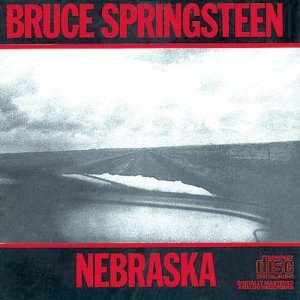
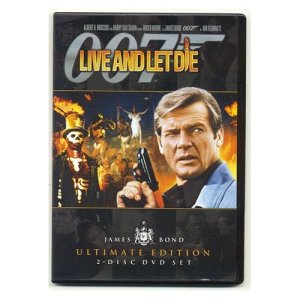 Title: Live and Let Die
 Reported Budget: $7,000,000 Estimated
 Opening Action Sequence: In another break with tradition, Bond is not seen or even hinted at in the opening sequence. We instead are witness to three murders, the first happening at the UN headquarters in New York. The camera pans several ambassadors listening to a foreign language speech through ear pieces. The British delegate is killed by the oldest trick in the book; switching the white wire with the red wire in the ear piece translation box so an audio tone will cause him to drop dead in seconds….classic. Next we see a CIA man watching a funeral procession in the French Quarter. In one of the better exchanges in any Bond film, the agent turns to a man standing next to him and asks “Whose funeral is it?” “Yours” answers the man as he plunges a knife into the agent’s side. Short, sweet, and freaking awesome. Cooler yet, the funeral procession marches over to the curb and stops when the coffin is directly above the fresh stiff. A trapdoor (the first of many in this film) opens in the bottom of the coffin and the pallbearers simply place the coffin on top of the body. The door then closes and the procession moves on, now in a Mardi Gras like dance. Off to the Caribbean Island of San Monique where we land in the middle of some kind of Vegas review version of a voodoo ceremony where things go from bad to worse for the dude in the linen suit. Not only is he tied to a stake but he’s got a goat head sporting snake charmer waving a green serpent in his face. As the crowed writhes about in a frenzy typically reserved for ecstasy heads at Burning Man the snake does what snakes do and we have our third victim. Talk about a hook to start the film! It not only sets the tone but launches the story with minimal exposition.
 But here Moore allows the audience to see Bonds wheels turning as he initially panics then quickly improvises a way to get out of this sticky situation. You see, the woman is the Italian agent Mrs. Crusoe and it would be bad if M finds her in Bond’s bed. 007 goes on to distract his boss every which way he can from making a huge production out of brewing a cup of coffee to demonstrating the magnetic powers of his Rolex Submariner that can deflect bullets at long-range “or so I’m told.” “A theory I rather like to test now” answers M. This scene not only sets up the relationship between M and Bond but it sets the table for the rest of the film, IE Bond in places and situations he (and we) don’t expect to find Bond in. These two men are accustomed to meeting in much more formal settings, never in Bonds home while he wearing his PJ’s. But yes, the mission, M tells Bond they have a croaked ambassador in New York, a stabbed CIA guy in New Orleans, and an agent named Banes snake bit in the Caribbean. “Banes sir? I rather liked Banes, we had the same boot maker.” What links the three? It’s Bonds job to find out.
 Villain’s Lair: The only thing Big Kananga loves more than information is secret passages. Every building he owns is silly with em, be it elevators hidden behind armoires, lifts that descend into caves under graveyards, or sliding panels that free poisonous reptiles into unwanted guests rooms. For me, the coolest trapdoors are the “spy abducting tables” at Big Kananga’s Fillet of Soul restaurants. When Bond enters the Harlem branch he’s offered a booth. 007 accepts, sits down, orders a bourbon and branch, and pulls out his wallet to pay. As the waiter takes Bond’s cash the booth spins into the wall and is replaced by an identical looking table. The waiter, with Bonds money in one hand, takes a sip from 007’s drink with the other, and walks away as if nothing happened. Meanwhile, Bond finds himself being menaced by a man with a hook for a hand. Bond however is a quick study and when he enters the New Orleans Fillet of Soul he politely declines the booth. “Do you have anything closer to the stage?” As soon as he settles in at a table in the middle of the room the four top is sucked down into the floor where Bond once again finds himself, sans drink, strapped to a chair. Kananga 2, Bond 0. I saw this film at some point in my childhood and for years I would sit in restaurant booths wondering if (and half hoping) the table would spin into the wall and I’d find a secrete passage. As the dictator of San Monique, Kananga pretty much has run of the island but he still hides Mr. Big’s poppy fields under camouflage tarps in the interest of keeping up appearances. He guards the entire thing with gunmen, dart shooting scarecrows and voodoo smoke and mirrors. Kananga, who spends half his life behind a mask, understands that by representing one thing and obscuring another he is once again controlling information. By knowing the lay of the land, Kananga puts his appoint at a huge disadvantage. It’s a shame Bond and Kananga never got to sit at a card table, he seems like one of the few villains who could outplay 007.
 Villain’s Coolest Accessory/ Trait: Well, he kind of has it all. An island nation, a drug network running from Harlem to New Orleans, a voodoo cult, a lady who can read the future and a fleet of gas guzzling 70’s cars to die for. The only thing he really lacks is a decent latex mask. The guy just looks weird as Mr. Big and besides, his best asset his is face. Stone cold, calculating, and able to control a room with a single look, it’s silly and counterproductive to cover it up.
 Bond Girl’s Name: Solitaire. As we indicated above there is little to say about Solitaire other than she is a pawn Bond uses to bring Big Kananga down. In order to communicate with the gods and see the future, Solitaire must remain a virgin. So, Bond gets to getting and once Solitaire is deflowered she is no longer of any use to Kananga. But let us not think too much about the gender politics behind the idea of a woman loosing her power if she sleeps with a man, it will only take away from the guns and fun. Rosie Carver (Gloria Hendry) is a CIA agent who not only has one of the more boring Bond Girl handles but is playing both sides of the fence. She attempts a babe in the woods routine by telling Bond “You’re my second assignment after Banes” (Banes, he of the fang marks in the neck and custom-made footwear) but Bond is onto her rather quickly and strings her along so he can have sex with her as well. Let’s us also try to get past that fact that Rosie is (A) black and therefore (B) must work for the bad guy. Indeed, in a post PC world, the 1970’s come across as a little icky.
 Number of People 007 Kills: 6 ½ men, a snake and a crocodile. Moore made it clear he wasn’t so high on the Connery Bond killing without a conscious. Indeed for his first turn as 007 the death count is not only low, but Bond makes it two thirds of the way through the film before punching a hole in his license to kill card. His first victim is a faceless guard who is knocked off a cliff via Bond’s boot swooping in on a hang glider. (Not just his boot you understand, it was on his foot.) At one point Bond is brought to a crocodile farm that doubles as a heroin processing plant. Bond blows up the plant but it appears everyone inside escapes without much problem, everyone that is except one unlucky crock. Bond then jumps into a speed boat and whips around the bayou for a while. The chase ends when Bond pours gasoline on a pursuing boat driver and forces him into a metal barge, both of which go boom. Eventually, Bond has to prepare himself to single-handedly take on about 100 voodoo dudes in order to save the girl from suffering poor old Bane’s fate. The odds are not in our heroes favor and one would think that in order to succeed, he’s going to have to slaughter quite a few baddies. His odds for success look even more dubious when we see Bond hopping over a grave with all the grace of sloth. Seriously, this is Bond and he looked like the grandpa in Willy Wonka when he first gets out of bed (before the dance number of course.) I later learned in my research that Moore injured his leg badly while filming the boat chase and was also suffering severe pain from kidney stones but man, I’ve never seen a more clumsy move by an action star on film. Anyway, the slaughter was not meant to be. In order to grab the girl all Bond had to do was shoot the goat head snake charmer, one other random dude, and a ceramic replica of the voodoo chief of the dead. On his way out Bond does push the real chief of the dead into a coffin full of snakes but this being the voodoo chief of the dead, it’s likely we will see him again. Shazam-ala-kbam, there he is in the final shot, sitting on the front of a train laughing to himself like he just drank a can of the Un-cola. (hence the ½ a man in the body count.) Loyal readers will know I love trains on film and I was delighted when Bond hops onto the rails. Tee Hee tracks 007 down and confronts him in his private sleeping car. The two men can’t very well punch each other silly with
  Solitary sitting on the bed so Tee Hee casually flips the hide-away and the lady up into the wall and it’s go time. While the fist-a-cuff don’t come near the Bond/Grant epic on the Orient Express it has its moments and a good amount of stuff is busted up. The fight ends badly for Tee Hee who is tossed out the window, looses his arm, and is assumed to be dead somewhere beside the tracks. It’s also worth noting that at one point Big Kananga bitches at Bond for killing one of the brothers in Harlem but we never see it happen so either Big was misinformed or there is some long-lost footage on the cutting room floor. While Moore may have wanted Bond to go easier on the human population her has no problem barbecuing reptiles. Besides the aforementioned crock he also torches a snake with a cigar and an aerosol can.
 M: M has a stick way up his ass and it’s a perfect counter balance to the fly by his paints Moore in the Mrs. Crusoe scene. M looks upon Bond with a bit of disgust and wonder as if to say “How is it that THIS man is our best agent?” As I mentioned before this early scene is a perfect self-contained bit of business using well-timed innuendo and pitch perfect sideways glances to set the stage for this and following Moore films. I always thought of M as kind of a drag when I was kid but the more I see what Bond puts him through, not to mention the immense responsibility that comes with his job, I’ve kind of grown the admire the character.
 important fixer. Quarrel Jr. is every bit as resourceful as his father. His boat becomes Bond’s base of operations while working in San Monique and he even brings Bond ashore on a beach front that looks identical to the one his father took Bond onto back in 1962. Quarrel Jr. also inherited his fathers superstitious pointing out areas of the island he refuses to go. Perhaps he wants to avoid the fire-breathing dragon that did in his old man.
 Gadgets/British Government Property Bond Destroys: Perhaps because of M’s budget issues or maybe because Q doesn’t have the opportunity to give Bond anything very little of the Queens property is lost. Bond manages to keep the watch intact and sacrifices only a wetsuit. I also assume the hang glider was unceremoniously dumped somewhere on the island.
 Without the convenience of CGI, the producers need to actually do the jump, a 110 foot launch that land them in Guinness Book of World Records for the longest jump of a boat. Bond also smashes through bunch of boats at a road block (river block?) and causes yet another to explode. Pursuing boats end up in a swimming pool and destroy a wedding cake. And then there are the dozen or so cop cars that end up in piles on the roadway. He also leaves some automobile wreckage on the FDR in Manhattan and takes out a bunch more cop cars in San Monique. The last cop car is disabled when Bond decapitates a double-decker bus on a low clearance bridge. 70’s films do love to pile up cars. 007 also blows up an entire poppy field, takes out most of the fixtures in his sleeping car, and breaks a rather life like ceramic statue of Baron Samedi likeness. Finally, he manages to destroy Solitaire by sleeping with her.
 Bond Cars: Bond doesn’t get his own set of wheels in this one but cars none-the-less are a big part of the film. From the get go the Caddies on New York’s FDR drive establish a specific time and place. They are, to paraphrase Mr. Fred Schneider, as big as a whale. Add the sideburn sporting cabbie right out of central casting (not to mention his movie perfect checker taxi) and the bubble gum lights on top of the cop cars and you’ve got a snapshot of the early 1970’s USA. Bond does get to drive a nifty beach jeep and a beat-up double-decker bus that handles the dirt roads of San Monique (really Jamaica) like a Trans-Saharan race buggy. This thing swings a 180, out maneuvers half the police force and finishes off the rest of after a deception at a low bridge. (No point in trying to explains it, it must be seen, and it’s pretty damn cool.) Finally there is that little incident with the Bleaker School of Flying single prop plane.
 Other Notable Bond Accessories: Our favorite spy has become a cigar smoker. And not those fat Tony Soprano jobs, these dudes are long and skinny like a candle sticks. I’ve seen it written that as part of his contract Moore had unlimited cigars while making the Bond films and if that is the case then good on you mate! He even puffs away on one of those bad boys while being pulled on a hang glider behind a powerboat. Rock star! Not nearly as cool are the rip away pants he displays after landing said glider. Connery at the top of Goldfinger he is not. Bond also apparently prefers baths to showers.

 Blog, James Blog